Singapore WWII Heritage Sites for Group Visits and Self-Guided Historical Routes
Book a guided tour for groups of 10-30 at the underground command centre where Lieutenant-General Arthur Percival decided to surrender Singapore on 15 February 1942. That single site, operated by Singapore History Consultants, gives your group the narrative anchor for any WWII heritage route on the island. Without it, the other sites, Fort Canning Park, Labrador Battery, Kranji War Memorial, Changi Chapel and Museum, Reflections at Bukit Chandu, and the Former Ford Factory, remain disconnected plaques and views. The routes below are organised by how much time you have and what your group wants to learn. Historical claims are attributed to named sources throughout.
- What This Page Does: Routes groups to WWII heritage sites in Singapore by itinerary length: single-site deep dive, half-day chronological route, or full-day fall-of-Singapore itinerary.
- Who Operates the Sites: Battlebox (Singapore History Consultants), Fort Canning Park and Labrador Battery (NParks), Kranji War Memorial (Commonwealth War Graves Commission), Changi Chapel and Museum and Reflections at Bukit Chandu (NHB), Former Ford Factory (National Archives of Singapore).
- Key Planning Rule: Every site requires a group booking. Walk-ins are not viable for groups of 10 or more. Check each operator’s online reservation system.
- Weather Reality: Outdoor sites (Fort Canning Park, Labrador Battery, Kranji War Memorial) are exposed. The monsoon seasons (December, March and June, September) bring predictable heavy rain. Have a wet-weather backup plan.
- Site Fatigue Risk: Combined itineraries work best at 2-3 sites per half-day. More than that and the narrative blurs. Sequence by chronology, not geography.
WWII Heritage Sites Singapore Group Visits: The Single-Site Deep Dive
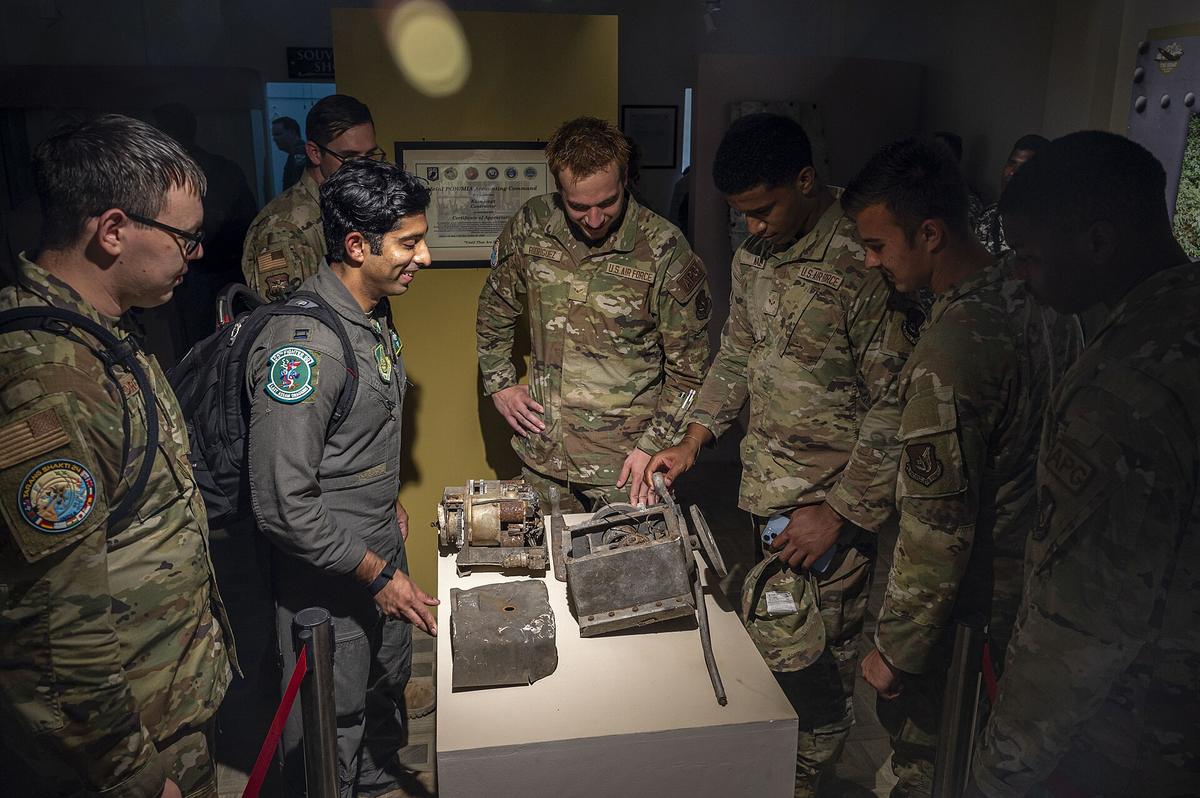
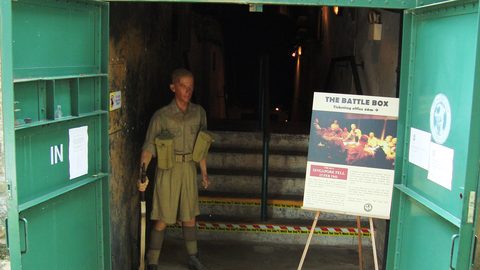
For groups that want one immersive stop, a corporate team that needs a facilitated historical briefing, a school cohort studying the Battle of Singapore, or a social club that prefers depth over breadth, the right choice is the underground command centre at Fort Canning. The tour runs 60-75 minutes and takes you through the room where Malaya Command’s final decision was made. The minimum age for the standard tour is 7 years; children under 12 must be accompanied by an adult. The group size limit per tour slot is 30 persons. A private tour requires a minimum of 10 and a maximum of 30 persons. The site is not wheelchair accessible due to a steep staircase entry. Book online through Singapore History Consultants.
The alternative single-site deep dive is the Former Ford Factory, operated by the National Archives of Singapore. This is the building where Percival signed the surrender. It is an indoor museum with guided tours for groups of up to 20 persons. Entry was free for Singapore citizens and PRs in 2024; the National Archives publishes the in-force rates. For a group that wants the surrender story and nothing else, this is the site. For a group that wants the command story plus the occupation story, combine it with the Fort Canning bunker in a half-day route.
.jpg)
Battle of Singapore Sites Group Tour: The Half-Day Chronological Route
To understand the fall of Singapore in a single morning or afternoon, sequence three sites in this order: Fort Canning Park (the hilltop from which Malaya Command operated), the underground command centre (where the surrender decision was made), and the Former Ford Factory (where the surrender was signed). This route covers the command perspective from planning to capitulation. It requires 3.5 to 4 hours including travel between sites; the bunker and the Former Ford Factory are a 10-minute drive apart.
Fort Canning Park: The Command Landscape
Start at Fort Canning Park. The park is free to enter, managed by NParks, and contains the Sally Port, the old command building, and the remnants of the British military headquarters. There is no single guided tour operator for the park itself; NHB and volunteer groups run occasional guided walks for 15-30 persons. For a self-guided start, walk the hilltop and note the siting of the pre-war coastal gun emplacements. The “fortress Singapore” myth begins here, because the guns faced the sea. The park is sloped with stairs and unpaved sections; wheelchair access is partial. There is no fixed shade over the entire route. Arrive by 08:30 to avoid the heat.
The Underground Command Centre: The Decision
From Fort Canning Park, walk to the bunker entrance at the foot of the hill. The guided tour covers the final days of the Battle of Singapore (8-15 February 1942), the breakdown of the British defence, and the decision to surrender. The bunker is mechanically ventilated and dehumidified, not air-conditioned to comfort levels, and remains warm and humid. The group size limit of 30 persons per slot is strict. Book the private tour for 10-30 persons if your group wants the same guide throughout. The standard public tour is not guaranteed to have space for a large group.
Former Ford Factory: The Surrender
End at the Former Ford Factory. The museum is indoor and air-conditioned. The guided tour for groups is capped at 20 persons per docent. If your group exceeds 20, split into two rotations with staggered start times. The National Archives of Singapore runs the site and publishes the in-force admission fees. The surrender room is preserved with period furniture. This is the strongest site for a debrief: the group can discuss the “who lost Singapore” question in the room where it was signed.
Fort Canning Command Bunker Group Visit: What to Book and How
The underground command centre is the only site on this list where the operator charges for admission and enforces a strict group-size ceiling. For a group of 10-30 persons, book the private tour. The private tour surcharge is the main cost driver over the standard public tour ticket. The operator, Singapore History Consultants, requires an online reservation. Walk-ups are not accepted for groups. The tour is guided by a docent with primary-source training. That places it at the highest level of historical depth on this page: guided narrative, not just panels or plaques.
What Goes Wrong
The most common failure mode for a group visit here is booking the wrong size. A group of 31 persons cannot fit into a single 30-person slot. The second failure mode is expecting museum-grade air-conditioning. The bunker is mechanically ventilated and dehumidified, not air-conditioned to comfort levels. It remains warm and humid. Dress accordingly and bring water. The third failure mode is expecting wheelchair access. The staircase entry is steep and narrow; the site is not wheelchair accessible. Groups with mobility-impaired members should choose the Former Ford Factory instead.
Kranji War Memorial Ceremony Group: Visiting the Commonwealth War Cemetery
The Kranji War Memorial, operated by the Commonwealth War Graves Commission, is a hillside cemetery and memorial to Allied servicemen who died in the Battle of Singapore and the subsequent occupation. Entry is free. The site is flat with paved paths, making it more accessible than Fort Canning Park or Labrador Battery. The main constraint is heat management: the memorial is open-air with limited shade. Plan visits for early morning (before 09:30) or late afternoon (after 16:00).
Group Access and Ceremonies
Groups can arrange a guided tour by prior arrangement with the CWGC. The annual Remembrance Day ceremony in November is the most significant event at the site; groups planning to attend must arrive early for parking and seating. The memorial is approximately 22 km from the city centre. Coach parking is available. For a group that wants a quiet, reflective stop, this site works best as the first or last stop in a full-day itinerary, not the middle. The emotional weight of the rows of headstones can overshadow the sites that follow.
Changi Chapel Museum Group Booking: The POW and Internment Story
The Changi Chapel and Museum, operated by the National Museum of Singapore (NHB), covers the POW and civilian internment experience during the Japanese Occupation. The museum is indoor with air-conditioned galleries and an outdoor chapel replica courtyard. The group size for a guided tour is a maximum of 20 persons per docent. If your group is larger, book multiple docent-led tours in staggered time slots. The guided tour duration is 60 minutes.
Admission and Booking
Entry was free for Singapore citizens and PRs in 2024. NHB publishes the in-force rates. Groups must book through the NHB website. The most common mistake is misidentifying the site as Changi Prison. The museum is a commemorative site open to the public; the prison is an active penal institution with no public access. The museum is at 1000 Upper Changi Road North. The prison is on a different stretch of Upper Changi Road. Check the address before booking transport.
Bukit Chandu Malay Regiment Group Tour: The Last Stand on Pasir Panjang Ridge
Reflections at Bukit Chandu is the interpretive centre at the site of the Malay Regiment’s last stand during the Battle of Singapore. The regiment fought on Pasir Panjang ridge on 13-14 February 1942, three days before the surrender. The centre is housed in a colonial bungalow and is indoor. The group size limit is 30 persons per timeslot. Entry was free for Singapore citizens and PRs in 2024; NHB publishes the in-force rates.
Sequencing Bukit Chandu
This site works best as the second stop in a half-day route that starts at Labrador Battery and ends at the Former Ford Factory. The narrative arc is: the coastal guns that could not fire inland (Labrador), the ground defence that held for two days (Bukit Chandu), and the surrender (Former Ford Factory). This sequence avoids site fatigue by moving from outdoor remains to indoor interpretive centre to indoor museum. The Kent Ridge Park canopy walk is adjacent to Bukit Chandu but is not part of the heritage site; groups with time can add a 15-minute detour.
Full-Day Itinerary: The Fall of Singapore From Invasion to Surrender to Occupation
For a group with a full day (08:30 to 17:00), sequence four sites in this order: Labrador Battery (coastal fort and the “fortress Singapore” myth), Reflections at Bukit Chandu (the Malay Regiment’s last stand), the underground command centre at Fort Canning (the surrender decision), and Changi Chapel and Museum (the occupation aftermath). This route covers the invasion from the coast, the ground defence, the command collapse, and the POW experience. It requires a private coach; the sites are dispersed across the island, and public transport between them adds 30-45 minutes per leg.
Labrador Battery: The Coastal Gun Emplacements
Start at Labrador Battery in Labrador Nature Reserve, managed by NParks. The site is free to enter and consists of gun emplacements, tunnels, and a jungle trail. The tunnels are accessible only during guided tours with restricted schedules; the NParks signage implies general access, but the tunnels are locked outside tour hours. The terrain is uneven with stairs and exposed roots. The tree canopy provides partial shade. The site’s historical value is the demonstration of the “fortress Singapore” myth: the guns faced the sea, not the landward invasion. Allow 45 minutes.
Reflections at Bukit Chandu: The Ground Defence
Drive 10 minutes from Labrador Battery to Bukit Chandu. The interpretive centre covers the battle on Pasir Panjang ridge. The bungalow setting and indoor galleries provide a break from the outdoor heat. Allow 60 minutes.
The Command Bunker: The Command Collapse
Drive 20 minutes from Bukit Chandu to Fort Canning. The bunker tour runs 60-75 minutes. Book the private tour for your group size. Allow 90 minutes total including entry and exit.
Changi Chapel and Museum: The Occupation
Drive 25 minutes from Fort Canning to Changi. The museum covers the POW internment experience, including the Changi prison camp. The outdoor chapel replica is a quiet spot for group reflection. Allow 75 minutes. End here; the emotional weight of the occupation story makes it the right finish.
What to Skip
In a full-day itinerary, skip Fort Canning Park itself. The bunker covers the command story, and the park’s other layers (pre-colonial, colonial) are a distraction from the WWII narrative. Skip Kranji War Memorial unless the group has a specific connection to a serviceman buried there; the site is 22 km from the city and adds 45 minutes of travel each way. Skip the Former Ford Factory if you are already visiting the command bunker; the surrender story is covered in the command narrative.
Group Planning: What to Book, How Far Ahead, and What Goes Wrong
- Book the command bunker private tour 14 days ahead for a group of 10-30. Weekend slots fill first. The online reservation system on Singapore History Consultants’ site is the only booking method.
- Book Changi Chapel and Museum and Reflections at Bukit Chandu 7 days ahead for a group of 20 or more. NHB’s booking portal requires a group size and preferred time slot. The guided tour surcharge is the cost driver for groups.
- Arrange Kranji War Memorial visits by prior arrangement with the CWGC for guided tours. For a self-guided visit, no booking is required, but check the CWGC site for closure notices.
- Check NParks notices for Fort Canning Park and Labrador Battery before visiting. Trail closures for maintenance or events are published on the NParks website.
- Confirm coach parking availability at each site. The Former Ford Factory and Changi Chapel and Museum have dedicated coach bays. Fort Canning Park and Labrador Battery have limited kerb-side drop-off.
The most common failure in group planning is site fatigue from poor sequencing. A group that visits Labrador Battery, Fort Canning Park, the command bunker, and Changi Chapel and Museum in that order will experience narrative whiplash: coastal defence, then command hill, then underground bunker, then POW camp. The chronology is lost. Sequence by the timeline of the Battle of Singapore: coastal defence (8-10 February), ground defence (11-14 February), command collapse (15 February), occupation (15 February onward). That is the route outlined in the full-day itinerary above.
Site Interpretation Standards and What You Actually Get
The term “guided tour” in Singapore’s heritage sector covers a wide range. At the Fort Canning bunker, the docent is trained in primary-source history and the tour is a guided narrative with the highest interpretation standard on this page. At Changi Chapel and Museum, the docent is an NHB-trained guide with curatorial authority over the exhibits. At Reflections at Bukit Chandu, the interpretive centre is self-guided with panels; a guided tour add-on is available but must be booked in advance. At Labrador Battery, the tunnels are accessible only on a guided tour with a restricted schedule; the NParks signage implies general access, but the tunnels are locked outside those hours. At Fort Canning Park, the term “guided tour” can mean an NHB volunteer walk or a third-party operator’s audio guide; the quality varies. At Kranji War Memorial, the guided tour is arranged with the CWGC and is infrequent.
For a group that wants a consistent standard, book the command bunker and Changi Chapel and Museum with guided tours. For a group that is comfortable with self-guided exploration, Fort Canning Park, Labrador Battery, and Kranji War Memorial reward a prepared group that has read the historical narrative beforehand. The site interpretation standard at all NHB-operated sites is high; the site interpretation standard at NParks-managed sites is primarily signage, not narrative.
Who This Subject Suits and Who Should Skip It
This subject suits corporate team-building organisers who need a facilitated historical briefing, school and uniformed-group coordinators who need curriculum-linked site visits with guided narrative depth, and heritage-curious locals and visitors who want to understand the Battle of Singapore from a coherent chronological route. It suits groups that are willing to book ahead, pay for guided tours, and tolerate weather dependency at outdoor sites.
It does not suit solo travellers looking for drop-in activities; most group activities require pre-formed teams and bookings. It does not suit tourists seeking nightlife or dining recommendations. It does not suit people wanting to book or compare prices. It does not suit adrenaline-seekers looking for bungee, skydiving, or theme parks.
More in WWII and heritage experiences
-
 Age suitability of war museums for children
Age-by-age suitability of Singapore's war museums and WWII sites for children, covering emotional weight of content, bunker claustrophobia, graphic imagery, and developmental engagement.
Age suitability of war museums for children
Age-by-age suitability of Singapore's war museums and WWII sites for children, covering emotional weight of content, bunker claustrophobia, graphic imagery, and developmental engagement.
-
 Commemorations calendar (15 Feb Total Defence Day, Remembrance/ANZAC Day)
The annual calendar of WWII commemorations at Singapore's heritage sites—Total Defence Day, ANZAC Day, Remembrance Day—with ceremony details, group attendance, and site access changes.
Commemorations calendar (15 Feb Total Defence Day, Remembrance/ANZAC Day)
The annual calendar of WWII commemorations at Singapore's heritage sites—Total Defence Day, ANZAC Day, Remembrance Day—with ceremony details, group attendance, and site access changes.
-
 Getting to Fort Canning Park from Dhoby Ghaut (independent directions)
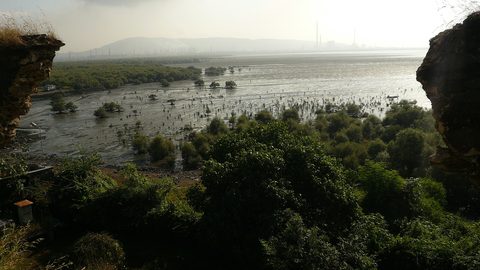
Independent walking directions from Dhoby Ghaut MRT to Fort Canning Park and the Battlebox entrance, covering multiple approach routes, hill gradients, and mobility access limitations.
Getting to Fort Canning Park from Dhoby Ghaut (independent directions)
Independent walking directions from Dhoby Ghaut MRT to Fort Canning Park and the Battlebox entrance, covering multiple approach routes, hill gradients, and mobility access limitations.
-
 Heritage walking tours vs self-guided visits: how to choose
How to decide between a guided heritage tour and a self-guided visit at Singapore's WWII sites, based on interpretation depth, site complexity, and the real meaning of 'guided' across operators.
Heritage walking tours vs self-guided visits: how to choose
How to decide between a guided heritage tour and a self-guided visit at Singapore's WWII sites, based on interpretation depth, site complexity, and the real meaning of 'guided' across operators.
-
 Heritage-themed team building and corporate tours
How corporate groups can use Singapore's WWII heritage sites for facilitated team building that extracts workplace lessons from the historical narrative, not just a guided tour.
Heritage-themed team building and corporate tours
How corporate groups can use Singapore's WWII heritage sites for facilitated team building that extracts workplace lessons from the historical narrative, not just a guided tour.
-
 History-themed escape games and night events
History-themed escape games, outdoor puzzle hunts, and night events at Singapore's WWII heritage sites, covering operator-site partnerships, historical accuracy, and practical constraints.
History-themed escape games and night events
History-themed escape games, outdoor puzzle hunts, and night events at Singapore's WWII heritage sites, covering operator-site partnerships, historical accuracy, and practical constraints.
-
 The Battlebox history explained: Malaya Command and 15 Feb 1942
-
 Visiting the Fort Canning WWII bunker: what to know (independent)
-
 WWII history outings for school groups
Planning a curriculum-linked WWII history outing for school groups in Singapore, covering site suitability by age, safety ratios, wet-weather plans, and which sites handle large cohorts efficiently.
WWII history outings for school groups
Planning a curriculum-linked WWII history outing for school groups in Singapore, covering site suitability by age, safety ratios, wet-weather plans, and which sites handle large cohorts efficiently.
-
 WWII sites trail: Fort Canning, Kranji War Memorial, Changi Chapel, Labrador Battery, Bukit Chandu
A sequenced trail through Singapore's five core WWII heritage sites, following the historical arc from pre-war defences through surrender to commemoration, with site operator details and group visit logistics.
WWII sites trail: Fort Canning, Kranji War Memorial, Changi Chapel, Labrador Battery, Bukit Chandu
A sequenced trail through Singapore's five core WWII heritage sites, following the historical arc from pre-war defences through surrender to commemoration, with site operator details and group visit logistics.
Common Questions
Which WWII heritage sites in Singapore are worth visiting as a group?
The underground command centre at Fort Canning (command narrative, guided tour), Changi Chapel and Museum (POW story, guided tour), and Reflections at Bukit Chandu (Malay Regiment last stand, interpretive centre) are worth a dedicated visit. Fort Canning Park and Labrador Battery reward a group that has pre-read the historical context. Kranji War Memorial is worth a visit for groups with a specific connection to a serviceman or for the annual Remembrance Day ceremony.
Do we need to book in advance for a group?
Yes. Every site on this list requires a group booking. The Fort Canning bunker requires an online reservation for groups of 10-30. Changi Chapel and Museum and Reflections at Bukit Chandu require booking through the NHB portal. Fort Canning Park and Labrador Battery do not require a booking for self-guided visits, but guided tours of the Labrador Battery tunnels have restricted schedules and must be arranged in advance. Kranji War Memorial guided tours require prior arrangement with the CWGC.
How many sites can we visit in a half-day?
A half-day itinerary works best with 2-3 sites. The chronological route from Fort Canning Park to the command bunker to the Former Ford Factory takes 3.5-4 hours including travel. The coastal defence route from Labrador Battery to Bukit Chandu to the Former Ford Factory takes 3-3.5 hours. A single-site deep dive at the bunker takes 60-75 minutes for the tour plus 30 minutes for arrival and departure.
Which sites are wheelchair accessible?
The Former Ford Factory and Changi Chapel and Museum are wheelchair accessible. The Fort Canning bunker is not wheelchair accessible due to a steep staircase entry. Fort Canning Park has partial wheelchair access on sloped paths and stairs. Labrador Battery has uneven jungle trails and is not wheelchair accessible. Reflections at Bukit Chandu has limited accessibility in the bungalow setting. Kranji War Memorial has flat paved paths and is the most accessible outdoor site.
What is the best route for a group that wants to understand the fall of Singapore from start to finish?
The full-day route: Labrador Battery (coastal defence, 45 min), Reflections at Bukit Chandu (ground defence, 60 min), the command bunker at Fort Canning (command collapse, 75 min), and Changi Chapel and Museum (occupation, 75 min). This sequence follows the timeline of the Battle of Singapore from 8 February to the surrender on 15 February and the occupation that followed. It requires a private coach and an 08:30 start.
Read next
-
Visiting the Fort Canning WWII bunker: what to know (independent)
-
WWII history outings for school groups
Planning a curriculum-linked WWII history outing for school groups in Singapore, covering site suitability by age, safety ratios, wet-weather plans, and which sites handle large cohorts efficiently.
-
Commemorations calendar (15 Feb Total Defence Day, Remembrance/ANZAC Day)
The annual calendar of WWII commemorations at Singapore's heritage sites—Total Defence Day, ANZAC Day, Remembrance Day—with ceremony details, group attendance, and site access changes.
-
WWII sites trail: Fort Canning, Kranji War Memorial, Changi Chapel, Labrador Battery, Bukit Chandu
A sequenced trail through Singapore's five core WWII heritage sites, following the historical arc from pre-war defences through surrender to commemoration, with site operator details and group visit logistics.
-
Heritage-themed team building and corporate tours
How corporate groups can use Singapore's WWII heritage sites for facilitated team building that extracts workplace lessons from the historical narrative, not just a guided tour.
-
Age suitability of war museums for children
Age-by-age suitability of Singapore's war museums and WWII sites for children, covering emotional weight of content, bunker claustrophobia, graphic imagery, and developmental engagement.