Laser Tag in Singapore: How Group Sessions Work and Who They Suit
How laser tag group sessions work in Singapore's indoor arenas, who they suit, and how to navigate the guides on formats, venues, and comparisons.
Laser Tag in Singapore Group Sessions: The Structure Behind the Game
The most common mistake people make about laser tag in Singapore is assuming it works like a walk-in arcade game. Swipe a card, pick a gun, start shooting. It does not work that way. Laser tag sessions are structured, commercially-operated events that run on a booking model. The walk-in player is the exception, not the rule. An indoor arena needs a squad of players to make a game economically viable, so operators run fixed time slots with a mandatory briefing and they expect a reservation. This is the most forgiving of the combat games in Singapore. No projectile, zero sting, and an air-conditioned facility mean the barrier to entry is low. The structure, however, is non-negotiable.
How Laser Tag Compares to Other Combat Games
This hub explains how a laser tag session runs, who it suits by age and fitness, the safety rules that are non-negotiable, how the game changes with group size, and what drives the cost. For format comparisons, go to the format comparison page. To choose between an indoor arena and a mobile setup, go to the venue-type page. To understand how scoring works before you brief your team, there is a page for that. If you are planning for a specific group, a kids' party, a corporate offsite, or a group of adult friends, the group-planning page for your audience is where you land. Each of those pages answers a question this page raises, and this page tells you which one to click.
What Laser Tag Is and What It Is Not
Before you read any further, understand what laser tag is not. It is not Nerf, which fires foam darts you can see and feel. It is not paintball, which uses gelatin capsules that splatter and sting. It is not archery tag, which uses foam-tipped arrows you must draw and shoot. Laser tag is an infrared-gun combat experience in a darkened, fog-filled arena. Each player wears a sensor vest and carries a gun that reads a hit when the infrared beam connects. The arena is multi-level, with narrow corridors and low obstacles. Scoring is electronic, displayed on a real-time monitor after each game. There is no contact, no projectile, nothing leaves the gun except an invisible beam. The sting level is zero. The fog makes the beams visible and the sensor vests readable. The darkness is part of the game design, not an accident.
Reading the Specification Table: What Matters First
Height and Age Filters
The table above lists the fields that appear on every laser tag operator's website in Singapore, but the order they are printed is not the order you should read them. Start with the height requirement. That is the first hard filter. If a child is under a metre, many arenas will not let them play, regardless of age. The age figure is softer, often advertised as five or six. The real question is whether the operator runs a structured kids' game or just lets them loose, and the age figure is a poor proxy for that.
Sting, Intensity, and Weather
Next, check the sting level and intensity together. Laser tag scores zero on sting. That is why reluctant team members will play it when they would refuse paintball. Then confirm indoor availability. Every proper arena in Singapore is indoor and air-conditioned. A mobile setup for outdoor laser tag is a different beast and weather is a real risk.
Scoring and Party Logistics
The scoring system matters if you care about competition. Electronic real-time scoring is standard, but the sophistication of the display, whether it shows individual scores or just a team total, changes how you talk about the game afterwards. Finally, for a kids' party, the food-and-party-space field is decisive. A venue with a party room add-on is worth far more than one with a larger arena and nowhere to eat cake.
The Anatomy of a Laser Tag Session: What to Expect
Here is how a laser tag session in Singapore actually runs, from arrival to exit. You book a time slot for your group. The booking lead time is 7 to 14 days in advance, and more in peak season. You arrive at the venue, check in, and are assigned to a squad. The group is briefed in a dedicated briefing room, where the rules are explained. No running in the arena, the floors are padded but the obstacles are real. No contact between players. The emergency stop procedure is explained. The briefing lasts five to ten minutes and is mandatory. After the briefing, you are issued your gear: an infrared gun and a sensor vest. The vest has sensors front and back. The gun has a range that reaches across the arena, indoor ranges are 30 to 100 metres, which means you can be tagged from much further away than you expect. You enter the arena, which is dark and fog-filled, and the game master starts the clock. A game lasts 10 to 15 minutes. A standard session includes two to three games with a score review in between. After the final game, the electronic scoring system produces a scorecard printout with individual and team scores, and the group is debriefed. You leave the arena. If you booked a party package, a party room is available for food and cake.
Laser Tag Session Format Explained: The Game Modes
The session format is not fixed; it changes with the game mode selected. The most common format for new groups is solo or team deathmatch. Every player is for themselves or the group splits into two or more teams. The goal is simply to score more tags than the opposition. Operators recommend this for first-timers because it requires no strategy, only shooting. The next tier up is capture the flag. Each team defends a base station and the objective is to capture the opponent's base while holding yours. This is a squad assignment game, and it requires coordination. That makes it the standard for corporate team-building sessions. Domination is a variation where teams hold control points for cumulative time; the team with the most cumulative time wins. VIP escort is a role-based game where one team protects a designated player, the VIP, and the opposing team targets them. This format surfaces leadership dynamics because the VIP must be sheltered and the escort team must communicate. Finally, zombie or infection mode starts with one player as the zombie. Every tag converts a player to the zombie team. The game accelerates until the last human is tagged. The choice of game mode is a decision the group makes during the briefing. It is the single biggest factor in whether the session feels like a casual shoot-'em-up or a strategic exercise.
Laser Tag Team Building Singapore: What the Facilitator Does
If you are planning a laser tag team building Singapore session, the game format is the point. Teams that are just there for a fun afternoon should stick with team deathmatch. It is low-pressure and high-energy. Teams that want to see who takes charge, who communicates clearly, and who improvises under pressure should ask for capture the flag or VIP escort. Those modes force squad assignment and real-time decision making. The operator's facilitator is the difference between a good and bad session. A good facilitator will brief the games, adjust the mode to the group's energy, and lead a debrief that extracts the workplace lessons. A bad one just runs the clock. If you are a corporate organiser, ask the operator directly whether the session includes a facilitated debrief as standard. Many advertise a two-hour package where the debrief is optional and often skipped. The intensity is medium. You will be breathing hard but not bruised. The air-conditioned facility means no one is dripping sweat by the end. The group size for a private booking is 8 to 10, but many operators run public sessions where you can join a mixed squad. Check with the operator if you have fewer players than their threshold.
Laser Tag Kids Party Singapore: Age, Safety, and Party Rooms
For a laser tag kids party Singapore, the questions change completely. The age for standard laser tag is 5 to 7 years depending on the operator, but the real test is the height requirement, which is around 1.0 to 1.2 metres where enforced. A six-year-old who is short for their age may be turned away. Measure before you book. The kids' party package includes two games, about 30 minutes of total play, followed by the use of a party room for 45 to 60 minutes for food, cake, and goodie bags. The party room add-on is not optional for most parents. It is the difference between a successful birthday party and a meltdown in the lobby. The operator's staff are trained to handle children, but that training varies. Ask whether the party has a dedicated host whose job is the kids, not just a game marshal who also supervises. The arena is dark and fog-filled, which is exciting for children but can be frightening for the very young. Most operators run a low-intensity version for kids' parties with the fog reduced and the lights turned up slightly. The safety rules are the same: no running, no contact, and the pad walls make collisions survivable. When you book, confirm that the operator can run the session at a lower intensity for the youngest players. The standard game may be too intense for a group of six-year-olds.
Groups of Adult Friends: Why Laser Tag Works for a Novel Night Out
Groups of adult friends looking for novelty are the third major audience for laser tag in Singapore, and they are the least well-served by the standard advice. The session flow is the same as any other group: briefing, games, scorecard. But the energy is different, and the intensity is a factor. Laser tag is not a workout. It is a tactical game where sneaking and aiming matter more than sprinting. Groups of adult friends should choose a venue with a multi-level arena. The verticality changes the game fundamentally. You can be tagged from above or below, and the narrow corridors create ambush points. Prior skill does not matter. The electronic scoring evens the field because there is no projectile to compensate for. A player with good aim but slow movement is as dangerous as a fast mover with poor aim. The group size matters. A standard game supports 8 to 30 players, depending on the arena. The sweet spot is 10 to 14 players, enough for two balanced teams without the chaos of a larger free-for-all. If you have more than 14, the game becomes less tactical and more about volume of fire, which is fun but not distinctive. The cost is driven by the venue type. An indoor arena hire fee is lower than a mobile setup that comes to you. The mobile operator has to transport the equipment and set up the arena, and that logistics cost shows up in the price.
What Drives the Cost of a Laser Tag Session in Singapore
The cost of a laser tag session in Singapore is driven by several factors, and they are worth understanding so you can compare quotes. The first driver is the venue type. An established indoor arena has fixed overheads, so the per-player cost is lower than a mobile setup. But the mobile setup comes to you, which may be worth the premium if you have a large group and no easy way to get to a fixed arena. The second driver is the add-ons. Food, drinks, party room rental, and a dedicated event host all increase the total cost, often doubling the base price of a game. The third driver is the day and time. Weekend afternoons are peak time, and the same session that costs less on a Tuesday morning will cost more on a Saturday. The actual figure is published by each operator on their booking page, and that is the only number that matters. The National Environment Agency publishes the regulatory framework for laser safety, but it does not publish prices.
Indoor Laser Tag Arena Singapore: The Physical Reality
There is one more thing to understand about laser tag in Singapore, and it is the thing that surprises most first-timers. The arena is dark, fog-filled, and smaller than you expect. The indoor arena is 2,000 to 5,000 square feet, which sounds large but feels cramped when you are navigating corridors designed for one person at a time. The fog is dense enough to make the infrared beams visible, which is a great effect, but it also means you cannot see more than a few metres ahead. The darkness hides the exits. The floors are padded carpet or EVA foam matting, forgiving when you trip. But the narrow corridors and low obstacles mean you will trip. The no-running rule is enforced by marshals. Not because running is dangerous in a padded room, but because a head-on collision in a narrow corridor has real consequences. The air-conditioning is set to a comfortable 22 to 26 degrees Celsius, perfect for a group of active players but cold if you are standing still waiting for your turn. Wear dark, comfortable clothing. The sensor vests are bulky and the guns are heavy. You will work up a light sweat even at low intensity. No open-toed sandals or slippers are permitted, for obvious reasons. Non-players are not allowed into the arena. If you have a parent or partner who just wants to watch, they will be watching on a monitor in the lobby, not at the arena edge.
Laser Tag Safety in Singapore: What the Briefing Covers
Safety is the area where laser tag is genuinely different from its competitors, and it is worth stating clearly. The game uses infrared and radio-frequency taggers. The light beams are classified as safe for normal use. The National Environment Agency's Radiation Protection and Nuclear Science Division regulates laser products in Singapore, so the equipment you are using is compliant with those rules. There is no Singapore-specific mandatory equipment standard for laser tag operators. The Ministry of Health does not mandate eye protection because the sensors are on the vest, not on the head, and the beams are not powerful enough to damage eyesight. The operator's insurance is their own affair. The coverage amount is not publicly mandated. You are relying on the operator's professionalism rather than a legal requirement. The safety briefing is mandatory and covers the emergency stop procedure, the no-touching rule, and the no-running rule. It is the same briefing every operator gives, which suggests it is comprehensive. The real risk is not the laser. It is the environment: a dark, fog-filled room with obstacles at shin level. The single most important thing you can do is listen to the briefing and not rush. The venue is air-conditioned, so heatstroke is not a risk, but the intensity is real. A player with a heart condition should sit out the most aggressive game modes.
What Can Go Wrong in a Laser Tag Session and How to Avoid It
The last thing to understand about laser tag is the failure modes. Knowing what can go wrong is part of planning a successful session. The most common failure is a sensor vest malfunction, caused by sweat damage, battery depletion, or impact wear. A player whose vest does not register a tag, or whose gun does not fire, breaks the competitive integrity of the game. A good operator will notice and replace the gear quickly. A bad one will not. The second most common failure is a group that books a session for a size the arena cannot support. A group of 16 that books a slot designed for 10 will find the game is chaotic and short. The third is weather, but only for outdoor laser tag, which is rare in Singapore because the indoor arena is the norm. An outdoor mobile setup will be halted during lightning risk or heavy rain. Confirm the operator's wet-weather policy at booking. The insurance issue is worth mentioning because it is the one place where the regulatory framework is thin. The NEA regulates the lasers, but there is no specific laser tag operator licence required. You are relying on the operator's insurance, and the coverage amount is not publicly mandated. If you have any doubt, ask to see the operator's insurance certificate before you pay a deposit.
FAQ: The Practical Questions Answered
Age, Booking, and What It Feels Like
What is the age for laser tag in Singapore? It varies by operator, but the stated figure is 5 to 7 years, and the height requirement, where enforced, is 1.0 to 1.2 metres. A six-year-old who is tall for their age will likely be fine; a short six-year-old may be turned away. Measure before you book.
Do I need to book a laser tag session in advance? Yes. The walk-in model does not work for operators, because they need a group to run a game economically. The booking lead time for groups is 7 to 14 days in advance, and longer in peak season.
Is laser tag painful? No. Laser tag uses infrared beams with zero sting and no projectile. It is the most pain-free of the combat games in Singapore; paintball is high-sting and archery tag is low-sting, but laser tag is nothing.
What to Wear and Party Planning
What should I wear to a laser tag session? Dark, comfortable clothing is recommended, and you must wear closed-toe shoes, no sandals or slippers. The arena is air-conditioned to 22 to 26 degrees Celsius, so a light layer is a good idea if you tend to feel the cold.
Can I host a kids' birthday party at a laser tag arena? Yes, and many operators have party packages designed for ages 5 to 12, including two games, a party room for 45 to 60 minutes, food and drinks, and goodie bags. The party room add-on is often the deciding factor between venues, so confirm it is included in the package.
Where You Should Start Booking Your Laser Tag Session
If you are still unsure where to start, the answer depends on who you are planning for. If you are a corporate organiser with a team of 10 or more, book a facilitated session at a fixed arena and ask for capture the flag or VIP escort. The debrief is where the value is, and the game mode is the tool. If you are a parent planning a kids' birthday party, book a kids' package at a venue that has a party room as standard, confirm the height requirement, and ask for a low-intensity version of the game if you have very young players. If you are a group of adult friends, book a public session at a multi-level arena on a weekend evening, choose team deathmatch for a first game, and decide whether you want to upgrade to a private squad once you have tried it. And if you are comparing formats, go to the format comparison page. The differences between laser tag, archery tag, and bubble soccer are not obvious from a spec sheet.
More in Laser tag
-
 Accessibility and low-impact options
Laser tag is Singapore's lowest-impact combat game, but arena stairs, strobe lighting, and fog present accessibility considerations to check before booking.
Accessibility and low-impact options
Laser tag is Singapore's lowest-impact combat game, but arena stairs, strobe lighting, and fog present accessibility considerations to check before booking.
-
 Group-size planning and team splitting
How laser tag group size affects wait times and active play in Singapore, with team-splitting strategies and the real maximum before the experience degrades.
Group-size planning and team splitting
How laser tag group size affects wait times and active play in Singapore, with team-splitting strategies and the real maximum before the experience degrades.
-
 How the equipment works (IR, hit zones, respawns)
How laser tag equipment functions in Singapore: infrared emitters, sensor-vest hit zones, respawn mechanics, and what to do when a vest malfunctions.
How the equipment works (IR, hit zones, respawns)
How laser tag equipment functions in Singapore: infrared emitters, sensor-vest hit zones, respawn mechanics, and what to do when a vest malfunctions.
-
 Laser tag birthday party checklist
A parent's checklist for booking a laser tag birthday party in Singapore: party-room policies, headcount pitfalls, consent waivers, and what to ask before you book.
Laser tag birthday party checklist
A parent's checklist for booking a laser tag birthday party in Singapore: party-room policies, headcount pitfalls, consent waivers, and what to ask before you book.
-
 Laser tag for corporate teams: structuring scenarios
How to structure a laser tag session for corporate groups in Singapore, including game modes that demand communication and how to handle large cohorts.
Laser tag for corporate teams: structuring scenarios
How to structure a laser tag session for corporate groups in Singapore, including game modes that demand communication and how to handle large cohorts.
-
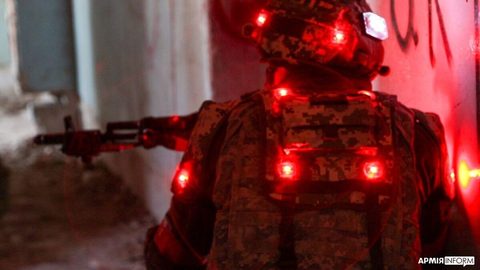 Laser tag for kids: ages, session length, supervision
How laser tag sessions in Singapore work for kids, covering real minimum ages, vest and phaser sizing, safety supervision, and birthday party logistics.
Laser tag for kids: ages, session length, supervision
How laser tag sessions in Singapore work for kids, covering real minimum ages, vest and phaser sizing, safety supervision, and birthday party logistics.
-
 Laser tag vs paintball vs airsoft: pain, cost drivers, age
Laser tag, paintball, and airsoft compared for Singapore groups on pain level, minimum age, cost structure, hit detection, and safety gear requirements.
Laser tag vs paintball vs airsoft: pain, cost drivers, age
Laser tag, paintball, and airsoft compared for Singapore groups on pain level, minimum age, cost structure, hit detection, and safety gear requirements.
-
 Outdoor laser tag vs indoor laser arenas
How outdoor laser tag and indoor laser arenas in Singapore differ on weather risk, terrain, scoring reliability, comfort, and group-size handling.
Outdoor laser tag vs indoor laser arenas
How outdoor laser tag and indoor laser arenas in Singapore differ on weather risk, terrain, scoring reliability, comfort, and group-size handling.
-
 Price drivers and hidden add-ons
What drives laser tag pricing in Singapore: headcount minimums, peak versus off-peak rates, private-session surcharges, party-room costs, and add-ons to budget for.
Price drivers and hidden add-ons
What drives laser tag pricing in Singapore: headcount minimums, peak versus off-peak rates, private-session surcharges, party-room costs, and add-ons to budget for.
-
 What to expect at your first laser tag session
Walk through your first laser tag session in Singapore from check-in to final scorecard, including the briefing, gear-up, arena environment, and how respawns work.
What to expect at your first laser tag session
Walk through your first laser tag session in Singapore from check-in to final scorecard, including the briefing, gear-up, arena environment, and how respawns work.
Read next
-
Group-size planning and team splitting
How laser tag group size affects wait times and active play in Singapore, with team-splitting strategies and the real maximum before the experience degrades.
-
What to expect at your first laser tag session
Walk through your first laser tag session in Singapore from check-in to final scorecard, including the briefing, gear-up, arena environment, and how respawns work.
-
How the equipment works (IR, hit zones, respawns)
How laser tag equipment functions in Singapore: infrared emitters, sensor-vest hit zones, respawn mechanics, and what to do when a vest malfunctions.
-
Outdoor laser tag vs indoor laser arenas
How outdoor laser tag and indoor laser arenas in Singapore differ on weather risk, terrain, scoring reliability, comfort, and group-size handling.
-
Price drivers and hidden add-ons
What drives laser tag pricing in Singapore: headcount minimums, peak versus off-peak rates, private-session surcharges, party-room costs, and add-ons to budget for.
-
Laser tag for corporate teams: structuring scenarios
How to structure a laser tag session for corporate groups in Singapore, including game modes that demand communication and how to handle large cohorts.