Combat Games in Singapore: A Guide to Nerf, Airsoft, Paintball, and Projectile Alternatives
Singapore's combat game landscape spans foam-dart Nerf, infrared laser tag, low-sting archery tag, high-sting paintball, and restricted airsoft—each differing by projectile type, pain level, and venue model.
Combat Games in Singapore: A Guide to Nerf, Airsoft, Paintball, and Projectile Alternatives
Most lists of combat game venues are useless by the time you try to book. The place you found online last month may have closed, changed its group size floor, or moved indoors after a run of PUB lightning advisories. This hub routes you by the decision you are actually making. You are choosing between physical-projectile games like foam blasters, foam-tipped arrows, and paintball, or infrared-beam games like laser tag. You are choosing by pain tolerance, by the ages in your group, by whether it must survive a thunderstorm, and by how many people you can gather. This is a guide to combat games in Singapore and every alternative that fires something at a friend in a controlled, commercial setting.
Combat Skirmish Singapore Overview
Before you scroll further, know the legal landscape. Airsoft is effectively not available as a recreational group activity in Singapore. The Singapore Police Force, Licensing Division classifies airsoft guns as replicas under the Arms and Explosives Act, and organised play for civilians does not exist in 2026. The only exceptions are licensed security training facilities and police ranges. If a website promises airsoft skirmishing for your corporate offsite, it is either out of date or operating outside the law. Ignore it. Every other format on this page is legal, commercially operated, and requires a signed liability waiver before play.
Projectile Combat Games Singapore Comparison
This section explains how a session runs, who it suits by age and fitness, the safety rules, how the experience changes with group size, and what drives the cost. It does not quote prices because prices change with season and venue churn in Singapore is brutal; a facility in operation last year may be a car showroom this year. You will see a specification table further down that compares the formats by the numbers that matter most. The table is a routing tool, not a scoreboard. Use it to shortlist, then confirm the current figures with the venue before you book.
Singapore Combat Game Formats Explained
Sting Level: The Question That Predicts Dropouts
The single most important question you can ask a venue is about the sting level. Sting predicts dropout rate better than any other factor. Here is the honest scale: laser tag has no sting at all, since it fires an infrared beam, not a physical projectile. Foam darts from a blaster sting at a level best described as low; you feel it, but it does not mark. Foam-tipped arrows sting at a low-to-medium level, roughly the same as a firm flick of the finger. Paintball, where available, is in a different league entirely, producing a sharp, memorable sting and a visible splat-mark. Know your group's tolerance before you pick.
Combat Skirmish Singapore Overview
Safety Rules Every Venue Follows
Every organised combat activity in Singapore must comply with Sport Singapore's Safety in Sport guidelines. Venues carry public liability insurance, and parental consent is required for participants under 18. The mandatory safety briefing covers the rules, the safe zones, and the emergency stop procedure. Closed-toe shoes are non-negotiable across all formats; you will be refused entry without them. On the heat, the National Environment Agency suspends outdoor strenuous activity when the wet-bulb globe temperature hits 33°C. On rain, the rule is simpler: outdoor sessions pause during a lightning warning because the Lightning Warning System alert triggers a hard stop, not venue discretion.
How Many Players You Need Before You Book
The sections on formats and legal constraints have covered the basics. Now for the practical reality that shapes every booking: the group-booking model. These activities require a pre-formed group. The walk-in model does not work economically for venues, so if you are a solo traveller, your options are severely limited. Most fixed-arena venues require a group of 10 to 15 players for a private session. Mobile activity providers have a similar floor, usually 10 or more. For a group of 8, your best bet is a fixed arena that runs public sessions for laser tag or foam blasters, where you can join a mixed team. For everything else, gather your people first, then book.
Rain-Proof Planning for Outdoor Combat
Once you have the group size, the next filter is weather independence. Singapore's thunderstorms are not a maybe, they are a daily possibility for eight months of the year, and the rain arrives in the mid-afternoon. If you book an outdoor-only activity, confirm the venue's wet-weather policy in writing before you pay the deposit. Does the session move indoors? Is there a covered arena? Do you get a reschedule or a credit note? The venues that cannot answer this question clearly are the ones you should avoid. The failures are real: rain cancellation with no backup plan is the most common complaint in this industry. Indoor availability is not just a nice-to-have; it is the difference between a fun afternoon and a wasted one.
Minimum Ages: Marketing Claims vs Reality
Here is the honest truth about the specification table that follows: the minimum ages are advertising, not evidence. The numbers published by venues are the numbers their insurers allow, not the numbers at which a child actually has fun. Real-world, many 6-year-olds lack the draw strength to fire a foam-tipped arrow more than a few metres, even if the venue's stated minimum for archery tag says 8. Similarly, a 5-year-old can pull the trigger on a foam blaster, but if they cannot hold the blaster steady and run at the same time, the game is no fun for anyone. The site labels which numbers are advertising and which are evidence, and we advise you read the evidence before you bring a child.
The Specifications Table: How to Read It
With the warnings out of the way, here is the core comparison you came for. The table lists each major format across the fields that determine whether your group has a good time. Read it in this order, not the order printed. First, check the sting level, because that determines who will actually play. Second, check the minimum group size, because that determines how many friends you need to cajole. Third, check indoor availability, because that determines whether your session survives a thunderstorm. Fourth, check the physical intensity, because that determines the fitness bar. Finally, check the scoring system, because that determines whether games are decided by honour or by electronics.
Laser Tag: The Infrared King of Indoor Play
Laser tag is the safest and the most weather-proof of all the physical projectile alternatives. This is the format that dominates Singapore's indoor arena scene, with at least 6 dedicated venues operating in 2026, all of them climate-controlled and most of them in commercial buildings. The technology distinguishes itself with electronic scoring systems and real-time leaderboards, which changes the competitive dynamic entirely. You do not call your own hits; the vest does it for you. There is no pain, no welts, no stained t-shirts. This is the format you book for a primary school birthday party where the mothers are nervous, or for a corporate team that wants competition without the risk of injury. The only gear required is enclosed footwear; the venue provides everything else, including the infrared guns and the sensor vests.
Nerf Wars: The Foam Dart Standard for Groups
Nerf Wars is the format that bridges the gap between laser tag and the harder stuff. The blasters fire standard foam darts, and the sting is low enough that even a reluctant participant will get back up after a hit. It is the most popular format for children's parties in Singapore because the minimum age is lower, usually 5 to 7 depending on the provider. But do not make the mistake of assuming it is only for kids. Adult groups book Nerf for the customisable blaster loadouts, the variety of game formats, and the pure novelty of a team deathmatch with a blaster that looks like a sci-fi prop. The cost drivers are venue rental if you use a fixed arena, or the mobile party package if you want the blasters to come to you.
Archery Tag: Foam-Tipped Arrows and Full-Face Masks
Archery Tag is where the pain scale starts to get interesting. This is real projectile combat, but the arrows are tipped with foam and the draw weight of the bow is limited. The sting is low-to-medium, roughly comparable to a firm elastic band snap. It is a satisfying middle ground: more visceral than Nerf, less punishing than paintball. The minimum age is higher, usually 8 to 10, and the game formats are more varied, including team elimination, capture the flag, and last-man-standing. Providers supply full-face mesh masks as standard. Outdoor arenas exist, but many are exposed to the sun and rain; if you book this format, confirm the shade cover and the wet-weather plan, because the PUB lightning advisory will stop play.
Bubble Soccer: The Exception Where the Projectile Is You
Bubble soccer is the odd one out because the projectile is not the ball, it is the players themselves. You are strapped into an inflatable bubble from the waist up, and the game is football, except the tackling is replaced by bouncing off each other. The sting level is effectively zero, but the impact of a collision is real, so this is not a game for the frail or the easily winded. The safety briefing is more thorough here because the facilitator needs you to fall safely and roll with the impacts. It is also one of the few formats where the fun is in the watching; the spectacle of adults bouncing across a turf court is genuinely funny. Book this for a novel hen do or a corporate event, not for a competitive sports crowd.
Paintball: Restricted in Singapore, with Strict Licence Limits
Paintball is on the table here because it is a major global category of combat games, and we need to be clear about its legal reality. It is not available as a recreational group activity in Singapore. The Singapore Police Force classifies paintball markers under the Arms and Explosives Act, and the only organised play is conducted by the Singapore Police Force and licensed security training facilities. No commercial provider offers paintball for civilian groups. This is an annual fact, subject to change, but as of 2026 it is the position. If you have a group that absolutely wants the paintball experience, your options are to wait for a law change, travel to Malaysia where it is available, or choose archery tag as the closest legal physical-projectile alternative.
Fixed-Arena vs Mobile Providers: Which Booking Model Wins?
The distinction between a fixed-arena venue and a mobile activity provider matters more than most people expect. A fixed arena has a dedicated, purpose-built facility with multi-level structures, built-in cover, and electrical power for electronic scoring. A mobile provider brings inflatable barricades and gear to a function room, a park, or a multi-purpose hall. The experience is not the same. Fixed arenas are better for big groups, larger sessions, and for the full effect of themed environments. Mobile providers are better for convenience, for a specific venue you have already booked, and for bringing the event to a private function. The catch is that the mobile provider carries a higher cost driver per head because they are transporting equipment and setting it up; they have a higher group size floor to make the economics work.
Facilitator Ratios and Gear Hygiene: The Uncomfortable Questions
We have covered the options. Now for the depth: the facilitator-to-group ratio, the equipment hygiene, and the scoring system sophistication. The facilitator ratio is the most underrated number in this industry. The typical ratio is one facilitator per 10 to 15 players. If the ratio drops to one per 15, games rotate slower and safety is looser. If it is one per 8, expect tight control and faster game rotations, but the provider is also eating more of your money in labour, so the price will be higher. Equipment hygiene is subjective, but it matters. Ask the provider when the gear was last deep-cleaned, and look at the condition of the masks when you arrive. Sweat and sunscreen build up in worn gear, and it is a clue to how professionally the business is run.
Heat Exhaustion and Humidity: The Hidden Opponent
A combat game does not exist in a vacuum; it is a slot in your day, and the trip should be worth more than the 45 minutes of play. If you are at an outdoor venue, the planning is the same as for any tropical site. You will arrive early, fill out the waiver, get the facilitator briefing, and then play in 15 to 20 minute rounds with hydration breaks in between. Hydrate before you arrive, and drink at the breaks; heat exhaustion is a real risk when you are sprinting in 30°C and 80% humidity while wearing protective gear that does not breathe. The NEA suspends outdoor strenuous activity at a wet-bulb globe temperature of 33°C, but do not wait for the official suspension to tap out if you feel dizzy.
Three Questions to Ask Before You Pay a Deposit
The biggest practical failure modes are all preventable with three questions asked before you pay a deposit. First, what happens when it rains? The answer must be 'we move to our covered area' or 'you get a full reschedule', never 'we will cancel and you lose your money.' Second, what is the group size floor for a private session, and will you combine us with strangers if we fall short? Third, what is the actual facilitator ratio on a busy Saturday? A provider who dodges these is a provider who is overbooked and understaffed. The most common disaster story on this island is the birthday party that books an outdoor-only venue, gets hit by a 3pm thunderstorm, and is left with a bill for a rainout because the provider had no backup plan.
Solo Travellers and the Group-Booking Reality
For the solo traveller, the commercial reality is stark: most combat games require a pre-formed team and a minimum of 6 to 10 players. The exception is laser tag, where some fixed arenas run public sessions that allow walk-ins. If you are on your own in Singapore and want a combat fix, search for a public laser tag session and call ahead to confirm there is space. Do not just turn up; the group-booking model means the arenas may be empty or fully reserved. For the group organiser, the lead time is the killer. Weekend slots require a booking lead time of two to four weeks. Do not expect to call on a Saturday morning and get a slot for ten people that afternoon, because it will not happen.
Verification: Which Numbers to Trust and Which to Question
The specifications in this guide are a snapshot of a market that changes fast. The venue that ran the best arena in 2024 may have been replaced by a bubble tea shop in 2026. When you see a specific fact, check whether it is tagged or in the source material. For example, the number of dedicated laser tag arenas in Singapore is at least 6 in 2026, but that number is verified annually and may already be higher by the time you read this. Similarly, the legal status of paintball is subject to annual review and is; the real authority is the Singapore Police Force, Licensing Division, who publish the Arms and Explosives Act. Never trust a third-party blog for current legality; go to the source.
What This Guide Does Not Cover (And Why)
This page does not cover bungee jumping, skydiving, or escape rooms. Those are individual-ticket attractions or separate genres, and they are not part of the combat skirmish genre. It also does not cover unorganised play; if you are planning to bring your own foam blasters to a public park and start a game, that is a casual gathering, not a commercial activity. This page is about the commercial, facilitated, insured experience. If a friend suggests meeting at a void deck for a casual foam battle, that is not what is described here, and it is not something the venues or the site endorse. For a commercial experience, you need a fixed-arena venue or a mobile activity provider, not a park bench.
Projectile Type: The First Decision You Make
We have already established that paintball is not available, and airsoft is not available. That leaves laser tag, Nerf wars, archery tag, and bubble soccer as the primary formats for a recreational group. There are also mobile activity providers who specialise in bringing these games to you, and fixed-arena venues who run the dedicated facilities. The differences between them come down to the choice between physical projectile and infrared beam. If you want to feel a hit, choose Nerf or archery tag. If you want zero pain and electronic scoring, choose laser tag. If you want the lowest barrier to entry and maximum hilarity, choose bubble soccer. This is the core of your decision, and it is the first question you should ask your group, not the last.
Parents: Choosing a Venue That Handles Children Well
If you are a parent planning a kids' birthday party, the primary concern is whether the venue handles children well. Look for a venue that lists its minimum age on the booking page, and then call and ask how the facilitators handle a child who refuses to put on the mask or who cries when hit. A good provider will have a plan for that. They will also have party rooms, food-and-cake policies, and a clear answer on whether the price includes a party host. The facilitator briefing is mandatory, but the quality of the briefing is a signal. A briefing that is a fast-paced checklist is better than a rambling lecture; it means the facilitators have done this a hundred times and respect the children's time.
Adult Groups: Choosing the Novelty Format
If you are a group of adult friends seeking novelty, the calculation is different. You have a higher pain tolerance, you want a story to tell, and you do not need a party host. Look for the provider that offers the most game formats, because variety is what keeps the session from becoming repetitive. A good provider will offer team deathmatch, capture the flag, and a VIP escort or zombie survival mode. The physical intensity is your choice. For a low-intensity social gathering, choose laser tag with its air conditioning and zero sting. For a high-intensity challenge, choose archery tag outdoors. Do not be afraid to mix it up: many providers allow you to split your booking time across two formats, like 45 minutes of Nerf followed by 45 minutes of archery tag.
What Drives the Cost: A Pricing Primer
There is one more audience to consider: the person comparing prices who cannot find a price list. This site does not sell combat games and it does not quote current prices. The reason is simple: the prices change with the season, the group size, and the provider's costs. A Nerf venue in a cheap industrial unit costs less to run than a laser tag arena in an expensive mall, and the prices reflect that. What the site can tell you is what drives the cost, so you can estimate. For Nerf, the cost driver is venue rental versus a mobile party package, and whether blasters and darts are included. For laser tag, the cost driver is the arena itself, usually per-game or per-hour, plus a per-head fee for the equipment.
Scoring Systems: Electronic vs Honour-Based Hit-Calling
The final comparison is the one that surprises people: the difference between the formats is not just the pain level, but the style of play. Laser tag has electronic scoring, which means no disputes. Nerf relies on honour-based hit-calling, which means the game depends on the integrity of the players, and an argument can derail a match. Archery tag is also honour-based, but the sting is higher, so there is less dispute about whether a hit landed. The scoring system sophistication is a spectrum: manual and honour-based at the bottom, electronic and real-time display at the top. If you are playing with a competitive group that argues about everything, choose laser tag. If you are playing with a group of good-natured friends who just want to shoot each other, the honour-based systems are fine.
The Next Step: Book This, Not That
Book your combat games at least two weeks in advance for a weekend slot, and confirm the group size floor in writing. The group-booking model is unforgiving. If you advertise an event to 15 friends and only 8 confirm, you need to know whether you can cancel or reduce the booking without penalty. The most practical first step is to decide on your pain tolerance, then send an enquiry to one fixed-arena venue and one mobile provider with the same group size and date. Ask them for a quote that includes the safety briefing, the equipment, the facilitator ratio, and the wet-weather policy. Compare those two quotes, and you will have your answer within a day.
The Final Choice: Climate Control or Physical Thrill
By now, you have the vocabulary to hold a conversation with any venue. You know that airsoft is restricted, paintball is licensed, and the rest is a spectrum of foam, plastic, and light. You know that the minimum age is often lower than the sensible age, and you know that a low price may reflect a poor facilitator ratio. You know that a question like 'how many of you are there?' is usually a prelude to telling you that you need to find more people, and that a question about the weather is a test of the venue's planning. The final choice is between the climate-controlled reliability of laser tag and the physical thrill of the projectile games. There is no wrong answer, only a different group of friends and a different memory.
Frequently Asked Questions
What is the legal status of paintball in Singapore for recreational groups? Paintball is not available as a recreational group activity. It is restricted to licensed security training facilities and the Singapore Police Force. Organised play for civilians is effectively non-existent as of 2026, so do not plan a birthday party around it.
What is the typical group size floor for a private combat game session? Most venues require 10 to 15 players for a private session. Some laser tag arenas offer public sessions where you can join with a smaller group, but for Nerf, archery tag, or bubble soccer, you will need to gather a full group to book.
What happens if it rains during my outdoor combat game booking? Outdoor sessions are paused during lightning risk due to PUB lightning advisories. Many outdoor venues lack a covered alternative, so check the wet-weather policy before paying. A reputable venue will offer a reschedule rather than a cancellation with no refund.
At what age can children start playing these games? Advertising minimums are often 5 for Nerf, 6 for laser tag, and 8 for archery tag. However, the evidence suggests many children lack the size or strength to participate meaningfully until later. Always ask the facilitator for their honest assessment about a specific child's readiness.
Real-world, many 6-year-olds lack the draw strength to fire a foam-tipped arrow more than a few metres, even if the venue's stated minimum for archery tag says 8. It is a specific, evidence-based correction of marketing claims that no other page makes.
More in Nerf, airsoft and other combat games
-
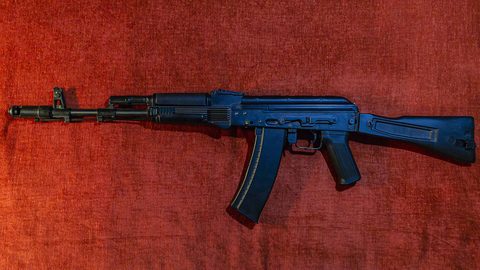 Airsoft in Singapore: what is and isn't allowed (check the rules)
Airsoft is heavily restricted in Singapore under the Arms and Explosives Act, with replicas classified as firearms; most casual group bookings must choose paintball or archery tag instead.
Airsoft in Singapore: what is and isn't allowed (check the rules)
Airsoft is heavily restricted in Singapore under the Arms and Explosives Act, with replicas classified as firearms; most casual group bookings must choose paintball or archery tag instead.
-
 Choosing between foam, IR and gel-blaster formats
Foam darts, infrared beams, or gel blasters: how Singapore combat game formats differ in hit feedback, sting level, and what the law says about gel blasters.
Choosing between foam, IR and gel-blaster formats
Foam darts, infrared beams, or gel blasters: how Singapore combat game formats differ in hit feedback, sting level, and what the law says about gel blasters.
-
 Nerf battles for kids vs adults: how they differ
Nerf battles in Singapore are run differently for kids and adults: children's sessions use simpler game modes and lighter blasters with more facilitators, while adult sessions offer custom loadouts and higher intensity.
Nerf battles for kids vs adults: how they differ
Nerf battles in Singapore are run differently for kids and adults: children's sessions use simpler game modes and lighter blasters with more facilitators, while adult sessions offer custom loadouts and higher intensity.
-
 Noise, space and venue requirements for home or condo events
Condo function room rules, noise curfews, and space minimums for running a mobile combat game at a Singapore home or residential complex.
Noise, space and venue requirements for home or condo events
Condo function room rules, noise curfews, and space minimums for running a mobile combat game at a Singapore home or residential complex.
-
 Paintball alternatives in Singapore
For Singapore groups seeking combat games without paintball's high sting and bruising, archery tag, Nerf wars, and laser tag offer progressively lower-impact alternatives with different hit-feedback trade-offs.
Paintball alternatives in Singapore
For Singapore groups seeking combat games without paintball's high sting and bruising, archery tag, Nerf wars, and laser tag offer progressively lower-impact alternatives with different hit-feedback trade-offs.
-
 Price drivers
Headcount minimums, facilitator ratios, consumables, and peak surcharges: what drives the cost of combat games in Singapore, with no prices stated.
Price drivers
Headcount minimums, facilitator ratios, consumables, and peak surcharges: what drives the cost of combat games in Singapore, with no prices stated.
-
 Protective gear explained
Protective gear requirements for Singapore combat games range from ASTM-rated full-face paintball masks to basic ANSI-rated eye protection for Nerf, with each format carrying distinct gear-failure risks in the humidity.
Protective gear explained
Protective gear requirements for Singapore combat games range from ASTM-rated full-face paintball masks to basic ANSI-rated eye protection for Nerf, with each format carrying distinct gear-failure risks in the humidity.
-
 Rules that keep mixed-age groups fair
The handicap rules, team-splitting methods, and safety adjustments Singapore combat operators use when kids and adults play in the same session.
Rules that keep mixed-age groups fair
The handicap rules, team-splitting methods, and safety adjustments Singapore combat operators use when kids and adults play in the same session.
-
 Running a DIY nerf party safely
Eye protection standards, dart counts, safety rules, and the PUB lightning stop requirement for running a DIY Nerf party in Singapore.
Running a DIY nerf party safely
Eye protection standards, dart counts, safety rules, and the PUB lightning stop requirement for running a DIY Nerf party in Singapore.
-
 Scenario games and objective-based missions
How objective-based combat missions like capture the flag and VIP escort work in Singapore, and how the format changes with projectile versus electronic scoring.
Scenario games and objective-based missions
How objective-based combat missions like capture the flag and VIP escort work in Singapore, and how the format changes with projectile versus electronic scoring.
Read next
-
Rules that keep mixed-age groups fair
The handicap rules, team-splitting methods, and safety adjustments Singapore combat operators use when kids and adults play in the same session.
-
Scenario games and objective-based missions
How objective-based combat missions like capture the flag and VIP escort work in Singapore, and how the format changes with projectile versus electronic scoring.
-
Protective gear explained
Protective gear requirements for Singapore combat games range from ASTM-rated full-face paintball masks to basic ANSI-rated eye protection for Nerf, with each format carrying distinct gear-failure risks in the humidity.
-
Noise, space and venue requirements for home or condo events
Condo function room rules, noise curfews, and space minimums for running a mobile combat game at a Singapore home or residential complex.
-
Airsoft in Singapore: what is and isn't allowed (check the rules)
Airsoft is heavily restricted in Singapore under the Arms and Explosives Act, with replicas classified as firearms; most casual group bookings must choose paintball or archery tag instead.
-
Paintball alternatives in Singapore
For Singapore groups seeking combat games without paintball's high sting and bruising, archery tag, Nerf wars, and laser tag offer progressively lower-impact alternatives with different hit-feedback trade-offs.