Airsoft in Singapore: What the Law Allows and What Is Prohibited
Airsoft is heavily restricted in Singapore under the Arms and Explosives Act, with replicas classified as firearms; most casual group bookings must choose paintball or archery tag instead.
Airsoft in Singapore: What the Law Allows and What Is Prohibited
Visitors and new residents assume that because airsoft is legal in Malaysia and Thailand, it is legal here. It is not. The Arms and Explosives Act sets the rules, and the short version is this: airsoft replicas are classified as firearms, private ownership is prohibited, and there is no legal venue for walk-in recreational play on this island. Show up with a rented or borrowed airsoft gun and you break the law. Try to buy one online and have it shipped here, customs stops it. The one thing that is legal is possession by licensed arms dealers and approved organisations, and even then, it is for import, export, and re-export, not for shooting at each other for fun. This guide explains what the law says, what the penalties are, and what your legal alternatives are for a projectile combat game in Singapore.
The Legal Status of Airsoft in Singapore
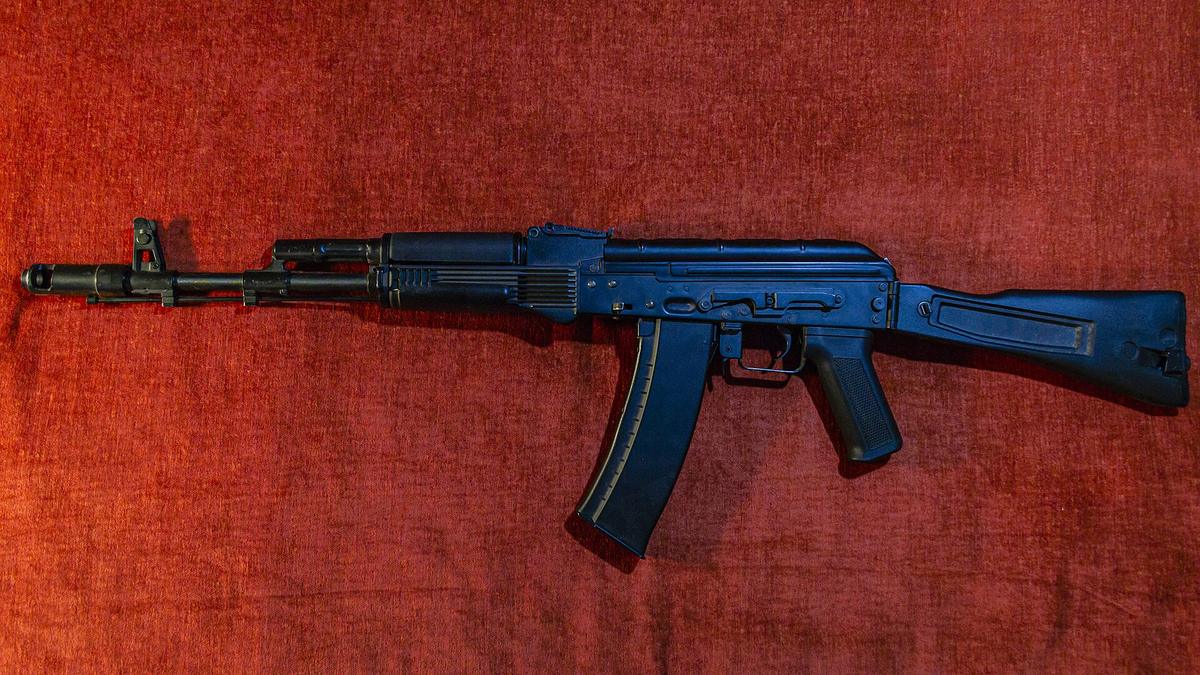
Airsoft guns fire 6mm plastic BB projectiles. Under the Arms and Explosives Act (Chapter 13), they are firearms. The Singapore Police Force Licensing Division regulates them. The Act defines arms to include any weapon from which a projectile can be discharged via compressed gas, spring, or explosive charge. An airsoft gun uses compressed gas or a spring. That is the legal definition of a firearm. It does not matter that the projectile is plastic. The law does not distinguish between a live round and a plastic BB. The penalty for unlawful possession of arms under Section 13 is imprisonment of up to 5 years and a fine of up to SGD 10,000. Importing or exporting arms without a permit carries the same penalty.
If you are moving to Singapore and want to bring your airsoft collection, do not. There is no permit for personal use. The only import permits issued go to licensed dealers, and the guns must be re-exported or destroyed. The nearest jurisdictions where recreational airsoft is legal are Malaysia, Thailand, and Taiwan. If airsoft is your sport, Singapore is not the place to live.
Airsoft vs Paintball Legality in Singapore
If you want a projectile combat game that is actually playable in Singapore, paintball is the legal alternative. Paintball markers are also classified as arms under the Arms and Explosives Act, but the difference is that paintball markers are permitted at licensed fixed-arena venues.
Licensed Paintball Venues
Two known licensed paintball venues operate in Singapore: Red Dynasty Paintball Park and Crossfire Paintball. Both are outdoor facilities. As of the last check, there are no indoor paintball venues in Singapore. Check with the operator for current status.
How Paintball Markers Differ
Paintball markers fire gelatin capsules filled with water-soluble dye, not plastic BBs. That is the fundamental distinction. Gelatin capsules are designed to break on impact and mark the target. They are also subject to a velocity limit: Singapore venues chronograph markers at 280 to 300 feet per second.
Safety Gear and Age Rules
The safety gear requirement is strict and mandatory: a full-face mask with an ASTM-certified lens, a neck guard, gloves, and at venues where required, a chest protector for female players. The minimum age for the game is 14 at Red Dynasty and 15 at Crossfire. If you are a parent planning a kids' birthday party and your child is under 14, paintball is not an option. Verify age rules with the operator before booking.
- Airsoft legal status: Prohibited for private ownership and recreational use
- Governing legislation: Arms and Explosives Act 1913 (Chapter 13)
- Regulatory authority: Singapore Police Force, Licensing Division
- Devices classified as firearms: Any device that expels a projectile via compressed gas, spring, or explosive charge, including airsoft guns
- Penalty for unlawful possession: Imprisonment up to 5 years and/or fine up to SGD 10,000 (Arms and Explosives Act, Section 13)
- Penalty for unlawful import/export: Imprisonment up to 3 years and/or fine up to SGD 10,000 (Arms and Explosives Act, Section 13)
- Airsoft guns under Singapore Customs: Controlled goods requiring import permit from SPF
- Paintball legal status: Permitted at licensed venues only
- Licensed paintball venues: Red Dynasty Paintball Park, Crossfire Paintball (verify with operator for current status)
- Paintball marker velocity limit: 280-300 fps chronographed
- Paintball minimum age: 14 years (Red Dynasty), 15 years (Crossfire) [verify with operator]
Airsoft Legal Status Singapore and What the Police Say
The Singapore Police Force website states clearly that airsoft guns are considered firearms under the law. There is no ambiguity. No grey area. The SPF does not grant exemptions to individuals for sport or competition. The only approvals go to licensed arms dealers and approved organisations that need to import airsoft guns for commercial purposes, such as manufacturing or re-export. There is no such thing as a private airsoft collection in Singapore. Even a single replica in your home is unlawful possession. If you are caught, the police seize the gun, you are arrested, and you face charges in court. The sentence is not a fine and a warning. It is a term of imprisonment.
If you are a competitive airsoft player considering a move to Singapore for work, factor this into your decision. You will not be playing here. The nearest field is across the causeway in Johor Bahru, Malaysia, but crossing the border with an airsoft gun is itself an arms smuggling offence unless you have a permit from both sides.
Airsoft Gun FPS Limit Singapore and Why It Does Not Matter
People ask about the airsoft gun FPS limit in Singapore. The question assumes there is a legal FPS limit above which an airsoft gun is considered dangerous and below which it is legal. There is no such limit here because airsoft guns are not legal at all. The FPS limit matters only in jurisdictions where airsoft is legal. In Singapore, the muzzle energy measured in joules is irrelevant because the classification of the gun as a firearm does not depend on its power. A spring-powered replica that shoots at a low velocity is still an arm under the Act.
The 280 to 300 fps figure you might see mentioned in Singapore is a paintball marker limit. It is a venue rule, not a law. The actual law is the Arms and Explosives Act, and it does not care about velocity or joulage. It cares about what the device is and whether you have a licence for it. If you came here looking for the FPS limit, the question is moot. The limit is zero.
Airsoft Licensing Requirement Singapore: Who Can Get a Licence
You need a licence to possess, import, or export an airsoft gun. That licence is only issued to arms dealers and approved organisations. It is not issued to individuals. The Singapore Police Force Licensing Division processes the applications. To qualify, a dealer must demonstrate a legitimate commercial need, have secure storage, and pass a background check. The licence is for the business of dealing in arms, not for personal enjoyment. There is no licence that allows a private individual to own an airsoft gun for target shooting, collecting, or recreational skirmishing.
If you are a collector of replica firearms, including props for film or theatre, you need an exemption, and exemptions are granted narrowly. The result is that Singapore has a very small community of licensed arms dealers who handle these items for commercial purposes, and they are tightly regulated. If you want to experience what it feels like to be licensed to hold an airsoft gun in Singapore, the answer is that you cannot. The licence is for the business, not for the person.
What Is Allowed: The Legal Projectile Combat Options
Since airsoft is closed off, the legal projectile combat games in Singapore are paintball, archery tag, and Nerf wars. Paintball is the most intense of the three, with the highest sting and visible splat-marking. Archery tag uses foam-tipped arrows and a full-face mask is mandatory. Nerf wars are unrestricted, require only eye protection, and are suitable for children as young as 4. If you are looking for a combat game that feels like airsoft, archery tag is the closest in terms of tactics, because it involves shooting at opponents with a projectile that has an arc. Paintball is closer to the sting of getting hit, but the markers are less accurate. Nerf is the least like airsoft because the darts are large and visible in flight. All three are legal. None of them require a police licence. All of them are offered by fixed-arena operators and mobile companies. If you are an airsoft player looking for a Singapore alternative, your first stop should be archery tag, and your second should be paintball.
Paintball Markers, CO2 Propellant, and Safety Gear Requirements
Paintball markers in Singapore run on CO2 propellant or compressed air. The marker itself is a regulated arm, but the regulation is enforced at the venue level. You cannot buy a paintball marker in Singapore without going through a licensed fixed-arena venue. The venues keep their markers on site, and you use them as part of a booking. You cannot take a marker home.
Safety Gear and Chronograph Rules
The safety gear requirement is strict: full-face mask with ASTM-certified lens, chest protector, neck guard, and gloves. The mask is non-negotiable. Remove it on the field and you are removed from the game. The velocity is chronographed at the start of every booking, and the limit is 280 to 300 fps.
What Drives the Cost
The cost drivers are the number of paintballs you consume, the group size, the day of the week, and the duration. When your initial paintballs run out, you buy more. It is not a cheap sport, and the price per paintball adds up quickly if you are not a good shot. The minimum age is 14 at Red Dynasty and 15 at Crossfire. Check the age requirement before you book a kids' party.
Archery Tag Indoor and Outdoor Options in Singapore
Archery tag is permitted without any firearms licensing requirement. The minimum age is 8 to 10 depending on the operator, and the safety gear required is a full-face mask, which is mandatory, and an arm guard, which is recommended. The bows are simple bows with a draw weight of around 30 pounds. No compound bows with high draw weight. The arrows have foam tips.
You can play archery tag indoors and outdoors in Singapore. Indoor venues are air-conditioned, which matters in this humidity. Outdoor venues are open-air and subject to weather disruption. Book an outdoor session during monsoon season and rain may force the operator to cancel with no backup plan. Always confirm the wet-weather policy before you book. Archery tag is the fastest-growing combat sport in Singapore, and it is the best alternative to airsoft for adults who want a tactical shooting game without the legal baggage. The sting of a foam arrow is minimal, so the game is about skill and teamwork, not pain tolerance.
Nerf Wars and Bubble Soccer: The Low-Barrier Options
For the least restrictive combat game, Nerf wars are the answer. There is no licence, no minimum age beyond 4 to 6 years depending on operator, and no safety gear beyond mandatory eye protection. Nerf wars are available indoors and outdoors. The foam darts are visible and soft, so the game is accessible to young children. The downside is that Nerf is not a serious tactical experience. It is a party game.
Bubble soccer, where players are zipped into inflatable bubbles, is in a different category but is often grouped with combat games. It is unrestricted, has a minimum age of 7 to 10 depending on operator, and is available indoors and outdoors. The appeal of bubble soccer is full-body collisions, not ball skill. If you are planning a kids' birthday party, Nerf wars and bubble soccer are the safest options because the age floor is low and the safety gear requirement is minimal. You need a dedicated air-conditioned space with tables for food and cake, and not every venue has one. Check party room availability before you commit.
What Goes Wrong: Heat Exhaustion, Rain, and Dart Loss
The most common failure in Singapore's outdoor combat games is heat exhaustion. You are playing in 30°C plus heat and 80% plus humidity, and you are wearing protective gear. The combination is brutal. The failure case is that a player, usually an adult, collapses from dehydration and the game stops. The fix is to hydrate before you arrive, take regular water breaks, and book a morning slot instead of an afternoon one.
The second failure is rain cancellation. Outdoor-only activities are at risk during the monsoon season, which runs from November to January. Book an outdoor paintball session and a downpour means the venue cancels. If there is no indoor backup, you lose your slot. Always confirm the wet-weather policy before you book, and ask what the backup plan is.
The third failure is specific to Nerf wars: dart loss. Some operators provide a fixed dart count with no on-field replenishment, and when the darts run out, the game stalls. A player who cannot shoot breaks the competitive integrity of the game. Ask what happens when darts are lost before you book.
Comparing the Options: What Each Game Costs and Who It Is For
If you are weighing your options, here is a direct comparison. Laser tag is the cheapest and easiest, with no projectiles, no safety gear beyond a briefing, and a minimum age of 5 to 7 depending on operator. It is unrestricted and available indoors. The cost drivers are venue versus mobile, player count, session length, and peak versus off-peak times.
Archery tag is more expensive than laser tag, but it is more tactical. The cost is driven by the number of arrows, the duration, and the venue. Paintball is the most expensive of the three because of the cost of paintballs. A single booking for a group of 10 can easily run high per person when you factor in paintballs, rental, and safety gear. Bubble soccer is a one-off cost per head, with no consumables, and is the best value for large groups.
For an adult group, archery tag is the sweet spot. For a kids' party, Nerf wars or bubble soccer are the most age-appropriate. For a corporate team-building event, laser tag is the safest and most accessible.
Booking Lead Time, Customisation, and What to Ask Before You Book
Whatever game you choose, booking lead time matters. Last-minute weekend slots are rare for popular fixed-arena venues. A typical booking requires 2 to 3 days of lead time, and weekends book out a week in advance.
Customisation is also a factor. Fixed-package deals are the default, moderate customisation lets you adjust the duration and number of players, and bespoke packages are available for team sizes and objectives. If you are planning a corporate event, ask the operator what the customisation options are. If you are planning a kids' party, ask about the party room, the food policy, and whether the facilitator is trained to handle children. The quality of the facilitator is the single biggest variable in the experience. A good facilitator runs the safety briefing, referees the game, and manages the pace. A bad one stands at the side and watches the clock. Ask for references or read recent reviews on the operator's social media page.
The Legal Trap: Importing Airsoft Equipment into Singapore
If you are moving to Singapore and you own an airsoft gun, the worst thing you can do is pack it in your luggage or ship it ahead. Singapore Customs classifies these replicas as controlled goods, and they will be seized at the border. The import permit requirement is absolute, and the only permits are issued to licensed arms dealers. You will not get one as a private individual. The penalty for unlawful import is imprisonment of up to 3 years and a fine of up to SGD 10,000. That is a criminal record and a prison sentence for what you might have considered a toy.
The same applies to any part of an airsoft gun, including magazines, barrels, and internal gearboxes. If the part can be used to assemble a gun, it is controlled. If you are moving to Singapore and you have any doubt about whether a replica firearm is legal, leave it behind. The cost of replacing it is less than the cost of a criminal conviction.
Nearest Airsoft Destinations: Where to Go for a Legit Game
If you are an airsoft player visiting Singapore and you want a real game, the nearest legal fields are in Malaysia. Johor Bahru is a 1-hour drive from Singapore, and several fields operate in the area. Cross the causeway at Woodlands, or take the Second Link from Tuas. Once you are in Malaysia, the sport is legal, and fields cater to foreigners. The cost is a fraction of paintball in Singapore. The downside is that you cannot bring a replica with you across the border, so you must rent on site. Some Malaysian fields allow you to rent a gun and buy plastic BBs on site. The minimum age in Malaysia is 18, and you will need to show your passport. It is a day trip, and it is the only way to play if you are based in Singapore. Plan for the border crossing to take up to 2 hours on a weekend, and check the field's schedule before you go.
The Honest Caveat: Rules Change, and You Should Not Trust a Blog for a Legal Opinion
The legal status of airsoft in Singapore is settled, but the details of the licensing regime can change. The Arms and Explosives Act was last revised in 2006, and the Singapore Police Force updates its operational guidelines from time to time. If you are reading this in 2026 or later, the specific penalties may have changed, and new regulations may have been introduced. The Singapore Statutes Online database is the authoritative source for the law, and the SPF website is the authoritative source for licensing. Do not rely on a review site for legal advice. If you are planning to import an airsoft gun, or if you are considering a paintball venue that you are not sure is licensed, contact the Singapore Police Force Licensing Division directly. And if you are a parent planning a kids' party, the minimum age and safety requirements vary by operator, so verify with the operator before you book.