Escape Rooms and Puzzle Games in Singapore
How Singapore escape rooms work for groups, what the real room capacity means for your team size, and how to choose by what you are trying to do.
The game master’s voice crackles through the in-room speaker: “You have forty-five minutes.” The lock clicks behind you, and the timer on the wall starts its red blink. That is the moment every escape room in Singapore builds toward. It is the reason your group is here, not because you all love puzzles, but because you need a structured, air-conditioned, rain-proof way to spend ninety minutes together. This hub routes you by what you are trying to do: understand the format, plan for a specific group type, or compare escape room group planning to laser tag, bubble soccer, archery tag, and heritage sites. Every section below explains how an outing runs, who it suits by age and fitness, the safety rules, how the experience changes with group size, and what drives the cost.
Singapore’s group-activity landscape splits sharply. On one side are the high-energy combat games, laser tag, archery tag, bubble soccer, where you sweat, run, and get competitive. On the other are the facilitated problem-solving formats: escape rooms and corporate team building. Parallel to both runs a heritage track covering WWII sites like the former Ford Factory and Labrador Park. Newcomers most often get wrong the assumption that any group can walk in without a booking, and that outdoor activities run year-round without weather disruption. Neither is true. Escape rooms require a reservation with a confirmed headcount, and every outdoor venue has a wet-weather policy you must ask about before you pay a deposit.
.jpg)
This catalogue is organised by what you are planning, not by what sounds fun in a brochure. The sections that follow answer the questions planners actually type into a search bar: how to pick a room for a team, what to book for a kid’s birthday, and how to choose an escape room when you have never done one. Each section names the claimed number and the real number, because they are rarely the same. The site labels which figures are advertising and which are evidence, and it tells you who publishes the verified version. If a number here is not labelled, treat it as the operator’s claim, not a fact.
How to Read the Specification Table
The table below lists the fields that decide whether a venue works for your group, in the order they matter, not the order a booking page prints them. First comes minimum age, because it filters out most of your party before you get excited. Then game duration, because a 45-minute room and a 75-minute room are different commitments even if both are called escape rooms. Then indoor availability, because in Singapore’s humidity a rain-proof plan is not a luxury. Then weather dependency, because a venue that says “indoor-only” and one that says “sheltered-outdoor” are not the same when the monsoon hits. Then group size lower and upper limits, because the gap between a room that holds 8 and a claim that it holds 10 is where the rotation logic lives. Then customisation, air-conditioning, scoring system sophistication, and food-and-party-space. Read down that order when you compare two venues side by side.
| Minimum age | Filters out the youngest players before you book | Whether the stated age is enforced or a suggestion |
| Game duration | Total time from briefing to debrief, not just the timer | If the room is 60 minutes, the whole outing is 90 |
| Indoor availability | Rain-proof planning for Singapore’s weather | Whether the entire outing is under a roof |
| Weather dependency | Exposed sites need a backup plan | Ask what happens if it rains mid-game |
| Group size lower and upper limits | The real capacity versus the advertised capacity | If the room holds 8, does the operator claim 10 via rotation? |
| Customisation | Bespoke tailoring versus fixed packages | Can the operator adjust for team size and objectives? |
| Air-conditioning | Comfort in 30°C heat | Is it fully air-conditioned or just shaded? |
| Scoring system sophistication | Manual honour calls versus electronic tracking | Does the score update in real time? |
| Food-and-party-space | Birthday party viability | Is there a dedicated room for cake and goodie bags? |
Puzzle Room Singapore Team: How an Outing Actually Runs
Before the Game Begins
When you book a puzzle room team outing, you are not just buying time inside a locked room. You are paying for the full arc: a safety briefing, the gameplay itself, and a debrief. The briefing covers the fire exit location, the emergency abort button or safe word, and the rule that no force on props is allowed. The locked-door illusion is theatrical only; the game master can release the door instantly from the control room. CCTV monitoring runs live throughout, and the game master will step in if someone looks distressed. If you try to brute force a puzzle by yanking a bookshelf, you will break the room, stop the game, and face damage charges.
Inside the Room
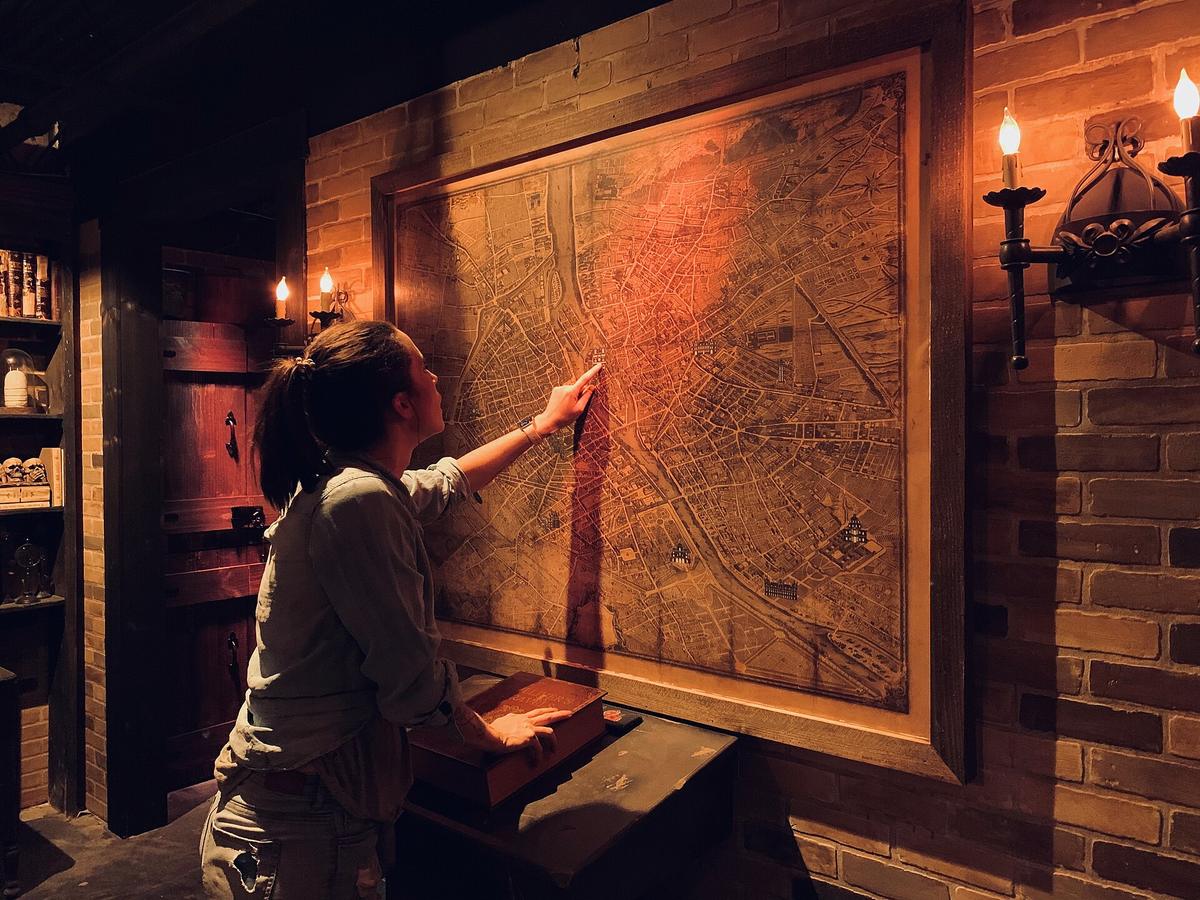
The typical format is 2 to 8 players locked in a themed room with a 45-to-75-minute timer. The breakout narrative is the genre’s defining feature: you are not just collecting clues; you are escaping a haunted asylum, a heist, or a spaceship. The puzzle types range from mechanical locks and electronic sensors to magnetic triggers, hidden compartments, UV light clues, audio cues, and video narrative segments. Some rooms are multi-room sequential unlocking experiences, where solving one chamber opens the next, with 3 to 5 interconnected chambers in total. The room capacity is strict, and the game master will not bend it for safety and fire code reasons. The hint system, an in-room screen, a walkie-talkie, or an actor-intermediary, is your only lifeline when the timer gets aggressive.
Escape Room Corporate Team Building Singapore: What Facilitators Do
For an escape room corporate team building event, the room is only half the product. The other half is the facilitated debrief. A good provider does not just lock your team in a room and watch; they split a large group across multiple identical or different rooms for timed competition, then bring everyone back for a conversation about who led, who listened, and who got stuck. The point is not the puzzles; it is surfacing leadership dynamics and communication breakdowns. Corporate add-ons include meeting room rental, catering packages, and a trained facilitator who extracts workplace lessons from the outing. If the provider offers no debrief, you are paying for a fun hour, not team building, and you should know the difference before you book.
The claimed-vs-real gap shows up hard here. An operator might advertise “group size up to 50” for an escape room. The room itself holds 6 to 10. The claim refers to rotating groups through multiple rooms, meaning half the party is waiting in a lobby while the other half plays. The gap is caused by aggregating room capacity without stating the rotation logic. If your team is 15 people and the venue has two rooms that each hold 6, you have 3 people idle at any moment. Do the math before you book. Ask exactly how many rooms you are getting and how many players are active at once. An outing of 60 minutes with 30 minutes of waiting per person is a bad deal.
Escape Room Birthday Party Singapore: Age Limits and Party Rooms
Age Rules and Room Suitability
Planning an escape room birthday party event for kids aged 7 to 16 means checking two things before anything else: the lower age limit and the party room. The common threshold is 7 years old for standard rooms, driven by insurance requirements and equipment sizing. Horror-themed rooms raise the bar to 13 to 16 years old, varying by operator. A low stated limit often means a less structured experience for the youngest participants; a 7-year-old might technically be allowed in but will need a game master who is patient with kids who cannot read fast or reach high shelves. The birthday party format includes the room outing plus a party room rental with decorations, food, and goodie bags. The food-and-party-space factor is often the deciding one: a venue without a dedicated air-conditioned space for cake is not kid-viable, no matter how good the puzzles are.
Booking and Practical Concerns
Book at least two weeks ahead for a weekend slot, and confirm the headcount 48 hours in advance. Most operators do not mix strangers; one booking equals a private room, which is a blessing for a birthday party because you are not sharing your game master’s attention with another family. If you have a child who is claustrophobic, skip any room with a “confined space” advisory and ask about the room’s square footage when you call. The locked room is a theatrical illusion, but the walls are real, and the timer does not stop for a crying kid. The operator should have an emergency abort button inside the room; confirm it works during the safety briefing.
How to Choose Escape Room Singapore: The Claimed vs. Real Numbers
When you sit down to choose an escape room, ignore the marketing line and read the specification sheet like a contract. The lower age limit is a real filter, but a low number is not automatically good; it often means a less structured experience for the youngest participants. The game duration is a total, not the timer: a 60-minute room plus a 15-minute briefing and a 15-minute debrief is a 90-minute commitment. The room capacity is the advertised maximum, but the real capacity is what the game master says after you tell them your confirmed headcount. The success rate range of 20 to 50% of groups escaping without extra time tells you the difficulty; a 20% success rate is brutally hard, and a 50% room is friendlier to first-timers. Ask for the success rate before you book; if the operator will not share it, that is a red flag.
The price drivers are not mysterious: group size (per-person rate vs. a flat room rate), time of day (peak evening and weekend slots cost more), player count minimum charges (rooms have a base fee covering 2 to 4 players even if fewer play), special formats (actor-in-room, competitive head-to-head rooms, outdoor puzzle trails), and bundled packages (multiple rooms, catering add-ons, corporate facilitation). The minimum charge is the one that catches groups out: if a room’s base fee covers 4 players and you show up with 3, you still pay for 4. If you have a group of 2, you need to find a room with a 2-player lower limit and a shorter game duration to keep the cost per person sane.
Escape Room Safety Rules and What Can Go Wrong
Regulatory Reality
Safety in a Singapore escape room is not a suggestion; it is a regulatory reality. The Singapore Civil Defence Force (SCDF) fire safety requirements apply to public entertainment premises, and venues may require a Public Entertainment Licence from the Singapore Police Force if they meet the criteria under the Public Entertainments Act. There is no specific industry body for escape rooms, so the burden falls on the operator to self-regulate. The safety briefing must cover the fire exit location, the emergency abort button or safe word, and the no-force-on-props rule. The locked-door illusion is theatrical only; the game master can release the door instantly from the control room. CCTV monitoring is live throughout the outing, and the game master will step in if someone looks distressed.
Three Common Failures
The most common failure is escape room brute forcing: participants apply physical force to props meant to be manipulated gently. That breaks the room, stops the game, and incurs damage charges. The second most common is booking the wrong group size, caused by counting total invitees rather than confirmed attendees. An escape room booked for 10 that only fits 8 means two people stand idle, or the group is turned away at the door. The third is claustrophobia: venues post a claustrophobia advisory for confined-space rooms, but groups ignore it until someone is panicking inside a locked vault. The operator has an emergency abort button, but using it ends the game for everyone. If anyone in your group has even mild claustrophobia, pick a room with a higher square footage and a lower difficulty rating.
Escape Room vs. Puzzle Room: Know the Difference
Escape rooms and puzzle rooms are not interchangeable. An escape room has a breakout narrative and a timer; you are locked in and you must get out. A puzzle room may be an untimed collection challenge where you solve a series of riddles without the pressure of a clock. The distinguishing feature is the timer and the locked door. If you want the adrenaline of a deadline, book an escape room. If you want a calmer cognitive challenge where the group can take breaks, ask for a puzzle room. Many venues offer both, but the game duration and the lower age limit may differ. The escape room non-resettability is another factor: once a team has solved a room, they cannot replay it. The operator retires and replaces rooms regularly, so a specific room mentioned in an article may no longer exist when you call. Check with the operator.
Group Size and Rotation Logic: The Real Capacity
The single most misunderstood number in the escape room industry is room capacity. A room that holds 8 may be marketed for 10 by rotating groups, meaning half the party waits in a lobby while the other half plays. The rotation logic is the gap between the booked duration and the active-play minutes. If you book a 60-minute slot for 10 people in a room that holds 5, you get 30 minutes of active play each, spread across two rotations, plus a 30-minute wait. The group-booking model is the commercial reality: these activities require a lower group size, typically 6 to 10 players, to run. The walk-in model does not work economically for operators, so they set a base charge even for small groups. For a group of adult friends, the recommendation is 4 to 6 players for a standard room. More than that, and you are tripping over each other; fewer, and you will not finish.
For a corporate team of 15 to 20 people, the operator will split you across multiple rooms. That is fine if the goal is intra-team competition, but it changes the nature of the event: a room with 5 people is a different cognitive challenge than a room with 10. The game master will adjust the hint system based on group size, but the difficulty rating is fixed. Ask the operator how many rooms they will use and whether the rooms are identical or different. Identical rooms allow for a fair race; different rooms with different difficulty ratings do not. The game duration is the same, but the debrief will be richer if all teams played the same room.
Escape Room Themes and Availability: What to Book Ahead
Escape rooms in Singapore are not static attractions. Operators retire and replace rooms on a regular basis, and a theme that was popular last year may be gone. The Singapore group-activity market has high churn; a venue operating last year may not be this year, so always check that the operator is still in business before you build a plan around them. The research suggests there are roughly 60 to 70 venues operating in 2026, but that number is revised on a schedule and the one you have may already be superseded. The real figure is published by the operators themselves, or by the SCDF’s fire safety registry. When you book, ask the operator how long the room has been running and when the next rotation is expected. If a room has been running for more than two years, the puzzles may be worn, the props may be fragile, and the difficulty rating may have been softened to account for age-related wear.
For a birthday party, book the room and the party room together. The operator will quote a bundled package that includes the room outing, the party room rental, and sometimes food. For a corporate event, book the room, the debrief, and any catering at the same time. For a group of adult friends, book 2 weeks ahead for a weekend slot and 48 hours ahead for a weekday. The peak hours are Friday evening and all day Saturday; if you can book a Tuesday-to-Thursday slot, you will have a better chance of getting the room you want at a per-person rate that is not inflated by peak demand.
Escape Room Difficulty Ratings and Hint Systems
The difficulty rating is the operator’s claim, not a standardised measure. A room rated 3 out of 5 at one venue may be a 2 out of 5 at another. The success rate range of 20 to 50% is the only number that acts as a rough proxy for difficulty. If the success rate is 20%, expect a brutal outing; if it is 50%, the room is accessible to first-timers. The hint system is your only tool when you are stuck, but it is not a free pass. Most operators limit the number of hints, or the game master will charge extra hints against your score. The timer does not stop while you wait for a hint, so use them sparingly. The lower age limit for horror-themed rooms is higher, driven by the SCDF’s classification of “disturbing content” and the operator’s insurance requirements. If you have a group of adult friends who want a scare, book a horror room; if you have kids, skip it entirely.
Escape Room Costs: What Drives the Price
You will not find a single price on this page, because this site does not sell or quote current prices. What you will find is what drives the price, so you can estimate before you call. The first driver is group size: per-person rates are common, but some rooms charge a flat room rate. The second is the player count base charge: a room has a base fee covering 2 to 4 players even if fewer play. If you book a room for 2 people and the base fee covers 4, you pay for the fourth player. The third is special formats: actor-in-room experiences, competitive head-to-head rooms, and outdoor puzzle trails cost a premium. The fourth is bundled packages: multiple rooms, catering add-ons, and corporate facilitation are cheaper per head than booking each separately. The gap between the advertised price and the final price is almost always the booking fee. Ask about it before you confirm.
Frequently Asked Questions
What This Page Does Not Cover
This page owns the overview. It does not cover the high-energy combat games in detail; that is a separate page. Laser tag distinguishes itself by high-tech scoring, no physical projectiles, and indoor climate control. Archery tag uses foam arrows and honour-based hit-calling, but many 6-year-olds lack the draw strength to fire a foam arrow more than a few metres. Bubble soccer is full-body collisions as the primary appeal, not ball skill. The heritage track covers WWII sites: the former Ford Factory, where the decision to surrender was made, and Labrador Park, where the guns famously faced the sea, not the landward invasion. Those pages own the history. This page routes; those pages answer.
Escape Rooms in Singapore vs. Other Group Activities
If you are still deciding between an escape room and a different group activity, the deciding factor is the physical intensity and the cognitive challenge. Bubble soccer is high-intensity bursts; an escape room is low and sustained. Laser tag has a real-time display of electronic scoring; an escape room has a timer and a game master. The weather dependency is the other factor: an escape room is indoor-only, which is critical for rain-proof planning during the monsoon season. A heritage site like Labrador Park is exposed and requires a wet-weather backup plan or a willingness to cancel. A combat game like archery tag may be sheltered-outdoor, but the heat and humidity will still sap your group’s energy. If your group wants to talk to each other afterwards, an escape room wins. If your group wants to burn off energy, a combat game wins. If your group wants to learn something, the heritage track wins. None of these are compatible; you have to pick one.
Who Should Start With an Escape Room in Singapore
Start with an escape room if your group is 4 to 6 people, you want a rain-proof, air-conditioned activity, and you prefer problem-solving to physical exertion. It suits corporate team-building organisers who need a facilitated debrief, parents planning a birthday party for kids aged 7 to 16, and groups of adult friends who want novelty without getting bruised. Skip the escape room if your group is larger than 12 people and you cannot split into multiple rooms, if you have someone with severe claustrophobia, or if you want to be physically active. Do not book an escape room if you are an adrenaline-seeker looking for bungee, skydiving, or a theme park; those are individual-ticket attractions, not group-outing formats. For everyone else, an escape room is the most reliable structured social experience in Singapore: a locked room, a timer, and a story that does not depend on the weather.
More in Escape rooms and puzzle games
-
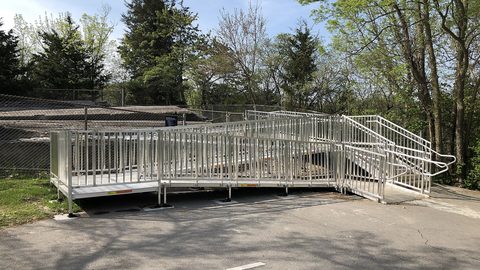 Accessibility and claustrophobia considerations
What to check for escape room accessibility in Singapore, from wheelchair step-free access to claustrophobia panic buttons and sensory sensitivity warnings.
Accessibility and claustrophobia considerations
What to check for escape room accessibility in Singapore, from wheelchair step-free access to claustrophobia panic buttons and sensory sensitivity warnings.
-
 Best team size per room and splitting large groups
How many people actually fit in a Singapore escape room without idle participants, and how operators rotate groups larger than a single room's capacity.
Best team size per room and splitting large groups
How many people actually fit in a Singapore escape room without idle participants, and how operators rotate groups larger than a single room's capacity.
-
 Choosing difficulty and theme for first-timers
How first-timers in Singapore can choose an escape room theme and difficulty level that matches their group, with what operator difficulty ratings actually mean.
Choosing difficulty and theme for first-timers
How first-timers in Singapore can choose an escape room theme and difficulty level that matches their group, with what operator difficulty ratings actually mean.
-
 Escape rooms for corporate team building: what they reveal
What escape rooms reveal about team dynamics in Singapore corporate sessions, and how a facilitated debrief extracts workplace lessons from the game.
Escape rooms for corporate team building: what they reveal
What escape rooms reveal about team dynamics in Singapore corporate sessions, and how a facilitated debrief extracts workplace lessons from the game.
-
 History-themed and location-based escape games (e.g. WWII-themed pop-ups)
How history-themed and location-based escape games in Singapore use WWII narratives and real heritage sites, and how they differ from standard locked rooms.
History-themed and location-based escape games (e.g. WWII-themed pop-ups)
How history-themed and location-based escape games in Singapore use WWII narratives and real heritage sites, and how they differ from standard locked rooms.
-
 Horror vs non-horror rooms: age and comfort
How horror escape rooms in Singapore compare to non-horror rooms for age suitability and participant comfort, from live actors to early-exit policies.
Horror vs non-horror rooms: age and comfort
How horror escape rooms in Singapore compare to non-horror rooms for age suitability and participant comfort, from live actors to early-exit policies.
-
 How escape rooms work and how long they take
From waiver to debrief: how a Singapore escape room session runs, why a 60-minute room means 60 minutes of puzzle time, and the no-replay rule.
How escape rooms work and how long they take
From waiver to debrief: how a Singapore escape room session runs, why a 60-minute room means 60 minutes of puzzle time, and the no-replay rule.
-
 Online, outdoor and hybrid puzzle hunts
How online, outdoor and hybrid puzzle hunts work for group events in Singapore, from video-conference facilitation to geolocation clues and weather contingencies.
Online, outdoor and hybrid puzzle hunts
How online, outdoor and hybrid puzzle hunts work for group events in Singapore, from video-conference facilitation to geolocation clues and weather contingencies.
-
 Price drivers (per head vs per room, peak slots)
How escape rooms in Singapore charge: per-head versus per-room pricing, why peak slots cost more, and what a private-session guarantee adds to the bill.
Price drivers (per head vs per room, peak slots)
How escape rooms in Singapore charge: per-head versus per-room pricing, why peak slots cost more, and what a private-session guarantee adds to the bill.
-
 Tips to escape faster
Strategies to escape faster in a Singapore escape room without brute forcing props, from search patterns and communication protocols to strategic hint use.
Tips to escape faster
Strategies to escape faster in a Singapore escape room without brute forcing props, from search patterns and communication protocols to strategic hint use.
Common Questions
Can we walk into an escape room without a booking?
No. Most operators do not mix strangers, and one booking equals a private room. The walk-in model does not work economically for operators, so you must reserve ahead with a confirmed headcount and a deposit.
What is the lower age limit for an escape room in Singapore?
The common threshold is 7 years old for standard rooms, but horror-themed rooms raise that to 13 to 16 years old, varying by operator. The stated limit is often insurance-driven, not a judgement of ability.
How long does an escape room outing take?
The game itself runs 45 to 75 minutes, but the total outing is 60 to 90 minutes including the safety briefing and debrief. Ask for the total time when you book, not just the timer length.
What happens if we break a prop?
You will be charged. Escape room brute forcing, applying physical force to props meant to be manipulated gently, breaks the room, stops the game, and incurs damage charges. The safety briefing will cover which props are safe to touch.
Read next
-
Horror vs non-horror rooms: age and comfort
How horror escape rooms in Singapore compare to non-horror rooms for age suitability and participant comfort, from live actors to early-exit policies.
-
How escape rooms work and how long they take
From waiver to debrief: how a Singapore escape room session runs, why a 60-minute room means 60 minutes of puzzle time, and the no-replay rule.
-
Price drivers (per head vs per room, peak slots)
How escape rooms in Singapore charge: per-head versus per-room pricing, why peak slots cost more, and what a private-session guarantee adds to the bill.
-
Best team size per room and splitting large groups
How many people actually fit in a Singapore escape room without idle participants, and how operators rotate groups larger than a single room's capacity.
-
Tips to escape faster
Strategies to escape faster in a Singapore escape room without brute forcing props, from search patterns and communication protocols to strategic hint use.
-
History-themed and location-based escape games (e.g. WWII-themed pop-ups)
How history-themed and location-based escape games in Singapore use WWII narratives and real heritage sites, and how they differ from standard locked rooms.