History-Themed and Location-Based Escape Games in Singapore
How history-themed and location-based escape games in Singapore use WWII narratives and real heritage sites, and how they differ from standard locked rooms.
History-Themed And Location-Based Escape Games In Singapore
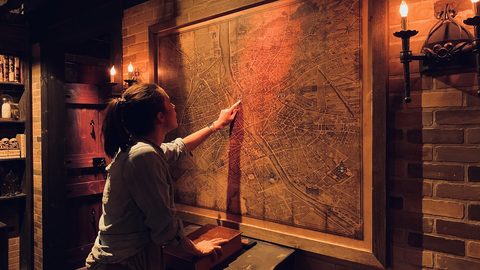
Most escape rooms in Singapore lock you in a single room with a fictional backstory. The history-themed location-based escape games Singapore offers are different: they drop you into real WWII sites or heritage trails where the puzzles use the actual location. These are not standard locked-room formats. They are pop-ups at places like Fort Canning Park, puzzle routes through historic districts, and augmented-reality experiences tied to museum exhibitions. If you book expecting a classic escape room, you will get something that depends on weather, requires walking, and may not have a countdown timer at all.

WWII Escape Room Singapore: Pop-Up And Limited-Run Formats
A WWII escape room in Singapore is almost never a permanent fixture. Companies run them as seasonal or event-based pop-ups at heritage sites, museum spaces, or tented structures. A session runs 45 to 90 minutes with teams of 4 to 8 people. The age requirement varies between 7 and 13 depending on the provider and theme, so confirm this before booking for a child's birthday party.
These pop-ups are predominantly indoor or in semi-enclosed tented structures, but that does not mean they are climate-controlled. Open-air pop-ups rely on portable air-cooling units, shaded queue areas, and hydration stations. On a 32-degree afternoon with 85 percent humidity, even a tented game can be uncomfortable. Ask the organiser what their heat management plan is before you pay.
Pricing is per person, with peak and off-peak slots and a surcharge for private sessions. Because these games are short-term, you cannot assume a game that ran last year will run this year. Check with the organiser directly for current runs and availability.
Heritage Escape Game Singapore: Site-Specific Puzzles And Museum Partnerships
A heritage escape game Singapore style uses a real historic location as the game board. Instead of a fictional room, the puzzles might involve a geolocation trigger at a specific gun emplacement, an augmented reality clue that overlays a colonial building with its wartime appearance, or a physical feature of the site itself, such as a tunnel or a staircase, that becomes part of the puzzle logic.
Operator Partnerships And Historical Accuracy
Some companies partner with National Parks Board (NParks) or National Heritage Board (NHB) sites. These partnerships give the game access to restricted areas or after-hours slots. But the game content is operator-created, not museum-curated. An NHB-licensed provider may have submitted the narrative script for curatorial review, but the historical accuracy of the storyline is not guaranteed. Ask the provider directly if the narrative is drawn from primary sources or is fictionalised set-dressing.
Site Entry Fees And The Battlebox
Also ask if site entry fees are included in the game cost. A location-based game at the Battlebox, for example, might require a separate admission ticket to the bunker. The Battlebox is operated by Singapore History Consultants Pte Ltd, located at 2 Cox Terrace, Fort Canning Park. It is a guided-tour-only site with no self-guided entry. Tours run 60 to 75 minutes and have an age requirement of 7 years. The "Of Graves, Guns & Battles" tour requires participants to be at least 13 years old. Private tours accommodate up to 30 persons per slot. The bunker is 9 metres underground, has no lift, and is not wheelchair accessible. It is mechanically ventilated and dehumidified but not air-conditioned to comfort levels, so dress accordingly.
Outdoor Puzzle Hunt Singapore History: Routes, Weather And Backup Plans
An open-air puzzle hunt Singapore history format sends teams along a walking route through a heritage area, solving clues at designated stops. These are the most weather-dependent format on this page. Singapore's monsoon seasons bring predictable heavy rain: the northeast monsoon from December to March and the southwest monsoon from June to September. The PUB lightning advisory requires outside activities to stop when lightning is within 6 to 8 kilometres. This is a hard stop, not an organiser's discretion. If you book an exterior puzzle hunt during monsoon season, confirm the provider's wet-weather policy in writing. A session cancelled by lightning with no indoor backup means you lose your deposit and your afternoon.
Heritage Routes And Site Access
The route may cover multiple heritage sites in a single session. Fort Canning Park, for example, has a density of history from the 14th-century Malay kingdom through the colonial fort to the WWII command site, including the Battlebox bunker and the Fort Gate. A hunt here could take two hours of walking on shaded paths. The park is free to enter, but guided tours may have per-person fees. Labrador Battery at Labrador Nature Reserve is another possible route. The coastal fort has 6-inch gun emplacements, ammunition bunkers, and machine-gun posts, but the tunnels are only accessible during guided tours with restricted schedules, not freely during park hours. A puzzle hunt that relies on the tunnels will need a backup route if the tour is unavailable.
A site-specific puzzle that uses the actual location as a clue is different from a walking tour. The puzzle forces you to look at the site more closely. But the failure case is real: a team that expects a "museum" experience at Labrador Battery or Fort Canning will be underwhelmed by above-ground remnants without a guide providing context. If your group wants curated galleries with artefacts and panels, go to Changi Chapel and Museum or Reflections at Bukit Chandu instead.
Location-Based Escape Game Singapore Museum: Timed-Entry And Augmented Reality
A location-based escape game Singapore museum format runs as a temporary exhibition tie-in at an NHB museum. The game is self-guided with timed entry slots, and the museum's existing exhibits become the puzzle space. Changi Chapel and Museum, reopened on 19 May 2021, is fully air-conditioned and has a group size cap per slot. It focuses on the POW and civilian internment experience in Changi during the Japanese Occupation. Reflections at Bukit Chandu, reopened on 9 September 2021, commemorates the Malay Regiment's last stand at the Battle of Pasir Panjang on 13 to 14 February 1942. Both sites are operated by the National Museum of Singapore under NHB. Admission fees apply for adults, with concession rates for students and seniors.
The game format here uses the museum's primary-source narrative as the puzzle framework. An augmented reality clue might overlay a period photograph on a current gallery view. A geolocation trigger might release the next puzzle when the team reaches a specific display case. Because the content is museum-curated, historical accuracy is higher than in a pop-up escape room. But the game is still provider-created and temporary. Check with the museum if a game is currently running before you plan a visit.
Battlebox Escape Room: The Only Permanent WWII Site With A Game-Like Tour
The Battlebox is not an escape room, but its guided tour has puzzle-like elements that make it the closest permanent experience to a history-themed escape game at a WWII site. The bunker was the British Far East Command Centre and Malaya Command bunker, built in 1938, where Lieutenant-General Arthur Percival made the decision to surrender Singapore on 15 February 1942. The tour walks you through the command rooms, and the narrative script is drawn from primary sources. The age requirement is 7 years for the tour and 13 years for the more detailed "Of Graves, Guns & Battles" tour. Advance online booking is required. Private tours accommodate up to 30 persons per slot.
The failure case for the Battlebox is climate expectation. The bunker is 9 metres underground and mechanically ventilated, but it is not air-conditioned to comfort levels. Visitors expecting museum-grade air-conditioning will find it warm and humid. The space is enclosed with no lift access and not wheelchair accessible. If anyone in your group has mobility issues, this site is not an option.
How These Games Differ From Standard Locked-Room Escape Rooms
Standard escape rooms have a locked door, a countdown timer, and a single room with props. History-themed location-based escape games in Singapore replace the locked door with a walking route or a museum gallery. The timer may be absent or replaced by a session time. The puzzles may use augmented reality, geolocation triggers, or physical site features such as a tunnel entrance or a gun emplacement.
Weather And Venue Differences
The biggest practical difference is weather dependency. A standard escape room runs indoors with air-conditioning. A location-based game at an exterior site stops for lightning. A pop-up in a tented structure has portable cooling but no air-conditioning. If your group is planning a session during monsoon season, a standard indoor escape room is the rain-proof option.
Group Size And Replayability
The second difference is group size. Standard escape rooms hold 6 to 10 people per room. Location-based games can accommodate larger groups by rotating teams through multiple rooms or routes, but half the party may be waiting at any time. If you have a group of 20, ask the provider if they can run parallel sessions or if you will be waiting.
The third difference is replayability. A standard escape room, once solved, cannot be replayed by the same team. A location-based game at a heritage site may be replayable if the route or puzzles change with a new exhibition. But the site itself is the same, so the novelty may be lower on a second visit.
Who Should Book These Games And Who Should Skip Them
Corporate team-building organisers should book these games for groups of 6 to 30 people who want a cognitive challenge in a real-world setting. The exterior puzzle hunt format surfaces leadership dynamics because teams must navigate and solve clues without a facilitator directing every step. But you need a wet-weather backup plan. Confirm the provider's indoor backup option before you commit.
Parents planning kids' birthday parties should check the age requirement carefully. A game with a lower age limit of 7 may still be too complex for a 7-year-old who cannot read well. The party-room requirement is a separate issue: most location-based games do not have a dedicated air-conditioned space with tables for food and cake. If that is a dealbreaker, choose a fixed-arena escape room company that offers party packages.
Groups of adult friends seeking novelty will enjoy the site-specific puzzle format if they want something different from a standard escape room. The physical intensity is low to medium, and prior skill does not matter. The session flow includes a briefing, the game, and a debrief, but the debrief is not a facilitated team-building session with workplace metaphors. If your group wants structured reflection, book a team-building provider instead.
Heritage-curious locals and visitors should choose a game that uses primary-source narrative from NHB or a curatorial-reviewed script. Ask the company if the story is drawn from primary sources or is fictionalised set-dressing. A game at Changi Chapel and Museum or Reflections at Bukit Chandu will have higher historical depth than a pop-up at a rented event space.
Solo travellers looking for drop-in activities should skip these games. Most require pre-formed teams and bookings. Go to a walking-tour aggregator or museum ticketing site instead. Tourists seeking nightlife or dining recommendations should also skip: this is not a food-and-drink guide. People wanting to book or compare prices should go to provider websites or booking platforms. Adrenaline-seekers looking for bungee, skydiving, or theme parks should go to an attractions ticketing site.
What To Ask The Operator Before You Book
Ask if the narrative script has been through curatorial review by NHB or a heritage consultant. If the company says no, assume the historical content is fictionalised set-dressing. Ask if site entry fees are included in the game cost. A game at the Battlebox may require a separate admission ticket. Ask what the wet-weather policy is for exterior puzzle hunts. A policy that says "we will reschedule" is not the same as "we have an indoor backup venue." Ask what the group size cap per slot is and if your entire party will be playing simultaneously or rotating. Ask what the age requirement is for the specific game you are booking, not the company's general policy. A game with a lower age limit of 7 may still be unsuitable for a 7-year-old if the puzzles require reading comprehension or abstract reasoning.
The One Thing Most Often Goes Wrong
The most common failure is booking an exterior puzzle hunt during monsoon season without confirming the wet-weather policy, then losing the deposit when lightning stops play. Before you pay, ask the organiser in writing: 'If lightning stops our session, do you have an indoor backup venue or a full refund?' If the answer is anything other than a clear yes with a named indoor location, book a standard indoor escape room instead.
Common Questions
What is the difference between a history-themed location-based escape game and a standard escape room in Singapore?
A standard escape room locks you in a single room with a countdown timer and a fictional backstory. A location-based game uses a real heritage site or museum as the game board, with puzzles that may involve augmented reality, geolocation triggers, or physical features of the site. The game may not have a locked door or a timer. The biggest practical difference is weather dependency: location-based games at exterior sites stop for lightning.
Are there any permanent WWII escape rooms in Singapore?
There is no permanent WWII escape room. The closest permanent experience is the guided tour at the Battlebox, which has puzzle-like narrative elements. All other WWII escape games in Singapore are pop-ups or limited-run events that change seasonally. Check with providers for current runs.
What is the minimum age for history-themed escape games in Singapore?
The age requirement varies by provider and theme. For pop-up escape games, the range is 7 to 13 years. The Battlebox tour requires an age of 7 years, and its 'Of Graves, Guns & Battles' tour requires 13 years. Confirm the age requirement for the specific game you are booking, not the provider's general policy.
Do open-air puzzle hunts in Singapore run in the rain?
No. Singapore's lightning safety guidelines require outside activities to stop when lightning is within 6 to 8 kilometres. This is a hard stop. If you book an exterior puzzle hunt during monsoon season (December to March or June to September), confirm the organiser's wet-weather policy in writing. A session cancelled by lightning with no indoor backup means you lose your deposit.
Are the historical narratives in these games accurate?
It depends on the company. Some submit their narrative script for curatorial review by NHB or a heritage consultant. Others use fictionalised set-dressing. Ask the provider if the narrative is drawn from primary sources. Games at NHB-operated sites such as Changi Chapel and Museum or Reflections at Bukit Chandu have higher historical accuracy because the museum curates the content.