Planning WWII History Outings for School Groups at Singapore's Heritage Sites
Planning a curriculum-linked WWII history outing for school groups in Singapore, covering site suitability by age, safety ratios, wet-weather plans, and which sites handle large cohorts efficiently.
H2: Planning WWII History Outings for School Groups at Singapore's Heritage Sites
Coordinating a school outing to a WWII heritage site rewards preparation and punishes assumption. The landscape of memorials, forts, and museums is rich but uneven. Six sites matter most: the underground command centre on Fort Canning Hill, Kranji War Memorial, Changi Chapel and Museum, Labrador Battery, and Reflections at Bukit Chandu. Each one fits a specific cohort, a curriculum link, and the realities of a tropical climate differently. This is an independent assessment written for the person holding the permission slips. It does not represent any of the operators mentioned.
H2: School Excursion Battlebox Fort Canning Singapore: Booking the Underground Command Centre
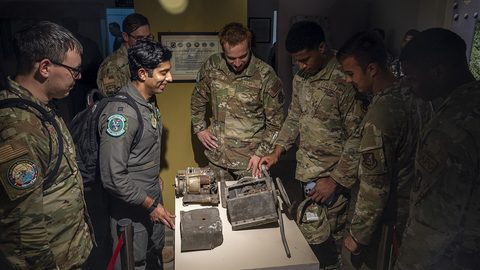
On 15 February 1942, Lieutenant-General Arthur Percival made the decision to surrender Singapore to Japanese forces inside this former British underground command centre on Fort Canning Hill. It is the single most important site for a school excursion. The operator, Singapore History Consultants Pte Ltd, permits guided tours only. No self-guided entry exists.
Choosing The Right Tour For Your Cohort
The standard tour lasts roughly 60 minutes. A docent leads it and can adjust the narrative to the cohort's age. The minimum age is 7 years, which suits a Primary 4 class, but the content is dense. A Secondary 2 class will absorb the complexity of the Malaya Command's miscalculations, the social context of the fall, and the strategic debate over where the guns faced. The more advanced "Of Graves, Guns & Battles" tour has a minimum age of 13. It delves into the fort's construction and the broader fortress Singapore concept.
Booking Rules And Physical Constraints
School group bookings require at least two weeks' advance notice. More is better given the site's popularity. The maximum group size for a private booking is 40 participants. The operator enforces a ratio of one adult supervisor per ten students. The entrance is a stairwell of 52 steps down. There is no wheelchair access. The site is fully air-conditioned indoors, which makes it rain-proof. The descent and the confined narrative mean it is not a venue where you can park a large cohort and expect them to manage independently. Use the pre-arrival briefing materials in class. They reduce on-site time spent on context and increase the time spent engaging with the guide. Note that the operating entity is managed by Global Cultural Alliance, a registered charity, on behalf of Singapore History Consultants. Confirm the actual fee schedule at the point of booking; check with the operator, as it is revised annually.
H2: Changi Chapel and Museum School Visit Curriculum Link: The POW Narrative Indoors
When the sky opens, and during the northeast monsoon from November to January it will, a school visit to Changi Chapel and Museum delivers an emotionally weighty curriculum link in a dry, fully indoor setting. The museum, operated by the National Museum of Singapore under the National Heritage Board, has a separate outdoor chapel replica. For a school group, this is the most flexible of the major sites because it does not depend on weather. The curriculum link is explicit: the story of Allied prisoners of war, the civilian internment narrative, and the resilience of the human spirit under the Japanese Occupation.
Key Exhibits And The Changi Murals
The key exhibits include the replica of St George's Chapel, built by POWs, and the replicas of the Changi Murals painted by Stanley Warren. The original murals are too fragile to be moved. The replicas are faithfully executed and come with a guided explanation.
Booking, Group Size, And What To Plan For
Book school groups at least two weeks in advance. The maximum group size is the largest of any site covered here; check with the operator for the current cap. The ratio requirement is one adult per ten students. Entry for Singapore citizens and permanent residents is free. Foreign students pay a school group rate; check with the NHB website for the current figure, as it is revised annually. The museum is a single-queue experience, so a large cohort can move through in waves. The emotional intensity of the content means it is not a place to rush. For a uniformed group, the visit to the chapel replica provides a moment for silent reflection that is hard to achieve outdoors. The museum shop is modest. The cafe is small. Plan for lunch away from the site or bring packed food to eat at the nearby Changi Village. This site rewards a pre-visit lesson on the difference between the museum and the active Changi Prison. That is a separate, operational institution with no public access.
H2: Bukit Chandu Malay Regiment School Tour Singapore: A Free, Indoor Interpretive Centre
Start at Reflections at Bukit Chandu. The interpretive centre, run by the National Museum of Singapore under the National Heritage Board, sits on a ridge overlooking the Pasir Panjang area. Here, the 1st and 2nd Battalions of the Malay Regiment, led by Lieutenant Adnan Saidi, made their last stand against the Japanese on 13-14 February 1942. The centre is fully air-conditioned. Its exhibitions cover the Battle of Pasir Panjang, the regiment's training, and the broader strategic context of the fall of Singapore. Entry for Singapore citizens and permanent residents is free. Foreign students pay a school group rate; check the NHB site for the current figure, as it is revised annually.
Group Size, Access, And The Guided Walk-Through
Book at least two weeks in advance. The maximum group size is 60. That is small enough that the two-storey gallery feels manageable but large enough that it requires a structured, guided walk-through rather than free exploration. The centre sits at the top of a hill, reached by a flight of steps. Wheelchair access to the main entrance is limited; arrange assistance in advance. The guided narrative covers the Malay Regiment's last stand with a focus on loyalty and sacrifice, a powerful theme for uniformed groups.
Timing And Pairing The Visit
The centre has no cafe. The nearest food options are at the bottom of the hill or a short bus ride away at Haw Par Villa. The visit is a clean 90 minutes, including the documentary film. It pairs well with a morning at Kent Ridge Park, which is adjacent but offers no additional WWII-specific structures. Choose this site when a coordinator needs depth without a fee and a guaranteed indoor experience.
H2: Uniformed Group WWII Heritage Outing Singapore: Outdoor Memorials and the Rain Factor
A uniformed group outing planned for a Saturday will likely involve the outdoors. That means confronting the wet-weather plan head-on. The two most significant outdoor sites are Kranji War Memorial and Labrador Battery.
Kranji War Memorial: Gravitas And Exposure
Kranji, operated by the Commonwealth War Graves Commission, is an open-air hillside cemetery with 4,458 identified graves and a memorial wall listing 24,346 names of missing personnel. It is a site of immense gravitas. It is also exposed. Shade is limited. During a tropical downpour, no shelter exists except a small visitor pavilion. The annual Remembrance Day service, held on the Sunday closest to 11 November, draws large crowds. On a normal school day, the site is quiet. Notify the CWGC in advance for guided access; the commission will provide a volunteer guide if requested. The heat at Kranji is a real risk for heat exhaustion. Mandatory hydration and sun protection are non-negotiable. Covered footwear is required because of uneven terrain and insect risk.
Labrador Battery: A Story Easy To Miss
Labrador Battery, within Labrador Nature Reserve and managed by the National Parks Board, offers the opposite problem. The two 6-inch gun emplacements and the underground tunnels are the remains of a pre-war defensive line. Unlike the curated museums, this is a ruin in a park. The tunnels are accessible only during a guided tour with restricted schedules. They are not freely open during park hours. Without a guide, a school group sees a gun pit, a view, and a plaque. No narrative depth. NParks runs periodic tours, but a coordinator must book them. Even then, the site is exposed to weather. There is no indoor space at the battery itself. Pair a visit to Labrador with a wet-weather alternative, such as the nearby World War II Interpretive Centre, which is small, or shift to an indoor venue. The failure case is a group arriving, finding the tunnels closed, and seeing nothing more than a hillside. Call the NParks office directly a week ahead. Confirm the tour guide's availability. Have a backup plan for rain that involves a chartered bus retreat to the nearest indoor site.
H2: Fort Canning Park WWII Trail: The Self-Guided Reality Check
Not every school outing needs a guided tour. The self-guided option on the Fort Canning Park WWII trail is low-cost and flexible. It comes with a caveat: the park's indigenous structures are remnants, not exhibitions. The park, operated by the National Parks Board, contains the Fort Gate, a remnant of the 19th-century fort used as a bunker in WWII, and the Sally Port, a small hidden exit door used during the war. The underground command centre is a separate, ticketed indoor attraction within the park's boundaries. Do not conflate the two. A school group that arrives at Fort Canning Park expecting a museum will be disappointed. The WWII markers along the heritage trail are informational panels, not interactive exhibits. The park is free, fully outdoor, and exposed to heat. Some sections are on slopes that tire younger students. The most common minor injuries are insect bites and slips on wet paths after rain. Use the park as a context-setting walk before or after a guided visit to the command centre, not as a standalone destination.
H2: School Group WWII Tour Safety Ratio and the Logistics of Large Cohorts
Behind every successful school outing is a safety ratio that is actually enforced. Across all National Heritage Board-managed sites, the standard is one adult supervisor per ten students. The same ratio is required at the underground command centre. It is best practice at Kranji and Labrador even if the land custodian does not mandate it in writing. For a large cohort, a coordinator must bring enough adults and pre-assign them to groups of ten before arrival. It is a failure mode to have a single teacher at the front counting heads while the group stretches across a field. Split the cohort by class or patrol. Give each adult a printed map and a rescue whistle. Set a meeting point and time at the start. The most common minor injuries, heat exhaustion, insect bites, and slips on wet paths, are all mitigated by a briefing that tells students to hydrate before arriving, wear covered footwear, and carry a small personal water bottle. Sun protection is essential at any outdoor site.
H2: Four Questions Co-ordinators Actually Ask
- Do we need to book for a school group at Changi Chapel and Museum? Yes, for any group of 10 or more. The NHB requires at least two weeks' notice. Booking guarantees your entry slot for a specific time. Without one, you may be turned away, especially on a weekday morning when other schools are visiting.
- Is there a wet-weather plan at Kranji War Memorial? No. Kranji is an open-air site. The CWGC provides an undercover pavilion, but it is small and not designed for a class of 40. Bring ponchos, or swap the order of your day and visit the Changi Chapel and Museum on the rainy afternoon instead.
- How physically demanding is the Labrador Battery site? The walk from the car park to the guns is a gentle 10-minute slope, but the terrain is uneven and the tunnels, when open, are damp and narrow. It is not suitable for a pram or wheelchair. Most Primary 4 students will manage. A Secondary 2 group will have an easier time with the historical context.
- What is the single biggest mistake a coordinator makes? Assuming you can just show up. The underground command centre, the Labrador tunnels, and Reflections at Bukit Chandu all require a booking for a guided tour. Showing up without one means you will be turned away or left with only a self-guided walk, which at Labrador is a plaque and a view.
H2: Site Comparison for the 2025 School Year
This table compares the six sites on the axes that matter most to a coordinator: indoor/outdoor, weather dependency, historical depth, and accessibility.
| Site | Indoor/Outdoor | Weather Dependency | Historical Depth | Accessibility |
|---|---|---|---|---|
| Battlebox | Indoor | Rain-proof | Guided narrative | Not accessible (52 steps) |
| Fort Canning Park | Outdoor | Exposed | Plaque-only / site-with-panels | Partial (slopes) |
| Kranji War Memorial | Outdoor | Exposed | Site-with-panels | Partial (hillside) |
| Changi Chapel and Museum | Indoor | Rain-proof | Guided narrative | Fully accessible |
| Labrador Battery | Outdoor | Exposed | Plaque-only | Partial (slopes) |
| Reflections at Bukit Chandu | Indoor | Rain-proof | Guided narrative | Partial (steps) |
H2: FAQ
Is there a minimum age for a school visit to the underground command centre? The standard tour has a minimum age of 7 years, making it suitable for Primary 4 and up. The more detailed "Of Graves, Guns & Battles" tour requires a minimum age of 13, for Secondary 2 and above.
Are there any free indoor sites for a last-minute wet-weather booking? Reflections at Bukit Chandu is free for Singapore citizens and PRs, but advance booking is essential. Changi Chapel and Museum is free for citizens/PRs; foreign students pay a school group rate. Both require a lead time of at least two weeks.
What should a group do if Kranji is rained out and they have already arrived? The CWGC is a 15-minute drive from the nearest covered location, which is the library at the Singapore University of Social Sciences. A better plan: pre-arrange an indoor alternative. Move the Changi Chapel and Museum visit to the morning and Kranji to the afternoon, knowing the weather forecast.
How long does a typical two-site itinerary take? Plan for 2-3 hours per site, plus travel time. A realistic day pairs the underground command centre (morning, 90 minutes) with Fort Canning Park (afternoon, 60 minutes, self-guided). Lunch is best at a hawker centre near the park, such as the one at Liang Court.
H2: Who This Subject Suits (and Who It Does Not)
The subject of Singapore's WWII heritage sites is a demanding one. It suits the coordinator with a clear lesson objective, a fixed budget, and a cohort that has been primed for a visit. It suits the uniformed group leader who sees the discipline of silent reflection as a reward, not a punishment. It suits the secondary school teacher teaching the fall of Singapore as a case study of strategic failure and the price of unpreparedness. Those travellers, and they are many, will find the operational scaffolding they need right here.
It does not suit the casual tourist who wants to wander on a whim, without a booking, expecting a fun few hours. It does not suit the parent planning a birthday party with a bouncy castle theme. It does not suit anyone who wants a guided tour that is actually a bus ride with a script and a stop for lunch. The subject of war history is heavy. The sites are often quiet. The best experiences demand concentration, not entertainment. If that is not what you are after, this page has already served its purpose: it has told you to look elsewhere.
H2: The One Sentence That Cannot Be on a Competitor's Page
This page's unique sentence is: "The standard tour at the underground command centre has a minimum age of 7 years, but the 'Of Graves, Guns & Battles' tour, with its 13-year age threshold, is the only one that properly explains why the guns at Labrador faced the sea instead of the landward invasion, a distinction that a Primary 4 class will not grasp and a Secondary 2 class will debate."