Visiting the Fort Canning WWII Bunker Battlebox in Singapore as an Independent Group
Visiting the Fort Canning WWII Bunker Battlebox Singapore Independently
The Battlebox is not a museum you can stroll into. It sits inside Fort Canning Park, but it runs on a fixed guided-tour timetable with a ticketed door. You cannot wander the tunnels alone. You cannot join a tour without a reservation. For independent groups, the questions are practical: how to find the place, how the tour works, and what to expect inside a dehumidified bunker often described as air-conditioned. This page answers those questions in the order you will meet them, from the climb up the hill to the final stairwell down into the former Malaya Command headquarters.
Finding the Battlebox Entrance in Fort Canning Park
The entrance is not obvious from the park's main paths. Look for a low, unassuming building set into the hillside at 2 Cox Terrace, Fort Canning Park, Singapore 179622. The nearest MRT station is Fort Canning MRT on the Downtown Line. Take Exit B and you still face a five-to-ten-minute uphill walk. The route is signposted, but the signs are small and compete with the greenery. The building looks like a concrete blockhouse with a single door. No grand facade. No banners. Just a discreet sign. If you are with a group, agree on a meeting point before descending. Phone reception around the entrance is patchy, and the nearby Sally Port and Fort Gate confuse first-time visitors.
The biggest mistake groups make is assuming the Battlebox is the same as the free-access park. Fort Canning Park is a National Parks Board land-custodian site, and the park is open to anyone. The Battlebox sits inside that park, but the ticketed entry door is separate. You pay for the bunker, not the hill. Once you find the entrance, you will see the tour desk just inside. There is no ticket booth outside. No same-day walk-up window. If you have not booked, the staff at the door will turn you away. The tour timetable is fixed and every slot is pre-sold. The site is run by a third-party commercial company, not the National Parks Board or the National Heritage Board, so NParks staff do not handle your reservation.
The Tour Format: A Guided Walk, Not a Self-Guided Visit
The Standard Public Tour
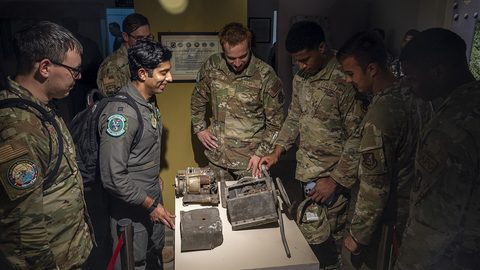
The Battlebox tour is a 75-minute guided walk through the underground complex. No independent exploration is permitted. A docent leads the group through a sequence of rooms, each staged as it would have looked in 1942, when this was the headquarters of Malaya Command. The tour is built around the British surrender of Singapore to Japanese forces on 15 February 1942 and the decision-making that led to that moment. The guide carries the story. The rooms provide the backdrop. If you are used to audio-guide lanyards and self-paced visits, this is a different format. You move as a group, you stand where the guide tells you, and you listen. The standard tour is conducted in English.
Private Group Tours
For an independent group, the key question is whether you qualify as a 'group' under the rules. Public tours run on a fixed timetable, and the size limit per slot is 30 persons. A public tour can have several unrelated parties in the same time slot, all moving together. If you want the experience to be just your own party, you need the exclusive group tour, which resets the clock and the cost structure. The cost driver is the flat rate up to the maximum capacity, so a group of 15 pays the same as a group of 29. There is no discount for a smaller group and no partial refund if someone drops out. Count your confirmed attendees, not your invitees, before you commit. The minimum size is 15 persons and the maximum is 30, with an advance requirement of at least two weeks. Check with the operator for the current figures.
The Bunker Environment: Ventilation, Not Air-Conditioning
Here is the fact that surprises most first-time visitors: the Battlebox is not air-conditioned in the way you would expect. The official line, repeated in marketing materials and on the reservation platform, is that the bunker is kept at 24-26°C. That is true, but the mechanism is not a standard air-conditioning unit. The bunker is mechanically ventilated and dehumidified. Industrial fans and dehumidifiers pull moisture out of the air and push fresh air through the tunnels. The result is a space that feels cool and dry, but it is not the blast of cold air you get in a shopping mall. Coming from Singapore's heat and humidity, the transition is welcome. Expecting a refrigerated room will leave you disappointed.
What this means for your visit is practical. The temperature inside is comfortable for 75 minutes, but it is not the kind of cold that requires a jacket. A light layer is enough, especially if you are prone to feeling chilled in cooled spaces. The air moves, but it is not a breeze. The dehumidified bunker is one of the few indoor attractions in Singapore that genuinely delivers on the 'escape the heat' promise, yet it is not a climate-controlled sanctuary. The guide will likely mention the mechanical ventilation system as part of the history. It was a remarkable feat of engineering for its time. Listen to that part; it explains how the command centre functioned around the clock in tropical conditions.
Accessibility and Physical Requirements: The 52-Step Descent
The Battlebox is not wheelchair accessible. The reason is the entrance. You descend 52 steps from the surface to the bunker. Those steps are steep, narrow, and uneven in places. There is no lift. No ramp. No alternative route. If you or anyone in your group has mobility issues, this is the point where you need to make a judgement call. The tour is not suitable for anyone who cannot manage stairs. The minimum age for the standard tour is 7 years; children under 7 are not permitted due to the steep staircases and dark, confined spaces. Closed-toe shoes are recommended. The surfaces inside are uneven and there are steps throughout the complex. The tour route is a loop, so what goes down must come back up, and the climb out is the harder part.
For groups, this is a planning factor that gets overlooked. A group booking form does not ask about mobility, and the staff will not refuse entry to a person who has managed the steps. But the tour involves standing for long periods, walking on uneven floors, and navigating low ceilings in some rooms. If one member of your group is not steady on their feet, the whole group's pace slows. The safety briefing at the start covers the route and emergency procedures, but it cannot make the stairs disappear. If you are organising a corporate team-building event and one participant has a hidden disability, call the operator directly and discuss options before you book. The staff are helpful. They cannot redesign the bunker.
What the Tour Covers: The Surrender Decision Room and Beyond
The historical core of the Battlebox is the surrender decision room, the space where Lieutenant-General Percival and his senior officers debated whether to continue fighting or capitulate to the Japanese. That room is the emotional centre of the tour. The guide spends a significant portion of the 75 minutes there, explaining the military situation, the casualties, and the logic that led to the decision to surrender. The room is staged with period-appropriate furniture, maps on the walls, and a sombre atmosphere. It is not a recreation. It is the actual room where the decision was made. That is rare in heritage tourism, and it gives the site its power.
The tour also covers the other rooms of the command centre: the operations room, the cipher room, and the signals room. Each space is furnished to show how the headquarters functioned, with mannequins in some areas and original or period-correct equipment in others. The guide's narrative ties the rooms together, explaining how information flowed in and out, how the command structure operated, and how the final days unfolded. The Battlebox is a guided narrative experience, not a self-guided museum with panels. You come away understanding not just what happened, but how it happened. That is the difference between visiting a bunker and understanding a turning point in history.
Group Reservations and the Walk-In Reality
If there is one sentence that summarises the biggest mistake independent groups make, it is this: you cannot walk into the Battlebox without a reservation. The business model depends on fixed tour times and pre-sold slots. A group of friends, a corporate team, or a family reunion that turns up without a reservation will be turned away. The only exception is the rare chance that a slot has a no-show. You cannot plan around that. The reliable path is to reserve through the official platform at battlebox.com.sg, the only site that sells tickets directly to the public. Third-party resellers exist, but using them adds a layer of risk if the operator overbooks or the reseller does not pass on the reservation. Book direct. Book early. Book for the exact number of confirmed attendees.
For exclusive group tours, the minimum size is 15 persons and the maximum is 30. A group of 10 cannot book a private tour; they would have to join a public slot. The advance requirement is a minimum of two weeks, though the operator may have flexibility for last-minute requests if staff are available. The cost driver is the flat rate for the guide and the slot, not the per-person cost, so the per-head price drops as the group size approaches the maximum. For a corporate team-building organiser, this is the structure that matters: you are paying for exclusivity, not for individual tickets. If you want the whole group to have the same guide and the same start time, the exclusive tour is the only option. If you are willing to share the guide with strangers, the public tour costs a fraction of that.
Nearby Alternatives: Fort Canning Park and the Wider WWII Context
The Battlebox is the centrepiece of Fort Canning Park's WWII heritage, but it is not the only significant site on the hill. The Sally Port, a 19th-century fort gate used as ammunition storage during WWII, is a short walk from the Battlebox entrance. It is a small, unassuming structure, but it is part of the park's dense layering of history. The Fort Gate, a remnant of the 1861 fort, is another nearby feature. These sites are free to visit and are open during park hours, yet they are best appreciated with context. A guide or a good interpretive panel can explain what you are looking at. Without that, they are old walls in a pleasant park. That is the gap between visiting a site and understanding what happened there.
The park itself is managed by the National Parks Board, which acts as the land custodian. The Battlebox is operated by a third-party company under a lease or management agreement. This distinction matters because it affects access. The park is open from early morning to late evening, and you can walk around the hill for free. The Battlebox has its own opening hours, tied to the tour timetable, and its own ticketing. If you are planning a self-guided walk around the park, combine it with a Battlebox tour time that fits. A common mistake is to visit the park first, get tired or hungry, and then skip the bunker because the timing does not work. Plan the tour time first, then fill the rest of the day around it.
Weather, Rain, and the Indoor Advantage
Singapore's weather is hot and humid year-round, with average daytime temperatures between 28-32°C and humidity at 70-90%. The Northeast Monsoon, from December to March, brings frequent afternoon rain, often in violent bursts that flood streets and soak anyone without cover. This is where the Battlebox's indoor classification becomes a critical planning factor. The bunker is nine metres below ground, fully enclosed, and unaffected by rain. The tour runs regardless of the weather. That makes it a rain-proof backup plan for a day that would otherwise be ruined by a tropical downpour. For groups planning an outdoor activity, this is the difference between a session that happens and a session that gets cancelled.
Do not assume the park walk to the entrance is sheltered. The route from Fort Canning MRT to the Battlebox door is exposed, with only partial tree cover. If it is pouring, you will arrive soaked. The operator does not provide umbrellas, and the narrow stairwells make it hard to shake off a drenching before you descend. A lightweight rain jacket or a compact umbrella is essential in the wet season. The bunker itself sits at a comfortable 24-26°C, so you will not be cold once inside, but the transition from monsoon rain to dehumidified air can be a shock. Dress in layers you can peel off and carry. The walk back uphill after the tour is the other direction, and the slopes are slippery when wet. Wear shoes with grip, not sandals with smooth soles.
When It Goes Wrong: Closures, Sold-Out Tours, and After-Hours
Every plan has a failure mode, and the Battlebox is no exception. The most common problem is a sold-out tour. The operator runs a limited number of tours per day. On weekends, public holidays, and school holidays, they can sell out days in advance. If you arrive without a reservation and the tour is full, you have two options. The first is to find the next available slot and fill the intervening hours with a walk around the park or the nearby National Museum of Singapore. The second is to read the closure risk. The Battlebox is occasionally closed for maintenance or private events. Those closures are announced on the operator's official site, not on the National Parks Board site. Check the operator's website before you travel, not a third-party review site.
The other failure mode is time of day. The Battlebox does not operate at night. There is no after-hours access. If it is 1am, the bunker is closed, and no amount of planning will open it. The park itself is also closed at night; entering it after hours is trespassing. Your alternative for late-night WWII heritage is limited. The sites in Singapore are not illuminated for night visits. If you are planning a late-night itinerary, accept that the Battlebox is a daytime activity and build the rest of your schedule around that. The last tour typically starts in the early afternoon, so give yourself a buffer. Do not arrive at 4pm expecting to be the last tour of the day. The timetable is set well in advance.
How the Battlebox Compares to Other WWII Heritage Sites
Changi Chapel and Museum
The Battlebox is often grouped with other Singapore WWII heritage sites, but it is not interchangeable with them. Changi Chapel and Museum, operated by the National Museum of Singapore under the National Heritage Board, is a ticketed museum that reopened in May 2021 after redevelopment. It is a curated, gallery-style experience. Singapore citizens and permanent residents enter free.
Reflections at Bukit Chandu and Kranji War Memorial
Reflections at Bukit Chandu, also operated by the National Museum of Singapore, is a smaller museum dedicated to the Battle of Pasir Panjang. It has the same ticketing model. Kranji War Memorial, managed by the Commonwealth War Graves Commission, is a free-access memorial and cemetery. Large groups should notify the commission in advance. Each of these sites has a different operator, a different pricing model, and a different visitor experience.
What Sets the Battlebox Apart
The distinguishing feature of the Battlebox is the surrender decision room. No other site in Singapore tells that specific story with such immediacy. The other sites are memorials or museums; the Battlebox is a place. That difference matters for group planning because it sets a clear hierarchy of value. If you have time for one WWII site, the Battlebox is the one with the strongest narrative. If you have a full day, combine the Battlebox with a visit to Fort Canning Park, then take a cab to Changi Chapel and Museum, then finish at the Kranji War Memorial. The transport between these sites is the cost driver; a private car or a taxi between them adds up quickly. For a group of 15 or more, a private coach is often more economical than multiple cabs, but it requires advance booking. Start with the Battlebox. Its fixed tour timetable is the hardest constraint to move.
Practical Tips for a Smooth Visit
Before you arrive, do four things. First, book your tickets online through the official Battlebox website. Do not use a third-party aggregator that bundles the Battlebox with other attractions; the bundles are often more expensive and do not guarantee the tour time you want. Book the general admission ticket, not a third-party bundle. Second, verify the tour timetable on the official site. The operator revises it on a cycle that is not always published in advance. The research notes mark the group size limits and age restrictions as subject to annual revision, so check the operator's own page for the current figures. Third, decide whether you need the standard public tour or an exclusive group tour. For a group of fewer than 15, the public tour is the only option. For a group of 15 to 30, the private tour gives you exclusivity and a single guide, but it costs more per person than a public tour for a group of 15.
Fourth, plan your footwear and clothing. The 52 steps down to the entrance are the first physical challenge. The walk back up at the end is the last. Closed-toe shoes with good grip are not optional; the surfaces inside are uneven and the stairs are steep. A light jacket or a long-sleeved layer is useful for the cooler bunker temperatures, which hover around 24-26°C. If you are visiting during the Northeast Monsoon from December to March, carry a compact umbrella or a rain jacket. The walk from the MRT station to the entrance is exposed. You will not want to arrive soaked. Finally, allow at least 30 minutes of buffer time around the tour. The tour itself is 75 minutes, but the safety briefing, the descent, and the exit process add another 15 minutes. If you are on a tight schedule, do not book a tour that ends right before you need to be somewhere else. The guide will not rush, and you should not ask them to.
The Battlebox Tour Experience: What You Will Remember
After the tour, the moments that stay with visitors are not the dates or the names but the sensory details. The sound of the dehumidifier humming through the corridors. The smell of dust and old concrete, which no amount of cleaning can erase. The weight of standing in the surrender decision room, knowing that the men who stood there chose to end the defence of Singapore rather than sacrifice more lives. The tour guide delivers the story with a gravity that is earned, not manufactured. The 75 minutes pass quickly. The walk back up the stairs to the daylight of Fort Canning Park feels like returning to a different world.
Is the Battlebox overrated? No, but it is not for everyone. If you are looking for a hands-on, interactive museum with lots of exhibits and digital displays, this is not it. The Battlebox is a historical site first and a museum second, and the tour format reflects that. If you are looking for a deep, narrative-driven experience that explains the fall of Singapore, it is the best in the country. The key is to arrive with the right expectations. This is a guided tour, not a self-guided visit. You will be told when to move, where to stand, and what to look at. Some visitors find that restrictive. Others find it freeing, because the guide handles the context and the interpretation. For an independent group, the decision comes down to whether you want a shared, structured experience or a solo exploration. The Battlebox only offers one of those.
Frequently Asked Questions
Can I enter the Battlebox without a tour?
No, the Battlebox requires a guided tour for all visitors. There is no independent exploration, and the tour timetable is fixed. You must book a specific time slot in advance through the official website. Walk-up visitors are turned away if there is no availability.
How far in advance should I book a Battlebox tour?
For public tours, booking a week ahead is safe for weekdays, but weekends and public holidays can sell out several days in advance. Exclusive group tours require a minimum of two weeks' notice. The operator may have limited flexibility for last-minute requests; check with them directly.
Is the Battlebox suitable for children?
The standard tour has a minimum age of 7 years. Children under that are not permitted due to the steep staircases and dark, confined spaces. The operator may adjust this for private tours, but it is safer to call and ask directly.
What happens if it rains on the day of my tour?
The Battlebox is fully underground and unaffected by rain, so the tour proceeds regardless of weather. The walk from the MRT station to the entrance is exposed, so bring a rain jacket or umbrella. The bunker's temperature stays around 24-26°C regardless of outside conditions.
If You Only Remember One Thing
Book the Battlebox tour online, in advance, for the exact number of confirmed attendees in your group. Arrive at the 2 Cox Terrace entrance at least 10 minutes early. Do not rely on walk-up availability. Do not book through a third-party aggregator. Do not confuse the paid-entry bunker with the free-access Fort Canning Park. The operator is a third-party commercial company, not the National Parks Board, so your ticket revenue does not flow to the park. The tour timetable is fixed, the group size limit is 30, and the exclusive tour minimum is 15 persons with a two-week lead time. If you are planning a visit to the Fort Canning WWII Bunker Battlebox Singapore, treat the reservation as the single most important step. Nothing else works until that is done.