Planning Group Activities in Singapore: A Guide by Group Size, Age, and Weather
Plan a group activity in Singapore by comparing formats by group size, age, physical intensity, and indoor availability, with monsoon-season backup strategies and no prices.

Planning Group Activities in Singapore: A Guide by Group Size, Age, and Weather
The booking confirmation for a group of 14 arrives at nine in the morning, and by two in the afternoon, the rain is sheeting down in solid grey curtains across the car park. You are at a fixed-arena combat site, the kind with a multi-level structure and electronic scoring, and the game is now in a damp, covered corner because the provider's "all-weather" claim met Singapore's PUB lightning advisory. This is the moment most group organisers in Singapore learn that a plan to plan group activities singapore is not the same as having one. Before you send a single invitation, you need to know your group size floor, whether the venue has indoor availability when the sky opens, and who is actually running the experience. It tells you what to check, what to ask, and where to start, so you arrive with the right questions and a wet-weather backup that is more than a prayer.
Singapore Team Building Activities: What the Facilitator Actually Does
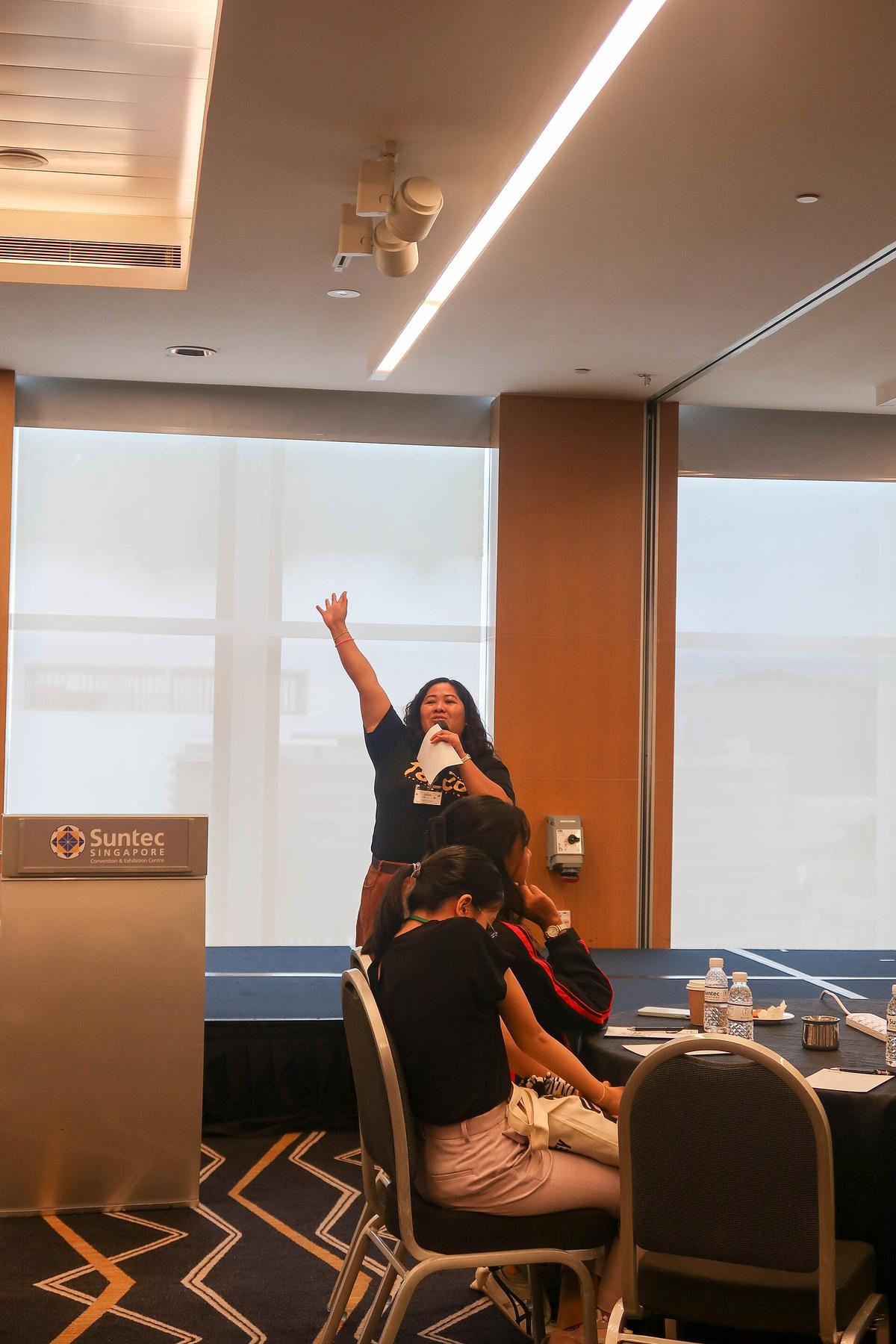
When a corporate team-building organiser asks what makes one programme better than another, the answer is rarely the games. It is the facilitator-to-group ratio and whether the debrief surfaces anything beyond who cheated at a puzzle. Singapore team building activities are not a menu of icebreakers; they are structured, commercially-operated social experiences sold with a specific duration and a price driver that scales with headcount. A programme for 10 people with one facilitator is a different beast from one for 50 with three.
The group size floor for most facilitated programmes is 10, and the maximum can stretch to 200, but the effective ceiling is where wait-time between turns becomes unacceptable. A half-day runs three to four hours; a full day runs six to eight. The game format is a hybrid of physical and mental challenges, and the safety gear provided varies by activity, so ask what is included before you book. Indoor availability is not automatic; some programmes run in function rooms and convention centres, others in parks and beaches. If the programme is outdoors, it is rain-affected, and the provider should have a wet-weather backup that is not "we will see." The price driver is the facilitator ratio, the activity type, the venue, whether catering is included, and how bespoke the customisation goes. A good facilitator is not a referee; they are extracting workplace lessons about communication and leadership dynamics. If the debrief is a formality, you have paid for entertainment, not team building.
Session Duration and the Half-Day Trap
A half-day programme of three to four hours sounds short until you run it. The trap is assuming more minutes equals more value. A well-facilitated three-hour slot with a tight debrief outperforms a six-hour one that drags through lunch. Confirm the duration in minutes before booking, and ask how much of that is game time versus briefing and feedback. For corporate groups, the facilitator-to-group ratio is the single most important number on the page. A ratio of 1:15 means one facilitator per 15 participants; a ratio of 1:30 means long waits and lax safety oversight. The difference in price band is significant, and the difference in quality is enormous.
Indoor Group Activities Singapore: Rain-Proof Plans That Are Not an Afterthought
The Northeast Monsoon runs December to March, the Southwest Monsoon June to September, and the inter-monsoon periods in April-May and October-November bring thunderstorms that arrive with no warning. This is why indoor group activities singapore are not a niche option but a structural requirement for anyone planning more than a month ahead. The market divides into fixed-arena providers running dedicated facilities and mobile providers who bring the experience to a client-chosen venue. Fixed arenas distinguish themselves with built-in structures and electronic scoring; mobile providers eliminate venue travel but add surface and space constraints that can kill a game.
For indoor availability, the question is binary: yes or no. A venue that is indoor but not air-conditioned is a different problem in Singapore's humidity. Air-conditioning is a separate binary check, and for a group of adults doing anything more strenuous than a board game, it is the difference between a comfortable time and a sweltering one. Escape rooms are the classic indoor option, with a group size floor of two and a maximum of ten per room. The duration is 60 minutes of game time plus 15 minutes of briefing and debrief. The game format is solo or team-based, and the price driver is per-head activity cost, venue peak or off-peak pricing, and whether equipment and a facilitator are included. A rainy-day indoor pursuit is weather-independent by definition, so it is the safest wet-weather backup you can book. The only question is whether the provider's "indoor" claim survives the actual rain, and for that, you need to ask if the escape room has a real door that closes.
Outdoor Group Activities Singapore Rain Backup: The PUB Lightning Advisory Is Not a Suggestion
Every outdoor group activities singapore rain backup plan has to start with the PUB lightning advisory, because Singapore's safety guidelines require outdoor pursuits to cease when lightning is within six to eight kilometres. This is not a weather forecast; it is a hard constraint that stops water and open-field events instantly. The National Environment Agency (NEA) also sets a Wet Bulb Globe Temperature (WBGT) threshold of 33°C, at which outdoor physical exertion is suspended. These are not optional. A provider who claims play continues in light rain is telling you the marketing copy, not the safety reality. In practice, Singapore thunderstorms stop play for lightning risk, and wet surfaces increase slip injuries.
The monsoon seasons are predictable in their unpredictability. Heavy rain can last 20 minutes or two hours, and the inter-monsoon periods are worse for thunderstorm frequency. A fixed-arena provider with a sheltered outdoor space may be able to ride out a short shower, but an exposed site has no such luxury. When you book an outdoor pursuit, ask for the wet-weather backup in writing. The answer is either a specific indoor alternative, a rescheduling policy, or a refund. If the answer is "we will decide on the day," you have no plan. The booking lead time matters here; last-minute weekend slots are rare for popular fixed-arena providers, and a rain-affected outdoor session during a monsoon month is a risk you are paying for. For outdoor adventure pursuits, the group size floor is four, the maximum can reach 50, and the duration is two to four hours. The price driver is equipment rental, the guide-to-participant ratio, and permit fees for parks and reservoirs. If lightning is within range, the guide should be calling the session, not the organiser.
Singapore Group Outing Ideas: Match the Activity to the Group's Real Profile
The mistake most organisers make with singapore group outing ideas is starting with the activity and working backwards to the group. Do the reverse. Count the confirmed attendees, not the invitees. Group size floors exist for economic reasons; a provider needs a certain headcount to run profitably, and a group of four will not get a combat game started. The age floor matters for insurance and equipment sizing. Most combat games set an age floor of seven, driven by the weight of the equipment and the physicality of the game. A low stated floor often means a less structured session for the youngest participants, so for a kids' birthday party, check whether the facilitator actually handles children or just supervises them.
For adult friends seeking novelty, the differentiator is not the branding but the format. Laser tag with electronic real-time scoring is a different experience from archery tag with honour-based hit-calling. In laser tag, the scoring system sophistication changes the competitive dynamics; in archery tag, the real-time physical feedback of being hit is the point. Bubble soccer has a persistent hygiene complaint; the zorb suits are enclosed, shared, and sweat-soaked by the second round. No provider has fully solved this, so if equipment hygiene is a dealbreaker, choose a game with external gear. The duration for most combat games is 60 to 90 minutes, which is long enough for novelty and short enough to avoid fatigue. The maximum group size is 30 to 40, but the effective ceiling is where wait-time between turns becomes unacceptable. A group of 40 in a single arena means long rotations and half the party watching.
Combat Games Compared: Laser Tag, Archery Tag, Nerf, Bubble Soccer
Laser tag has an age floor of five, a group size floor of four, a maximum of 40, and a session of 60 to 90 minutes. It is indoor or outdoor, with outdoor sessions rain-affected. The price driver is arena technology level, session length, and player count. Archery tag raises the age floor to seven and the group size floor to six, with a maximum of 30. Combat archery is played with foam-tipped arrows, includes a physical impact, and the duration is 60 to 90 minutes. The indoor availability depends on the provider; some run in sports halls, others on fields. Nerf battle has an age floor of five, a group size floor of six, and a maximum of 40, with sessions running 60 to 120 minutes. The price driver is blaster and dart quality, venue size, and facilitator ratio. Bubble soccer has an age floor of eight, a group size floor of eight, and a maximum of 40, with a 60 to 90-minute session. The zorb suit hygiene issue is the main complaint, and the physical intensity is high, with a real risk of bumping into others. None of these are suitable for a walk-in; every one requires a group-booking model with a group size floor to run.
Team Building vs Corporate Fun Day: Know What You Are Paying For
Team building is a facilitated programme with a debrief that extracts workplace lessons. A corporate fun day is an activity with a lunch break. The difference is not semantic; it is the facilitator-to-group ratio and the structure of the debrief. A team building programme has an age floor of 18 for corporate cohorts, a group size floor of 10, and a maximum of 200. The duration is a half-day or full-day, and the game format is a mix of physical and mental challenges. The safety gear provided varies by activity, and the indoor availability depends on whether the programme uses function rooms or outdoor sites. The price driver is the facilitator ratio, activity type, venue, catering inclusion, and customisation level.
If you want leadership dynamics to surface, you need a facilitator who knows how to draw them out. If you want a fun day where colleagues bond over shared novelty, a combat game may suffice. The question to ask is not "what activities do you offer" but "what is the debrief structure" and "what is the facilitator-to-group ratio." A session booked with a 1:15 ratio that arrives to find 1:30 means long waits and lax safety oversight. The provider has overbooked, and you are the one who loses the quality. Booking lead time is also a factor; popular facilitators for corporate programmes book out weeks in advance, and last-minute weekend slots are rare.
Kids' Birthday Party Venue: The Party Room Is the Deciding Factor
For parents planning a kids' birthday party, the age floor is three, and the group size floor is eight, with a maximum of 30. The duration is two to three hours, structured as one hour of games and one hour of food and cake. The game format is a structured activity rotation, and the safety gear provided is activity-dependent, such as eye protection for Nerf or helmets for cycling. The common injuries are minor bumps and scrapes. The deciding factor is not the activity but the party room. A dedicated air-conditioned space with tables for food and cake is a structural requirement that separates kid-viable venues from adult-only ones. If the venue does not have a party room, the children are eating on the floor or in a corridor, and the birthday cake becomes a logistical nightmare.
The price driver for a kids' party package is the activity type, the number of children, catering, a dedicated host, and venue rental. A dedicated host is not a facilitator; the host manages the rotation, the food, the cake, and the timing. Ask whether the provider's facilitators handle children well or just supervise them. A low stated age floor often means a less structured session for the youngest participants, so for a group of six-year-olds, confirm that the games are age-appropriate. The weather dependence is straightforward: outdoor parties are rain-affected, and indoor parties are weather-independent. If the party is outdoors, the wet-weather backup is a non-negotiable question, not an afterthought.
Mobile vs Fixed-Arena Operators: The Venue Trade-Off
Mobile activity providers bring the activity to a client-chosen venue, which eliminates venue travel but adds surface and space constraints. A function room with a low ceiling is not suitable for bubble soccer, and a field with uneven ground is a trip hazard for archery tag. The mobile provider's duration, group size floor, and equipment hygiene are the same as a fixed arena, but the venue risk is yours. Fixed-arena providers run dedicated, purpose-built facilities with built-in structures, multi-level arenas, and electronic scoring. They distinguish themselves by the consistency of the experience, the quality of the equipment, and the ability to handle large cohorts efficiently. The trade-off is that you travel to them, and the venue is the activity.
For a group of 40, a fixed arena is almost always the better choice because the provider has designed the space for that flow. A mobile provider with inflatable cover needs time to set up and pack down, which eats into the duration. The booking lead time for a mobile provider may be shorter, but the risk of a venue-related failure is higher. Ask the provider which venues they have used successfully and which they would avoid. If they hesitate, that is a signal. The price driver for a mobile provider is the same as a fixed arena, but the venue rental may be separate, so the total cost can be higher once you add a function room.
Outdoor Adventure Activities: Permits, Safety Ratios, and the WBGT Threshold
Outdoor adventure pursuits, such as cycling, kayaking, or high-ropes courses, have an age floor of seven, a group size floor of four, and a maximum of 50. The duration is two to four hours, and the weather dependence is rain-affected, with lightning risk halting water and high-ground activities. The price driver is equipment rental, the guide-to-participant ratio, and permit fees for parks and reservoirs. The NEA's WBGT threshold of 33°C triggers suspension of outdoor physical exertion, and the PUB lightning warning system halts water and open-field activities when lightning is within six to eight kilometres. These are not suggestions; they are safety protocols that a qualified guide will follow.
The guide-to-participant ratio is the same principle as the facilitator-to-group ratio for team building. A ratio of 1:10 means one guide per ten participants, and a ratio of 1:20 is a safety concern. For a group of 50, you need multiple guides, and the provider should state the ratios clearly. The booking lead time for adventure pursuits is often longer because permits for parks and reservoirs are required. If the activity is at a reservoir or a park, confirm that the provider has the permits, not just the equipment. The equipment hygiene standard is a subjective check; a well-maintained helmet and a clean life jacket are non-negotiable.
Heritage and WWII Sites: A Rain-Affected Alternative for History-Minded Groups
For groups that prefer narrative to adrenaline, the WWII heritage sites in Singapore offer a structured alternative. The Battlebox bunker is indoor and weather-independent, with a recommended age floor of seven and a maximum group size of 30 per tour slot. The guide-to-group ratio is not the same as a facilitator ratio; it is a tour guide with primary-source knowledge, and the quality of the narrative is the price driver. Fort Canning Park, Kranji War Memorial, and Labrador Battery are outdoor sites that are rain-affected. The weather dependence is mixed, and visitors without a guide or context leave underwhelmed. WWII site fatigue is a real risk from poor sequencing; visiting multiple heritage sites in one day without narrative structure is a recipe for disengagement.
The Battlebox's distinction is the speed of the Allied collapse and the enduring "who lost Singapore" question. A good guide turns the bunker's story into a narrative, not a lecture. If you are planning a heritage group visit, book the Battlebox tour first, then decide whether to add an outdoor site based on the weather forecast. The monsoon seasons make outdoor heritage sites a gamble, so have a wet-weather backup plan that is a museum or an indoor attraction. The price driver for a heritage site visit is the tour guide quality, the booking lead time for a guide, and the venue's policy on groups. Check with the operator for current tour schedules and guide availability.
Session Duration and Booking Lead Time: What the Numbers Mean
Duration in minutes is not a measure of quality; it is a measure of exposure. A 60-minute escape room is a tight 45-minute game plus a 15-minute briefing and debrief. A 90-minute combat game has 60 minutes of play and 30 minutes of safety briefing, gear fitting, and score reading. Longer is not inherently better; it just means more time in the arena. The duration for a kids' party package is two to three hours, with one hour of games and one hour for food and cake. The price driver is the per-head activity cost, venue peak or off-peak pricing, and whether a facilitator is included. For corporate programmes, the duration is a half-day or full-day, and the catering inclusion is a major cost driver.
Booking lead time is the number of days between booking and the session. Shorter is more flexible, but last-minute weekend slots are rare for popular fixed-arena providers. A mobile provider may have a shorter lead time, but you take on the venue risk. A heritage site tour with a specific guide may require weeks of notice. The rule of thumb is to book as soon as your group size is confirmed, not when the invite goes out. A group of 12 confirmed attendees is a booking; a group of 20 invitees is a hope.
Common Mistakes to Avoid: Group Size, Rain, and Facilitator Shortfalls
The most common mistake is booking the wrong group size by counting total invitees rather than confirmed attendees. The group size floor is a hard floor; if you book for 10 and nine show up, you are still paying for 10. The second mistake is booking an outdoor-only pursuit during monsoon season without confirming the provider's wet-weather policy. A rain cancellation with no backup plan is a failed event, not an act of God. The third mistake is assuming that a facilitator no-show or understaffing will not happen to you. A session booked with a 1:15 ratio that arrives to find 1:30 means long waits and lax safety oversight. Ask for the provider's overbooking policy in writing.
The age floor of seven for most combat games is driven by insurance requirements and equipment sizing. A group of five-year-olds will not be able to hold a bow or lift a blaster. The duration for a combat game is 60 to 90 minutes, which is long enough for novelty and short enough to avoid fatigue. The price driver is the venue rental cost, facilitator-to-participant ratio, and equipment quality. The weather dependence is straightforward: outdoor sessions are rain-affected, and indoor sessions are weather-independent. If the provider claims "all-weather," ask what the PUB lightning advisory does to their session.
What to Ask Before You Book: A Checklist for the First Call
Before you call any provider, write down your group size floor, the maximum you can accommodate, the duration you want, and the weather dependence you can tolerate. Then ask these questions: What is the group size floor to run the session? What is the maximum group size before the wait-time between turns becomes unacceptable? Is there indoor availability if it rains? What is the physical intensity on a scale of low to high? Is the equipment hygiene good, and how often is it cleaned? What is the facilitator-to-group ratio, and is that ratio guaranteed? What is the booking lead time, and is there a last-minute surcharge? Is there a wet-weather backup, and is it a specific alternative or a vague promise? Is the venue air-conditioned? What is the scoring system sophistication: manual, electronic, or real-time display? Is there a food-and-party-space option? And what is the price driver: headcount, session length, or equipment quality?
The answers will tell you which pursuits are viable for your group. A group of 30 adults can do most combat games, but a group of 30 six-year-olds cannot. A group of 4 will not get an archery tag session started because the floor is 6. A group of 200 can only do a team building programme with a dedicated facilitator team. The duration for a corporate group is a half-day or full-day, and the price driver is the facilitator ratio and catering inclusion. The indoor availability is binary, and the equipment hygiene is subjective but non-negotiable. Ask the questions, and do not accept a non-answer.
The Monsoon Season and Your Wet-Weather Backup: A Practical Plan
Singapore's monsoon seasons are not a minor weather pattern; they are a scheduling constraint. The Northeast Monsoon runs December to March, and the Southwest Monsoon runs June to September, with the inter-monsoon periods in April-May and October-November bringing heavier rainfall and thunderstorm frequency. If you are planning an outdoor pursuit, check the NEA's lightning warning system and the WBGT threshold of 33°C. These are not forecasts; they are conditions that trigger suspension of outdoor physical exertion. The PUB lightning advisory is a hard constraint that stops play when lightning is within six to eight kilometres. A provider who has a wet-weather backup will tell you what it is without you asking. A good backup is a specific indoor alternative or a rescheduling policy. A bad backup is "we will see."
For outdoor adventure pursuits, the weather dependence is rain-affected, and lightning risk halts water and high-ground activities. The price driver includes permit fees for parks and reservoirs, and the guide-to-participant ratio is a safety issue, not a luxury. The monsoon season is not the time to test a provider's "all-weather" claim. It is the time to ask for the backup plan in writing. The duration for an outdoor pursuit is two to four hours, and the booking lead time is longer because permits are required. If the forecast is bad, the provider should be proactive in rescheduling, not waiting for you to call.
The Battlebox, Fort Canning, and the WWII Narrative: A Structured Heritage Visit
For groups that prefer history to adrenaline, the WWII heritage sites offer a structured alternative. The Battlebox bunker is indoor and weather-independent, with a recommended age floor of seven and a maximum group size of 30 per tour slot. The guide-to-group ratio is not the same as a facilitator ratio; it is a tour guide with primary-source knowledge. The quality of the narrative is the price driver, and the guide's ability to answer the "who lost Singapore" question is what separates a good tour from a forgettable one. Fort Canning Park, Kranji War Memorial, and Labrador Battery are outdoor sites that are rain-affected. The weather dependence is mixed, and the sites are primarily outdoor remnants. Visitors without a guide or context leave underwhelmed. WWII site fatigue is a real risk from poor sequencing; visiting multiple heritage sites in one day without narrative structure is a recipe for disengagement.
If you are planning a heritage group visit, book the Battlebox tour first, then decide whether to add an outdoor site based on the weather forecast. The booking lead time for a specific guide may be weeks, so plan ahead. The monsoon season makes outdoor heritage sites a gamble, so have a wet-weather backup that is a museum or an indoor attraction. The Battlebox's distinction is the speed of the Allied collapse and the enduring question of who lost Singapore. A good guide turns the bunker's story into a narrative, not a lecture. Check with the operator for current tour schedules and guide availability.
What It Costs and Why: Price Drivers, Not Price Lists
This page does not sell or quote current prices, and you should be suspicious of any provider that publishes a fixed price without knowing your group size. The price driver for any group activity in Singapore is the headcount floor, the facilitator-to-participant ratio, and the venue model. A mobile provider has lower venue costs but adds surface and space constraints. A fixed-arena provider has a purpose-built facility but charges for the venue. The duration is a price driver because longer sessions need more facilitator hours and more equipment. The equipment quality is a cost driver; a blaster that jams is not a saving. The equipment hygiene is a cost driver; a venue that does not clean its gear is not worth the discount.
The price band for a combat game is driven by the arena technology level, the session length, and the number of players. For a team building programme, the price driver is the facilitator ratio, the activity type, the venue, catering inclusion, and the customisation level. For a kids' birthday party, the price driver is the activity type, the number of children, catering, a dedicated host, and venue rental. For an outdoor adventure pursuit, the price driver is equipment rental, the guide-to-participant ratio, and permit fees for parks and reservoirs. The price driver for an escape room is the per-head activity cost and the venue peak or off-peak pricing. Ask for a quote based on your group size, and compare the price drivers, not the sticker price.
A Final Note on Operator Churn and Facility Changes
The Singapore group-activity market has high churn. A venue operating last year may not be operating this year, and a specific room mentioned in an article may no longer exist. Equipment hygiene is a persistent complaint, and the zorb suit hygiene issue in bubble soccer has not been solved by any provider. Facilitator quality is provider-level, not individual-level; a well-reviewed facilitator may have left, and the session quality is a gamble. Mobile provider venue partnerships change as partnerships shift. This is not a reason to avoid the market; it is a reason to verify directly with the provider before you book. Ask for the current duration, the current group size floor, and the current equipment hygiene standard. If the provider is still in business and the answer is specific, you are probably fine. If the answer is vague, move on. Check with the operator for the latest details.
FAQ: Four Questions You Are About to Ask
What is the group size floor for most activities? For combat games like archery tag and Nerf battle, the floor is six to eight. For laser tag, it is four. For escape rooms, it is two per room. Team building programmes usually require a floor of ten. If your group is smaller than the floor, you are paying for the empty slots or not booking.
What happens if it rains during an outdoor session? The provider will follow the PUB lightning advisory and stop play if lightning is within six to eight kilometres. A good provider will have a wet-weather backup, such as a rescheduling policy or an indoor alternative. Ask for this in writing before you book. If the provider says "all-weather," ask what that means for lightning.
Can I bring my own food and cake to a kids' party? This depends on the venue. Some party packages include catering; others allow outside food but charge a corkage fee. The party room should have tables and a fridge. Confirm the food-and-party-space policy before you book, and ask if a dedicated host is included in the price.
How far in advance should I book? For popular fixed-arena providers, book at least two to three weeks ahead for a weekend slot. For corporate team building, book a month in advance. For heritage site tours with a specific guide, allow two weeks for the guide's schedule. Last-minute bookings are possible but rare for weekend slots.
The One Sentence That Makes This Page Uniquely Useful
"The price driver for a combat game is the arena technology level, the session length, and the number of players, but the zorb suit hygiene issue in bubble soccer has not been solved by any provider."