Indoor Sports Halls vs Outdoor Fields for Bubble Soccer: Surface Safety and Singapore Heat
Indoor sports halls beat outdoor fields for bubble soccer in Singapore: no lightning stops, lower heat risk, and safer surfaces. Most indoor halls are ventilated, not air-conditioned.
Bubble Soccer in Singapore: Indoor Halls vs Outdoor Fields
Ten minutes into a bubble soccer game on a public field, the zorb suit already slick with sweat, the sky opens. A PUB lightning advisory pushes a hard stop. The facilitator calls it. You spend the next hour peeling wet nylon off your legs under a shelter while the grass turns to mud. That moment, not the collisions, not the goals, is what decides whether the outing succeeds. Venue choice matters more than any other booking decision.
Book the indoor sports hall. Most first-timers assume an outdoor field is fine. It is cheaper, it feels more like football, and the photos look better. Singapore's climate and lightning rules make outdoor a gamble you win only on a dry day. The surface and heat risks are not theoretical. Here is which surface to pick, what the heat does to your game, and when the outdoor option is the wrong call.
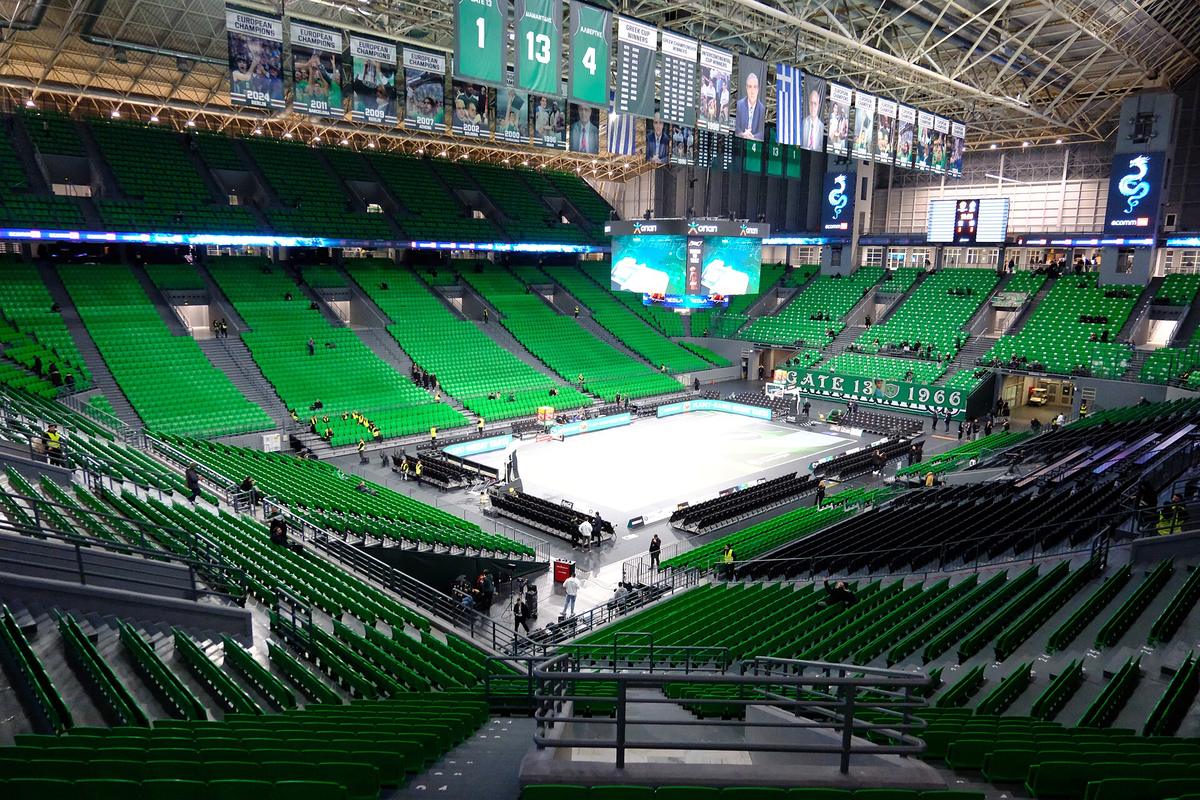
Why Indoor Sports Halls Beat Outdoor Fields for Bubble Soccer
Start with the hard fact: Singapore's annual mean temperature sits at 28.0°C (NEA 2024 data). Midday outdoor field readings hit 30-35°C. The PUB lightning advisory is not a suggestion. It requires all outdoor activities to cease when lightning is within 6-8 km. That is a hard stop. A 60-90 minute game on an outdoor field carries a real chance of interruption. For a group that has travelled, paid, and suited up, a rain cancellation with no backup plan is the failure mode that kills the day.
The indoor sports hall eliminates that entire category of risk. No weather dependency. You are not checking a radar app at 9am hoping for a dry slot. The trade-off is cost: indoor hall rental runs higher than an outdoor field, which is why providers often push outdoor options for large groups. That premium buys you a consistent surface, a guaranteed start time, and no lightning stop. For any group that values the game actually happening, indoor is the default choice.
Surface Safety: Sprung Floors vs Grass and Artificial Turf
Why The Floor Determines Injury Risk
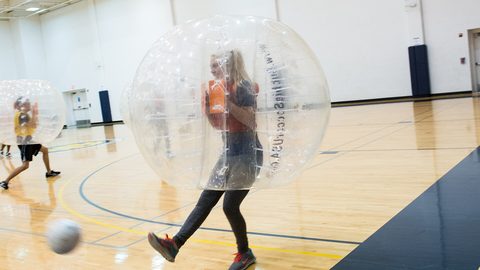
The floor under your zorb is the single biggest factor in whether you walk away with a strain or a sprain. Indoor sports halls use polished wood or synthetic sports flooring, laid over sprung subfloors designed to absorb impact. These surfaces give under your feet. Enough to reduce the shock on knees and ankles when you fall. And you will fall. Bubble soccer's primary appeal is full-body collision. The zorb suit restricts lower-leg movement while encouraging full-speed hits. On a sprung indoor floor, that fall is a roll. On outdoor grass or artificial turf, it is a jolt that transmits straight up through the legs.
What Outdoor Surfaces Do To Your Body
Outdoor natural grass is worse than you remember. In Singapore's humidity, grass is either dry and hard-packed or wet and slippery. There is rarely a middle ground. Wet grass increases slip risk dramatically. The zorb suit has no grip. Your feet slide inside the bubble. Surface abrasion is a real complaint. Artificial turf is not better. It sits on a hard base with shock-absorbing infill that compacts unevenly over time. The surface temperature at midday can exceed 40°C in the sun. The research is blunt: the common minor injury is muscle strain from the 9-12 kg suit weight. The common serious risk is ankle and knee injuries from restricted movement and collision force. A sprung indoor floor mitigates that risk. A field does not. For a corporate group where one sprained ankle means a workers' compensation claim and an HR headache, the choice is obvious.
- Average outdoor field temperature (midday, no shade): 30-35 °C
- Average indoor hall temperature (air-conditioned): 22-26 °C
- Typical game duration: 60-90 min
- Bubble diameter (adult) / weight: 1.5 m / 9-12 kg
- Minimum group size / maximum per game: 10 pax / 30 pax
- Minimum ceiling height / floor area: 6 m / 30 m × 15 m
- Age / height / weight limits (check with the operator): 7 years / 1.2 m / 100 kg
- Indoor hall premium vs outdoor field: 20-50% higher
- WBGT threshold for outdoor suspension (schools): 33 °C
- Lightning advisory stop radius: 6-8 km (PUB)
Heat Management: Air-Conditioning Is Rare Even Indoors
The Air-Conditioning Misconception
Here is the misconception that ruins games: people assume an indoor hall means air-conditioning. It does not. Most indoor sports halls are mechanically ventilated. Large ceiling fans and open vents. They are not cooled to comfort. The temperature inside a hall on a 30°C day will sit in the high 20s. Humidity stays close to outdoor levels because the doors are open for the game. The Ministry of Health's heat stress guidelines (2023) exist because Singapore's heat is a genuine physiological threat. Bubble soccer is high-intensity bursts: sprint, collide, recover, repeat. In a 9-12 kg suit, your core temperature climbs fast.
How To Manage Heat During Play
The distinction matters for planning. An air-conditioned bubble soccer venue is rare. Most providers cannot access a hall with full AC because the space requirements, 30m × 15m with a 6m ceiling, rule out typical air-conditioned function rooms. Your indoor booking reduces heat risk but does not eliminate it. The practical response: hydrate before you feel thirsty. The suit's insulation hides sweat. Take water breaks every 10-15 minutes. Watch for the early signs of heat exhaustion: dizziness, nausea, confusion. They set in above a 38°C core temperature. The schools' wet-bulb globe temperature threshold of 33°C for outdoor suspension is a useful benchmark. If the provider cannot tell you how they manage heat, that is a red flag. For a corporate group, do not book the hottest slot of the day (1-3pm) even indoors. The residual heat in the building and the lack of AC make it the most uncomfortable hour to run.
Bubble Soccer Outdoor Field Singapore: When It Makes Sense and When It Fails
Outdoor offers one advantage the hall cannot match: space and atmosphere. An outdoor grass field is usually larger. The 5-a-side pitch feels more expansive. The open air dissipates both heat and the cabin-fever feeling of being in a box. If you book outdoor, go in with eyes open about the constraints.
First, the weather dependency is absolute. The monsoon seasons, Northeast (December, March) and Southwest (June, September), bring predictable heavy rain. Singapore's thunderstorms can form in 30 minutes in any month. The PUB lightning advisory stops play. Check the provider's wet-weather backup policy before you pay a deposit. The good ones offer a free reschedule. The bad ones offer credit only. Second, the surface: natural grass that is dry is acceptable. The zorb suits use more upper-body effort to move than you expect. On hard-packed dry grass, a fall is an impact on compacted earth. Artificial turf is faster and more predictable. It abrades the suit, and your knees through the suit, more quickly. Third, the heat: at midday, a field has no shade. The WBGT can exceed the 33°C threshold that suspends all school sports.
When does outdoor make sense? For a group that has checked the forecast is dry, booked a morning slot (before 10am) or evening (after 5pm), and confirmed a reschedule policy. For a weekend casual kickabout where a cancellation is not a disaster. For anyone else, the modest premium for indoor is the insurance premium against a ruined afternoon.
What Is a Bubble Soccer Weather Backup in Singapore?
When the rain hits, and it will, your weather backup is the difference between a rescheduled game and a wasted trip. The term is simple: a pre-agreed alternative plan that the provider offers when the outdoor game cannot proceed. It is not optional. It is a requirement for anything booked during the monsoon seasons.
Here is what a backup looks like in practice. The provider has a partnership with a nearby indoor sports hall, or a mobile setup that can fit under a sheltered multi-purpose court. The backup is either a time-shift, move to a dry slot later in the day, or a venue-shift, move indoors. The failure mode is when the provider has no backup and cancels. You lose the game and possibly the money. Ask specifically: 'If lightning stops play at minute 20, what happens?' The answer should include a partial refund or a full rebooking. Not just a rain-check with a 30-day expiry. The best providers bake this into their terms. The worst leave it to your negotiation. For school coordinators, the wet-weather plan is a mandatory part of the risk assessment. Do not accept a vague 'we'll see' from a provider.
Bubble Soccer Air-Conditioned Venue Singapore: What Actually Exists
Be precise about the claim. A true air-conditioned bubble soccer venue is rare. The sport needs a 30m × 15m playing area with a 6m minimum ceiling. Air-conditioning an industrial unit of that footprint is cost-prohibitive for most providers. What exists instead is a spectrum. At one end, the high-end indoor sports halls operated by Sport Singapore and commercial partners offer filtered and fan-circulated air. Cooler than a field but not a cold room. At the other, some providers have invested in fixed arenas with industrial-scale ventilation and misting fans. A compromise that keeps players cooler than a sealed hall but is not air-conditioning in the residential sense.
The research flags the distinction as a claimed-vs-real issue: providers say 'climate-controlled' and players hear 'air-conditioned.' They are not the same. If a cool room is non-negotiable for your group, say a corporate event with executives who will not tolerate a sweaty debrief, bubble soccer itself is the wrong activity. The 9-12 kg suit traps heat regardless of the venue. A better play: book the game in a ventilated hall, schedule it for the coolest hours, morning or evening, and plan a post-game cool-down in an air-conditioned lobby or food court nearby. The travel to that air-conditioned spot is part of the plan.
Bubble Soccer Surface Safety Singapore: What the Research Does and Does Not Say
The Evidence Gap
Bubble soccer surface safety is under-researched in Singapore. That is exactly why you should read this. The Ministry of Health's heat stress guidelines (2023) and Sport Singapore's indoor sports hall specifications (2024) cover the built environment. There is no published body of data on bubble soccer injury rates on this island. What the research does support is a few concrete numbers: the zorb suit weighs 9-12 kg for adults, the bubble is 1.5m in diameter, and the typical pitch is 30m × 15m. The suit's dead weight, combined with restricted lower-leg movement, means a fall happens at speed and with momentum. On a sprung floor, that impact is absorbed. On grass, it is not.
What Providers Do About Safety
The provider websites (Bubble Soccer Singapore, Bubble Bump Singapore, Fun Empire, accessed 2025-2026) are consistent on the other safety measures: knee pads and shin guards are included. The facilitator-led safety briefing is mandatory. It covers rules, safe zones, and emergency stops. The format is stable across providers. The quality varies. A good facilitator enforces the 'no head-on collisions' rule. A lax one lets the rugby-style tackles go. For a corporate group, ask the provider how they handle the 1:15 facilitator-to-group ratio. A lower ratio, more facilitators, means tighter safety and faster game rotations. A game booked at 1:15 that arrives with 1:30 is a red flag. Muscle strain is the common minor injury. It comes from the suit weight, not the collisions. The fix is to take the suit off during water breaks. Do not push through.
Mobile vs Fixed-Arena Providers: Who You Are Booking
The venue choice is two choices: the location and the provider model. Mobile activity companies bring the bubbles to a client-chosen venue. A void deck, a function room, a public field. They distinguish themselves by eliminating venue travel. You pick the spot, they bring the gear. The catch is surface and space constraints. A mobile provider will not bring the game to a sloped field or a 5m ceiling. They will charge a transport fee. Fixed-arena providers run a dedicated, purpose-built facility. Pitch markings are painted. The ceiling height is verified. The insurance is in place. They distinguish themselves by reliability and safety oversight, not by flexibility.
For most groups, the fixed arena is the right call. The provider owns the space. They control the surface, the briefing room, and the changing facilities. Mobile is for a special event. A birthday party at a specific park. A team-building day with multiple activities where the location is part of the appeal. The failure mode to avoid is assuming all providers are interchangeable. Check whether they use a fixed arena or a mobile setup before you book. The price difference reflects the surface quality, not just convenience. A mobile provider on a public field is cheaper for a reason: the ground is worse, and you are one lightning advisory from a cancellation. For a school uniformed-group coordinator managing a large cohort, the fixed arena's weather-proofing and safety briefing quality are worth the premium.
Zorb Suit Hygiene and the Reality of Shared Gear
The least comfortable truth about bubble soccer is the zorb suit. It is an enclosed, shared piece of gear that you wear over your clothes. It traps sweat. The research names zorb suit hygiene as a persistent complaint, the most cited offender across user reviews. No provider has fully solved it. Any page that does not mention it is not being honest. The suit's interior is wiped down between games. Some providers use a sanitising spray. That does not address the smell of the bubble itself, which holds odour over time.
What you can do is practical. Wear a synthetic base layer, not cotton, that wicks sweat. Bring a change of clothes and a towel for the debrief. The provider should supply a suit bag or a staging area to step out of the bubble. Use it. Do not wear jewellery or anything that can pierce the suit from the inside. If you are the organiser, set expectations: the game is high-exertion. The suits smell like a gym bag. That is not a flaw in the activity. It is the nature of the beast. For a corporate group, the hygiene question is a legitimate one to ask directly: 'How do you clean the suits between games?' If the answer is 'we don't' or a defensive deflection, that is a signal about their overall standards.
Budget, Group Size, and the Real Cost Drivers
The cost of a bubble soccer game is driven by three things: venue rental, game duration, and transport inclusion. The indoor hall premium is the biggest line item. That premium buys you the ceiling, the sprung floor, and the weather-proofing. Duration matters less than you think. A well-paced 60-minute game with a tight briefing beats a padded 90-minute one that includes 20 minutes of waiting for stragglers. The typical game runs 60-90 minutes. The clock includes briefing and suiting-up, not just active play. A provider who promises a '2-hour game' is counting the full window. Expect 60-75 minutes of actual game time.
Group size is a hard constraint: the typical minimum is 10 pax, the maximum is 30 pax per game. Fewer than 10, you are paying for 10. More than 30, you are splitting the group and paying for two games. For a corporate team-building organiser, the facilitator-to-group ratio is the quality lever. A 1:15 ratio is the industry default. A 1:10 ratio is worth paying extra for. Transport inclusion is a cost driver for mobile providers. A fixed-arena provider likely has parking but not necessarily MRT access. The venue travel is on you. Factor it into the total cost. Public liability insurance coverage is typically S$1 million. There is no specific provider licensing requirement for bubble soccer in Singapore. The provider's reputation and your due diligence are the only safety net.
Who This Is For and Who Should Skip It
This activity suits a specific set of people. Corporate team-building organisers who need a reliable, weather-proof activity with a clear safety briefing will find the indoor hall version ideal. It is a controlled environment where the collisions surface leadership dynamics, who calls the shots, who protects the group, without the risk of an outdoor injury. School and uniformed-group coordinators will find it works if they can secure a wet-weather plan and the provider manages the 7-year minimum age and 1.2m height rule. Adults who want a genuinely fun, high-exertion workout that does not require football skill will enjoy the collision-for-its-own-sake appeal.
Skip it if you want a serious football match. The ball skills are secondary. The suit makes precise passing impossible. Skip it if you are looking for a relaxed, low-sweat activity. This is high-intensity bursts with a 9-12 kg weight on your shoulders. Skip it if your group has participants over 100 kg or with mobility issues. Skip it if you cannot tolerate the idea of shared, sweaty gear. If you are booking purely on price, expecting a premium experience from the cheapest outdoor field provider during monsoon season, you are betting against the weather and the PUB advisory. There is no hedge here: indoor is the safe choice, outdoor is the gamble. Now you know the odds.
Frequently Asked Questions
Is an indoor venue the only safe option?
No, but it is the most reliable. Outdoor fields work if you book a dry morning or evening slot, confirm the provider's wet-weather backup policy, and accept the residual heat risk. The safety gap is not about the venue being indoor or outdoor. It is about the surface and the weather dependency. A dry-day outdoor game on natural grass with a 1:10 facilitator ratio is fine. The problem is you cannot guarantee a dry day in Singapore. The PUB lightning advisory is a hard stop.
What does a bubble soccer game cost?
Providers do not publish list prices because they vary with group size, duration, and venue. The research indicates indoor hall rental runs higher than an outdoor field. Pricing scales with duration and the inclusion of transport for mobile providers. For a real quote, contact the provider directly. Prices change with promotions and peak seasons.
What happens if it rains during an outdoor game?
The game stops if lightning is within 6-8 km (PUB advisory), regardless of the provider's preferences. If heavy rain starts without lightning, the provider may continue or pause depending on the surface. Wet grass increases slip risk. A responsible provider stops. Your backup is the provider's wet-weather policy: a reschedule, a credit, or a partial refund. Confirm this policy before paying a deposit. Not after.
Can I book a bubble soccer game for my child's birthday party?
Yes, with caveats. The minimum age is 7 years and the minimum height is 1.2m. That rules out younger children. Party rooms with air-conditioning for food and cake are a separate structural requirement. Most providers offer the pitch only. You will need to book a venue with a party space. Zorb suit hygiene is a concern for kids who are less careful about sweat. Bring a change of clothes.
How far in advance should I book?
For a fixed-arena provider on a weekend, book at least 7-10 days ahead. Last-minute weekend slots are rare because the arena runs multiple games. For a mobile provider, the lead time is shorter. You are competing for the good time slots, morning or evening, and the good weather. Booking lead time is measured in days. The shorter the lead time, the more flexible the provider must be. The less likely you are to get a weekend prime slot.
.jpg)