How Do You Combine Bubble Soccer with Other Activity Stations for a Singapore Group Event?
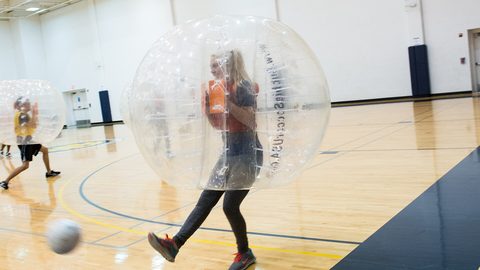
Combining bubble soccer with other activity stations in Singapore requires careful rotation planning, as suiting-up time and space demands make it a slower station than archery tag or Nerf.
A humid Saturday morning in a Singapore park. Thirty colleagues have just finished suiting up in inflated zorb suits, sweating before a single bump. The facilitator shouts a countdown. The first bubble match kicks off. Twenty minutes later the real problem surfaces: half the group is waiting, the sun is climbing, and the archery tag setup across the field has not seen a single arrow. Combining bubble soccer with other activities is a logistical puzzle that looks simple on a proposal. The difference between a smooth swap and a meltdown comes down to how you structure the day, not the equipment.
For a multi-activity event in Singapore, the operator splits your group into sub-teams. Each starts at a different point. A swap might run 20 to 45 minutes per activity, depending on suiting-up time and the number of participants. Bubble soccer is the slowest. Inflating suits, fitting them, and the safety briefing eat five to ten minutes before any actual play. You cannot hand someone a zorb and expect them to self-serve. The effective group size for a single bubble-soccer setup tops out around 12 to 15 players per match, so with 20 to 80 people you need multiple matches or a shorter rotation. Otherwise waiting becomes the dominant memory.
Here is the honest math. A two-hour session labelled as such includes briefing, suiting-up, and debrief. That leaves only 45 to 60 minutes of active play across all activities. Book a three-activity rotation with bubble soccer and each team gets roughly 20 minutes of actual game time per stop, if the facilitator keeps the clock honest. That is why the facilitator-to-group ratio matters. A 1:15 ratio means one staffer per 15 participants, but that person is also managing transitions, water breaks, and the bubble-suit queue. For groups over 30 people, a dedicated event coordinator becomes essential. The sequence of who swaps where and when is where most events fall apart.
Bubble Soccer Multi-Activity Event Singapore
Pairing High And Low Exertion
A bubble soccer multi-activity event operator offers a menu of three to five activities. Zorb suits pair with archery tag, laser tag, nerf wars, or an inflatable obstacle course. The trick is mixing high-intensity bursts with lower-exertion options to keep the group from burning out in the heat. Bubble soccer spikes the heart rate. Archery tag's stalking phases bring it back down. The maximum group size for such a day is less about the operator's stated capacity and more about the field. Most mobile operators cap a single session at 80 people. Beyond that, the wait between activities becomes unacceptable. Nobody paid to stand around in a sweaty suit watching others play.
Bubble Soccer Plus Archery Tag Rotation
Running bubble soccer plus archery tag is a natural pairing. Both are combat-adjacent but different in physical demand. Archery tag requires a cleared space about half the size of a badminton court per match, with a minimum ceiling height of four metres if indoors. Players need only a forearm guard and a face mask. No suiting-up time. This contrast is the point. While half the group is still getting into zorb suits, a five-to-ten-minute affair with Velcro straps and sweat, the other half can be shooting foam-tipped arrows. The operator's facilitator manages the swap. Insist on a clear signal for the changeover. In the noise of a multi-activity day, the quiet part of the group always rotates late.
Mixed-Format Group Day Singapore
Splitting The Day In Two
A mixed-format group day that works separates the schedule into two halves. Combat games run in the morning when it is cooler. Facilitated problem-solving follows lunch, when the sun is brutal and the group is less likely to run. Bubble soccer and archery tag are high-energy, high-exertion. An escape room or a team-building activity in an air-conditioned room is low and sustained. The mobile operator cannot easily move an escape room, so the fixed-arena operator takes over the afternoon slot. The failure case is booking a full-day outdoor event during a hot spell. The National Environment Agency's Wet Bulb Globe Temperature advisory suspends outdoor activities above 32 degrees Celsius. In Singapore's humidity, that means many afternoons are a hard stop. You need a wet-weather backup plan that is an indoor hall or a substitute indoor activity, not just a prayer.
Mobile Operator Multi-Activity Setup Singapore
Surface, Shelter And Setup
When you choose a mobile operator multi-activity setup, you are buying convenience but paying in venue constraints. The operator brings inflatable bubble-soccer pitches and archery-tag barriers to a client-chosen field. Artificial turf or an indoor sports hall floor works. Natural grass gets torn up and becomes slippery. The surface for bubble soccer must be level and debris-free. The zorb suits slide, and a pebble can pop the vinyl. But the operator cannot change the fact that the site has no shelter. A sudden Singapore downpour stops play immediately because of the PUB lightning advisory, which halts outdoor activities when lightning is within six to eight kilometres. Unlike a fixed-arena operator with a roof, a mobile setup has no indoor fallback. Confirm the wet-weather policy in writing before signing.
Space Reality And Staffing
The space constraint for a mobile setup is more brutal than most organisers expect. A standard bubble-soccer pitch needs a clear area of roughly 30 metres by 20 metres per match, plus a run-off zone. Archery tag needs about half that. If you have booked a public field in a park, you are also competing with other users. A kids' football match can delay your start. The operator's setup time is usually 60 to 90 minutes. Your booked slot starts when they are ready, not when you arrive. For groups over 50, ask the operator what the facilitator-to-group ratio actually will be on the day. A promised 1:15 can slip to 1:30 on a busy weekend. That is the difference between a safe, fast swap and a slow, unsafe one. The insurance requirement for bubble soccer operators in Singapore is a minimum of S$1 million in public liability cover. Verify it before you pay a deposit.
Wait-Time Between Activities
The Real Bottleneck
The single biggest killer of a multi-activity event is waiting, and it is almost always a planning failure, not an operator failure. Your group size is 60 and you have booked three activities. You are running 20 people per activity simultaneously, so each must handle 20 people in a single pass. Bubble soccer can only field six to ten players at a time. Twenty people means two to three matches per rotation, each lasting ten to fifteen minutes, plus suiting-up. That is a 45-minute wait for the bubble soccer group to finish all its matches. Meanwhile the archery tag group has already run through its 20-minute slot and is standing around. The fix: increase the number of rotations and cut active play per activity, or reduce the group size per activity by adding a fourth one, even if it is low-intensity like a giant Jenga.
A Workable Rule Of Thumb
Total event duration should be at least 15 minutes per activity per rotation, plus ten minutes per rotation for transition, briefings, and hydration breaks. For a three-activity event with 20 to 80 participants, that means a 2.5-to-3.5-hour window, not the two hours most operators quote. The briefing overhead is real. Each activity has a mandatory facilitator-led safety briefing. With 60 people, you are doing it three times over. The group split should be unequal if one activity is slower. Put ten people on bubble soccer and 25 on archery tag, and swap after 30 minutes. This works because archery tag can run continuous matches with quick substitution. Bubble soccer's suiting-up time creates natural gaps. The facilitator must be empowered to adjust the schedule on the fly, not stick to a rigid timetable that is silently failing.
Suiting-Up Time And Active Play
Suiting-up time for bubble soccer is the hidden tax on your event. The zorb suit needs to be checked for leaks, inflated to the right pressure, and strapped on properly. A rushed fitting means a deflated suit that ruins the game. This takes two to three minutes per person. A group of 12 needs a full 30 minutes just to get everyone suited, even with two facilitators helping. Schedule bubble soccer as the first activity of the day, when the group is fresh and the sun is lower. Active play rarely exceeds 45 to 60 minutes in a two-hour booking. The operator knows this, which is why the clock starts at the briefing, not at the first kick. For a mixed-format event, put bubble soccer in the morning and lower-exertion activities after lunch to avoid heat exhaustion in the 30-degree-plus humidity.
Venue Constraints And Wet-Weather Backup
Ceilings, Floors And Lightning
Venue selection is where combining bubble soccer with other activities either works or collapses. Bubble soccer requires a higher ceiling than archery tag, four metres minimum. Players bounce, and a low ceiling means head injuries. It also needs a bigger floor area. A single match takes up roughly the space of a basketball court, and a multi-activity event needs that allocated per active match. Indoors in a sports hall, check the ceiling height and floor type. A wooden sprung floor is ideal. A concrete hall floor is a slip hazard with sweat and grass. Outdoors, the PUB lightning advisory is the hard stop. No operator can override it. A good one will have a wet-weather backup plan that involves moving to an indoor venue or substituting a different activity. The mobile operator's website may claim all-weather capability. The gap between marketing copy and a real lightning storm is where events die.
Surfaces, Hydration And Heat Rules
For outdoor events, the surface requirement is artificial turf or indoor sports hall flooring, not grass. Natural grass gets torn up by the zorb suits, creates muddy patches that become slip-and-slides, and hides debris that can puncture the vinyl. A wet field is worse. Zorb suits slide on wet grass with almost no friction, leading to uncontrolled collisions and injuries. The operator should provide a hydration point. Water, not isotonic drinks, which can cause cramps in the heat. Schedule at least one five-minute water break per 30 minutes of active play. The NEA's WBGT advisory is not optional. When it exceeds 32 degrees Celsius, outdoor activities are suspended. A responsible facilitator will throw that switch even if the sky is clear. If your operator does not mention WBGT, ask why. It means they are not tracking the data that keeps your group safe.
What Drives The Cost
The cost driver for a combined event is the number of activities selected, not the headcount alone. Each activity requires a facilitator, equipment, and setup time. A three-activity event with 30 people can cost as much as a five-activity event with 60. The second cost driver is event duration. Half-day events are cheaper per hour than full-day because the operator can book a second group in the afternoon. Indoor air-conditioned venues cost more than outdoor public fields, but they eliminate the wet-weather risk and the WBGT problem entirely. A facilitator or referee per activity is a necessary cost, not an add-on. Without one, the games devolve into arguments. Transport between venues is a cost driver only if locations are not co-located. For a mobile operator, that means you are paying for their travel time and fuel. For peak periods, November to January and June, book four to eight weeks ahead. Operators have limited multi-activity setups and weekends go fast.
Do not pay a deposit until you have confirmed three things: the operator's public liability insurance at a minimum of S$1 million, the facilitator-to-group ratio in writing, and the wet-weather policy. Get clarity on whether it is a cash refund, reschedule, or indoor substitute. A common failure is booking through a third-party aggregator who does not check with the operator whether bubble soccer is still offered. Operators in Singapore have high churn, and a venue that ran zorb balls last year may have swapped to a different activity. Verify with the operator directly before paying any money. Another hidden cost is overtime. If your group runs long because of a slow rotation, the operator will charge by the hour for additional facilitator time. That is often 20 to 30 percent more than the base hourly rate. Budget for a buffer of 15 to 30 minutes in your schedule, not just in your wallet.
Common Pitfalls And The Failure Case
The most common failure in a multi-activity event is rain cancellation with no backup plan. You have booked an outdoor-only setup during the monsoon season, November to January and often June, and the operator has no indoor alternative. You lose your money or reschedule to a day when no one is free. The failure case is worse. You arrive at the field, the sky opens, and the operator says they cannot refund because the ground is wet. A second failure is booking the wrong group size by counting total invitees rather than confirmed attendees. You confirm 60 people but 45 show up. The operator may still charge for 60 because they staffed for 60, and your group's waiting time doubles. A facilitator no-show or understaffing is a real risk on a busy Saturday. The operator's contract should state the penalty for understaffing. Have the coordinator's phone number on hand.
When the event is over, the real test of whether the rotation worked is whether the group is talking about the games or the waiting. A well-run multi-activity event feels like a blur of activity. A badly run one is dominated by people checking their phones. Zorb suit hygiene is an enduring complaint. The enclosed suits trap sweat, and no operator has fully solved the odour problem. For a corporate day, brace for that feedback. Provide towels and a change of clothes in the invite and it stops being a surprise. For schools and uniformed groups, the safety ratio is non-negotiable. Insist on a 1:10 facilitator-to-group ratio for bubble soccer, even if the operator's standard is 1:15. A bumped knee or a twisted ankle is more likely when kids are involved. The minimum age for bubble soccer in Singapore is seven years, with a minimum height of 1.2 metres. Check your group's demographics against those limits before booking.
Structuring The Schedule For Maximum Play
The Three-Activity Arc
The best schedule for a multi-activity event is a three-activity rotation with a different type per stop: one high-intensity like bubble soccer, one medium like archery tag, and one low like nerf wars or an inflatable course. Start with the lowest-energy activity to warm up. Peak with bubble soccer in the middle. Finish with something social. This sequence keeps energy levels steady and prevents the group from being exhausted by the final rotation. For a 30-person group, split into three teams of ten. Run each activity for 30 minutes with a five-minute transition. That is 1.5 hours of active time plus a 15-minute buffer, fitting into a two-hour booking with no dead time. For a 60-person group, you need two cohorts per activity, doubling the total time to three hours, or you accept a shorter rotation of 20 minutes per activity.
Staffing And Hydration Flow
The facilitator-to-group ratio is the lever that controls everything. A 1:15 ratio means one facilitator is responsible for 15 people's safety and game flow. That is manageable for archery tag but stressful for bubble soccer, where a deflated suit or a hard collision can turn a fun game into an injury. Push for a 1:10 ratio for bubble soccer specifically. Consider paying extra for a dedicated referee for that activity. The operator's standard ratio may be lower, but you are allowed to ask for a higher ratio at a higher price. Mixed-intensity scheduling also matters. Running bubble soccer and archery tag back-to-back will exhaust your group by the second activity. Alternate high and low. Build in a hydration point between every transition. The operator should have a water cooler at each activity, not just one at basecamp. Walking 100 metres to drink is enough of a barrier that people skip it.
Table: Activity Comparison For Multi-Activity Events
This table compares the five most common activities in a combined event across the axes that matter for planning: space, setup time, and active play per 30-minute slot.
| Activity | Space Needed (m²) | Setup Time (min) | Active Play per 30-min Slot | Indoor-Friendly |
|---|---|---|---|---|
| Bubble Soccer | 400–600 | 60–90 | 15–20 min (suiting-up overhead) | Yes (ceiling ≥4m) |
| Archery Tag | 200–300 | 30–45 | 20–25 min (minimal gear) | Yes (ceiling ≥4m) |
| Laser Tag | 150–250 | 30–60 | 20–25 min (vests only) | Yes (dark room) |
| Nerf Wars | 200–400 | 30–45 | 15–20 min (dart loss issue) | Yes |
| Inflatable Obstacle Course | 200–400 | 45–60 | 20–25 min (continuous run) | Yes (ceiling ≥4m) |
The table shows the key difference. Bubble soccer's suiting-up time and space requirement make it the most expensive per active play minute. Use it sparingly. Twenty minutes per rotation is enough for the novelty to land without the group losing interest. Archery tag and laser tag give you more active play for less setup, which is why they are the default pairings. Nerf wars is the weakest link because of dart loss. Operators provide a fixed dart count. When players scavenge for darts between rounds, play grinds to a halt, eating into your active time. An inflatable course is a good filler but has no team-versus-team dynamic. It works better as a warm-up than a main event.
FAQ
Here are the four questions organisers most often ask when combining bubble soccer with other activities.
Who This Suits And Who It Does Not
This multi-activity approach suits corporate team-building organisers and school coordinators who have a confirmed headcount of 20 to 80, a clear schedule, and a budget for at least three activities with a dedicated facilitator each. It fits groups that want variety and can handle the physical demand of bubble soccer mixed with archery tag or laser tag. It does not suit a casual weekend group of fewer than ten people. The per-activity cost will be prohibitive and the rotation pointless. You are better off booking a single fixed-arena activity. It is also wrong for a group that wants pure discussion or a heritage-focused day. Bubble soccer is a high-exertion physical activity. If your goal is facilitated problem-solving, an escape room or a team-building workshop in an air-conditioned room is a better use of the time.